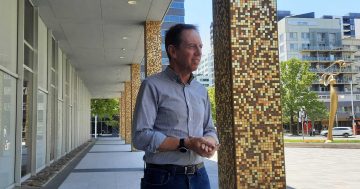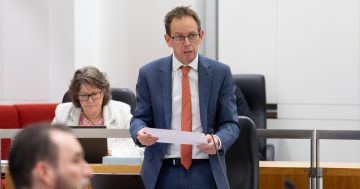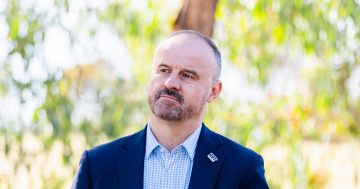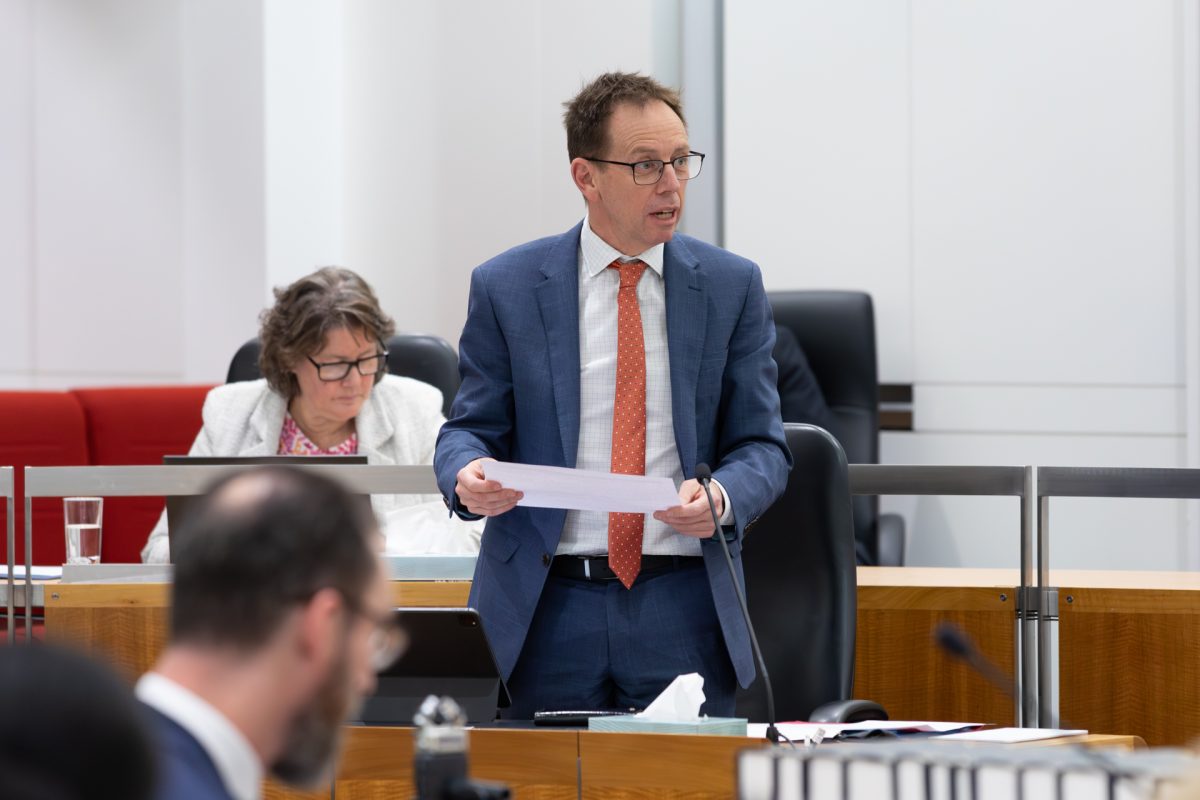
Outgoing Greens Leader Shane Rattenbury commanded respect in the Assembly and provided a template for progressive politics. Photo: Michelle Kroll.
The departure of Shane Rattenbury from the Legislative Assembly will leave a big hole in ACT politics and in the ACT Greens.
Mr Rattenbury will deny it, but it could be argued that he, more than anyone else, is responsible for the Greens’ success in the ACT.
The ACT may be the “progressive” jurisdiction in the country, but it is hard to see its federal counterparts making as much of an impact here.
Indeed, if they had followed the Rattenbury template for pragmatic, non-confrontational politics, the Australian Greens might be in a better position and have achieved more than they have.
While Chief Minister Andrew Barr, who has known Mr Rattenbury since university, noted this pragmatism, he also said the outgoing Greens leader was not for turning on some issues.
Mr Rattenbury himself says he remains an activist.
But that is not how he presented himself to the media or the electorate. While no doubt a man of principle, he was also prepared to find common ground. He could argue his case coolly and methodically in a non-polarising way. Most of the time, he made sense and did not try to avoid difficult questions.
Both political friend and foe praised his contribution to the Assembly.
He realised that ideology could be a turnoff for voters, particularly in a small jurisdiction where prosaic issues such as potholes and paths were important.
But the size of the ACT, proportional voting and the highly educated voter profile also offered opportunities for selling Green policies in a non-ideological way.
Winning the balance of power and using it strategically enabled Mr Rattenbury to achieve major policy outcomes, including light rail and climate goals.
He was willing to go into government with Labor and served competently in major portfolios. If Mr Rattenbury had been a Labor member, he would have been seen as the next best equipped to be chief minister after Mr Barr.
But the Greens’ partnership with Labor soured, and Mr Rattenbury took his MLAs back to the crossbenches where he felt they could achieve more in concert with the new Independents and the Canberra Liberals.
Mr Barr says that may not have been solely his choice, given the input the Greens membership has in these matters.
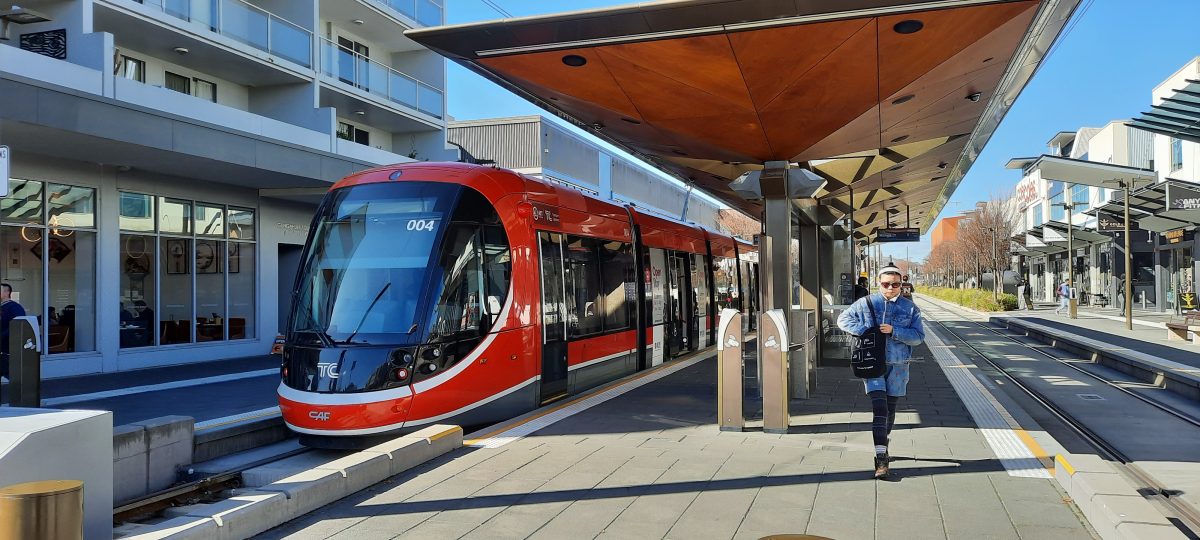
Light rail will be a lasting legacy. Photo: Ian Bushnell.
While the Greens opted to stick with supporting Labor as the governing party, Mr Rattenbury’s pragmatism allowed him to stay open to the possibility of working with the Liberals in a coalition government, one he would lead.
No doubt informed by his time in Cabinet, Mr Rattenbury was alarmed by the state of the finances and integrity investigations, and saw a chance to enter into a working arrangement with the Liberals that would overturn the ACT political consensus.
It was a radical proposition that was anathema to some Liberals and repulsive to the Greens grassroots, prompting the party’s entire campaign team, led by former ACT Greens deputy leader Rebecca Vassarotti, to quit.
Ironically, Ms Vassarotti could return to the Assembly through a countback, replacing Mr Rattenbury.
Mr Rattenbury says the decision to leave was based on no longer being able to give the 110 per cent he had always put into politics, not due to the uproar over his flirtation with the Liberals.
A deal with the Liberals offered him his last chance to be chief minister, and the process must have taken its toll. Indeed, some party members would have felt betrayed and lost confidence in him as leader.
A partnership with the Liberals may have been doomed, but Mr Rattenbury was always one to act in what he believed was the public interest. The Greens will be poorer for his absence in the Assembly.
How the Greens respond will be crucial to their future. If they shift to a more ideologically strident position and become distracted by peripheral issues, they could slip back to the political margins.
The new leader will have to forge their own path, but it would be churlish to eschew the style, substance and vision that Mr Rattenbury brought to the Assembly and made the Greens a credible choice.
Mr Rattenbury’s legacy is his contribution to a livable, inclusive city, and that has always been and will continue to be the Greens’ strength.
But it will also be how to cultivate support, build credibility and achieve change.