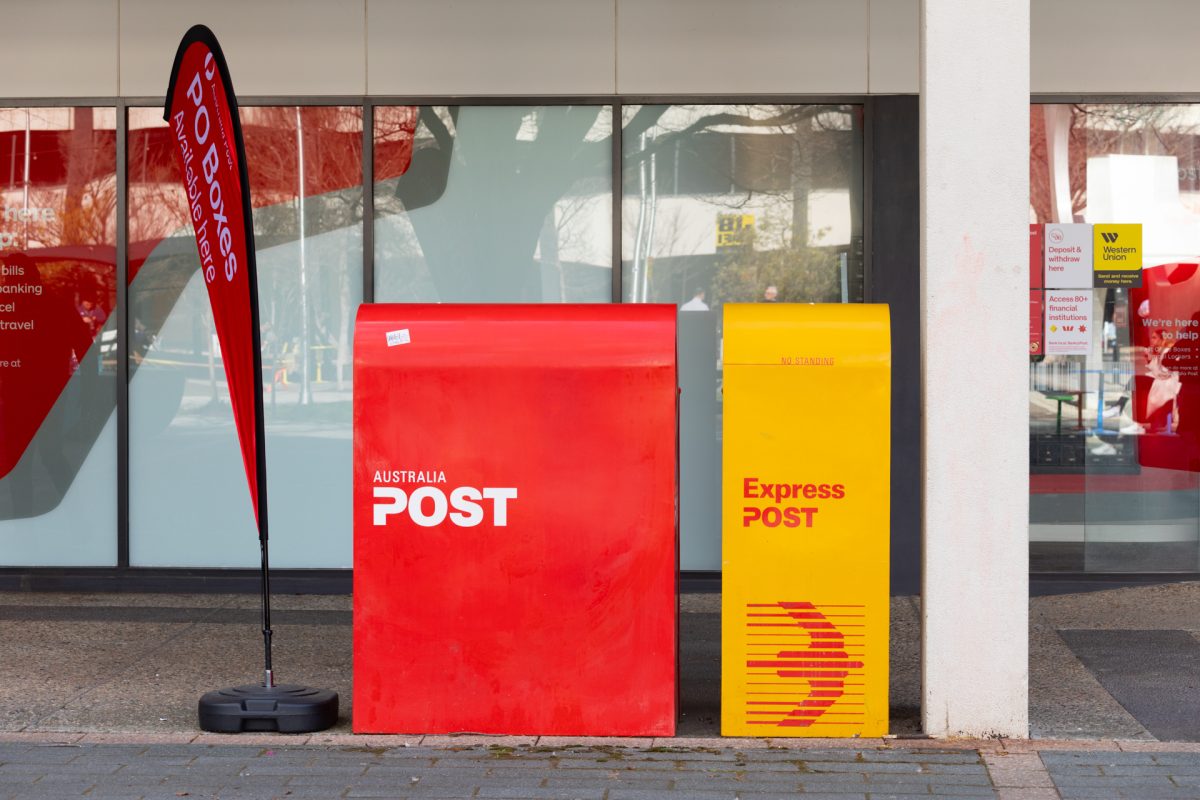
Australia Post is facing structural changes that required it to adapt while continuing to serve communities. Photo: Michelle Kroll.
The future of dozens of licensed post offices across Australia will come under parliamentary scrutiny after the Senate voted to establish an inquiry into Australia Post’s reported plans to overhaul its retail network.
At the centre of the inquiry is a leaked business case, Post Office Network & Licensed Post Office Reimagined, dated 9 June, which allegedly outlines plans to close up to 36 metropolitan licensed post offices in New South Wales and Victoria while encouraging regional and rural operators to move away from perpetual licences as part of a broader “format conversions” strategy.
The Coalition, which pushed for the inquiry, says the proposal could fundamentally change how postal services are delivered, particularly in regional Australia, where licensed post offices often serve as critical community hubs.
Under the reported plan, some metropolitan post offices would be converted into parcel handling facilities, while regional and rural outlets could be encouraged to transition from traditional licensed post offices to alternative operating models.
Those changes could involve relocating postal services into businesses such as pharmacies, newsagents and convenience stores, reducing some outlets to parcel agencies or, in some cases, replacing services with parcel lockers.
The inquiry will also examine whether Australia Post adequately disclosed its plans during Senate Estimates in May.
According to Coalition senators, Australia Post Group CEO and managing director, Paul Graham, did not refer to the board-endorsed strategy when he appeared before the Environment and Communications Legislation Committee on 27 May, despite extensive questioning about the organisation’s retail network.
“It is unacceptable we had to find out about Australia Post’s secret plan via a leaked document instead of directly from Mr Graham when he testified at Senate Estimates last month,” said Shadow Minister for Communications and Digital Safety Sarah Henderson.
“Australia Post should halt this corrosive plan, which has caused enormous uncertainty for LPO small business owners and local communities.”
The Senate inquiry has been tasked with examining Australia Post’s management of its retail network, including its consultation with licensed post office operators, representative bodies, shareholder ministers and other stakeholders.
It will also investigate the governance and decision-making behind the reported plans, the role licensed post offices play in regional, rural and remote communities, alternative business models for maintaining the network and whether evidence provided to Senate Estimates accurately reflects Australia Post’s internal plans.
Licensed post offices form the backbone of postal services in many smaller communities, often operating as locally owned businesses that provide banking, identity verification, parcel collection and government services in addition to traditional mail.
For many regional towns, they also serve as important community meeting points and as one of the few remaining face-to-face government service outlets.
Australia Post, however, maintains that the document is not a final blueprint for change.
Responding to questions from Region, an Australia Post spokesperson described the so-called leaked paper as part of an ongoing business discussion aimed at improving the long-term sustainability of its licensed post office network.
“As part of the LPO Reimagined program, a program specifically focused on the sustainability of LPOs, we are considering several options, including a voluntary buy-back trial,” the spokesperson said.
“It’s important to note that this does not impact LPOs located in rural or regional Australia; however, it is focused on certain metropolitan areas where there is a clear oversupply of post offices. For example, there are inner-city suburbs in Melbourne and Sydney where there are more than 70 post offices within 7.5km, all competing with each other.”
The spokesperson said no final decision had been made and any changes would continue to be developed in consultation with licensee representative groups.
Australia Post also said it remained committed to maintaining its network of 4000 post offices nationwide, including about 2500 in regional and remote Australia.
During the Senate Estimates last month, Mr Graham had also defended the organisation’s broader strategy, telling the committee Australia Post was facing structural changes that required it to adapt while continuing to serve communities.
“Australia Post needs to continue to invest in our people, network, facilities and services so we can delight our customers and communities, now and into the future,” he added.