28 February 2026

Spending out of control across all governments, new research warns

| By Chris Johnson
Join the conversation
6
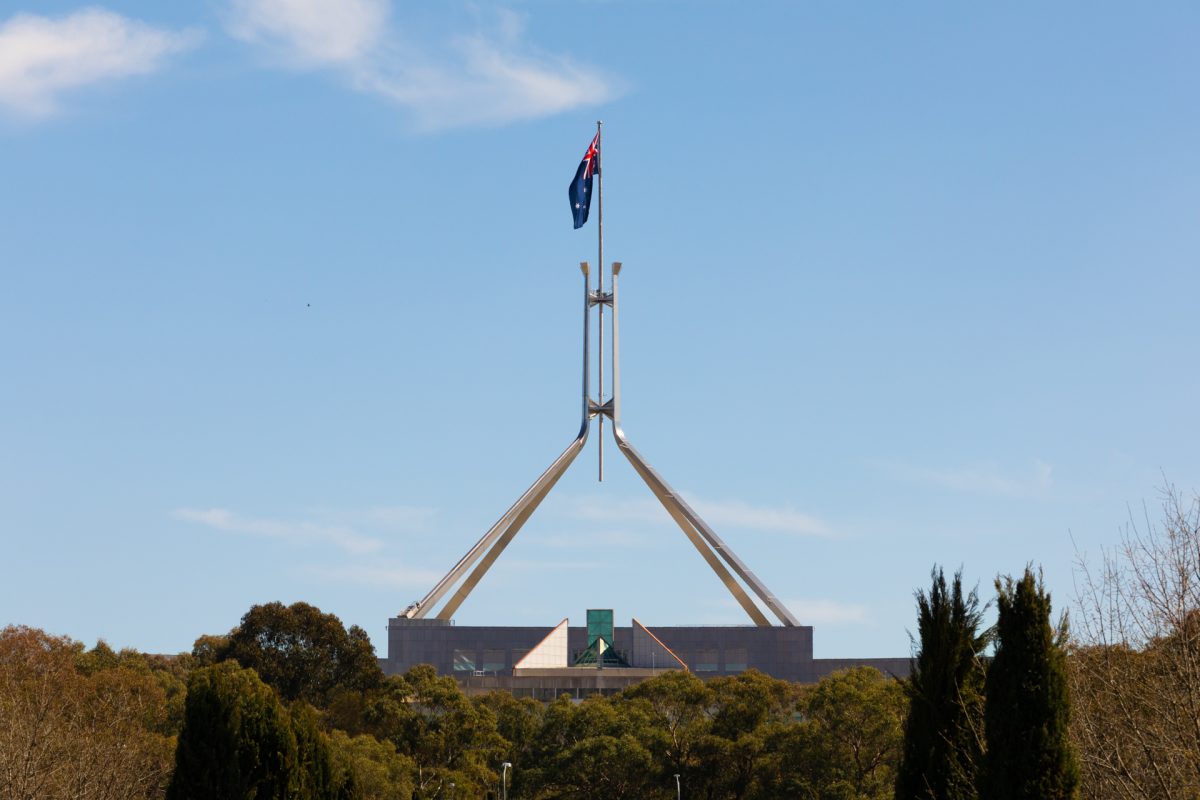
Parliament House

If governments don’t rethink their fiscal policy settings, budget deficits will be the norm for decades, new research says. Photo: Michelle Kroll.

An ageing population and governments bent on spending money without due consideration for future value will see Australia in greater debt than it has been for many decades.

There will also be two decades of continuous budget deficits if policies don’t change, according to just–released high-level academic research into fiscal sustainability.

Think tanks e61 and McKinnon have produced a report suggesting that by 2028, Australia will be on track for 20 consecutive years of combined state and federal deficits, because spending is consistently outstripping revenue.

The report Rising Pressures, Fading Discipline: A Review of Australia’s Fiscal Sustainability found the consolidated fiscal deficit, which combines federal, state and territory budgets, currently exceeds three per cent of GDP and is larger than in the years before the COVID-19 pandemic.

As a share of GDP, consolidated expenditure has increased from 34.7 per cent in the early 2000s to 38.2 per cent in 2024.

The biggest spending pressure is health, which has grown from 5.5 per cent of GDP in 1999 to 7.1 per cent today.

Meanwhile, education spending has stayed constant at around five per cent of GDP despite the population share of school age children shrinking.

READ ALSO Treasurer says former RBA governor has vendetta against Labor

E61 chief executive officer Michael Brennan said governments at all levels didn’t appear to be getting the policy settings right.

“Much of the recent growth in spending is explained by our ageing population which demands more labour-intensive services such as health, aged care and disability support,” he said.

“However, policymakers have chosen to increase spending on education and in-kind services such as childcare and the NDIS, often without a clear link to value-for-money outcomes.

“Over time, this will build pressure to raise more revenue, including from income tax, which is the workhorse of the Australian tax system.

“The income tax is by far the largest single source of tax revenue across all tiers of government. It funds federal programs but also indirectly underpins state services via tied grants.”

While it stresses there is no imminent debt crisis, the report notes that with renewed pressures ahead such as an ageing population and slow productivity growth, Australia’s fiscal options are narrowing.

Even if spending was maintained at its current share of GDP, the Federal Government will need to increase average income tax rates substantially over the next 10 years to achieve budget balance.

“Over the past two decades, Australia’s financial position has become increasingly fragile,” Mr Brennan said.

“Australian governments have been running a combined deficit every year since the Global Financial Crisis in 2008. Debt is higher after two global shocks and governments have struggled to rebuild fiscal buffers for the next one.

“With the tax system as it currently stands, we will be asking workers to pay a larger share of their income to fund a fiscal gap that has been building for two decades — and that’s before any new spending commitments are added to the ledger.”

READ ALSO Taylor wants a good look at government spending – and the public service

Without tax reform, the report states, spending restraint will be needed to avoid burdening future generations with a fragile, inequitable and inefficient Australian economy.

Governments are spending unsustainably and left to its current path, it is unlikely that government debt will naturally decline.

Slower productivity growth is providing less revenue to finance new or expanded services, while spending continues to rise as the population ages.

The report states that while this ageing is unavoidable, the fiscal cost depends on policy decisions that are made now, making an increase in government debt likely.

Larger government debt, it says, implies that future generations must pay for some current government expenditure and all levels of government will be less able to support Australians if faced with a large external shock.

“Potential directions include a renewed focus on efficiency in state service delivery, curtailing cost pressures through greater means testing of in-kind transfers and, inevitably, hard choices about priorities,” Mr Brennan said.

Federal Government spending is a hot topic right now with interest rates on the rise.

New Opposition Leader Angus Taylor has requested a bipartisan taskforce to monitor government spending and find ways to cut waste.

Treasurer Jim Chalmers has denied the request.

The Treasurer has also hit back at former Reserve Bank of Australia governor Philip Lowe who said Labor’s handouts were contributing to inflation.

Dr Chalmers accused Dr Lowe of having a vendetta against the government for not reappointing him to the RBA.

Free Daily Digest

Want the best Canberra news delivered daily? We package the most-read Canberra stories and send them to your inbox. Sign-up now for trusted local news that will never be behind a paywall.
Loading
By submitting your email address you are agreeing to Region Group's terms and conditions and privacy policy.

Join the conversation

6
All Comments
  • All Comments
  • Website Comments
LatestOldest
HiddenDragon9:46 pm 01 Mar 26

Altering the trajectory will take somewhat more than the politically limited (particularly in an increasingly fragmented electorate) options for changes to taxing and spending.

The crucial prior step will be to face up to the reality that our national economic model – a bloated, over-priced, domestically-focused services sector with first world living standards propped up by public and private debt and primary production exports – is unsustainable.

The closest we have come to dealing with that is “Made in Australia” – Labor’s scale model version of the Sanders/Biden “Green New Deal”, which is already shaping up to do far more for rent-seekers and gravy-trainers than it is for the creation of internationally competitive industries and businesses.

As the deflectors and apologists are always quick to point out, Australia’s public debt levels are still well below some of the fiscal disasters of the northern hemisphere, so nothing of substance will happen for some time yet – but this year’s federal budget will, of course, be hyped into the stratosphere as an epic of reform.

Excellent article Chris. Not only is government spending out of control, but Treasury forecasting is too with the revised $50 billion hit that was announced in MYEFO. This mob have had the chance to reduce debt and deliver long term surpluses – or at least balanced budgets – but have settled on delivering a structural deficit and entrenching a trillion dollars of debt.

We hear so much about intergenerational issues but the worst thing that’s being done is lumping our kids and grandkids with government debt which they will need to pay. Plus the hundred billions in interest which will go with it.

Speaking of the early 2000s, Monday is the 30 year anniversary of the election of the great Howard government, probably the best since Menzies. Hopefully we’ll get to read your article reminiscing on what good government did once look like. As the spending issues exemplify – and this applies to all government since – good government has been missing in Australia for two decades.

Since 2022, Labor has had two surpluses, & reduced the $1 trillion+ debt left by the LNP – Fact.
Howard worst Treasurer in Australian history, three consecutive recessionary quarters – Fact
Howard/Costello sold off just about all revenue raising Government owned entities, sold our gold reserves for a pittance, left unfunded “middle class welfare”, wasted surpluses on tax reductions for the wealthy – Fact
ALP better money managers – Fact.

Given the national debt under the Coalition never hit $1 trillion, it might be best to update those “facts”.

The rest of your rant can be categorised under the tag “opinion”.

Good article which outline some of the structural problems that have been building under government’s of all types back to Howard.

Unfortunately every time reform proposals are out forward, it’s always “someone else should pay”.

Spending growth needs to be curtailed through better targeted support and efficiency gains in large spending areas, rather than tinkering around the edges.

And structural tax reform is needed to reduce unnecessary and harmful concessions, raise the GST on everything and shift the taxation mix to more efficient options like taxing land. We rely far too heavily on taxing income over wealth and it is only leading us into bigger problems down the road.

Hilarious that after this article, we get a perfect example from the Goldfish, of the partisan nonsense that got us into and keeps us in this mess.

Not remotely interested in the facts or what the most efficient solutions are, the groupthinkers are just interested in spewing ideological garbage and cheap political point scoring.

Daily Digest

Want the best Canberra news delivered daily? Every day we package the most popular Region Canberra stories and send them straight to your inbox. Sign-up now for trusted local news that will never be behind a paywall.

By submitting your email address you are agreeing to Region Group's terms and conditions and privacy policy.