Kui Foon Chin Wong and her husband Samson Wong have called Canberra home for almost 50 years and watched the capital transform into a multicultural city. Photo: Supplied.
When Kui Foon Chin Wong and her husband Samson arrived in Canberra in the 1970s, finding Chinese food sometimes meant placing an order and waiting for the roast duck or char siu to make its way down from Sydney.
They remember one Asian grocery store in Civic, only a handful of Chinese restaurants, and perhaps 10 Chinese families in their immediate circle.
Canberra itself? “Very quiet,” Chin said.
Almost 50 years later, the couple, known simply as Chin and Sam, walk through a very different capital.
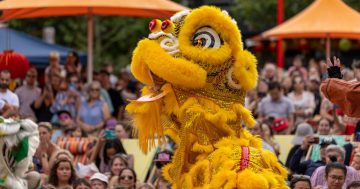
Chinese supermarkets and restaurants are scattered across Canberra. Lunar New Year is celebrated publicly. Thousands spill into Civic for the National Multicultural Festival. And their daughter grew up never questioning whether being Chinese made her any less Australian.
For Chin and Sam, both now in their 70s, that transformation is deeply personal. They did not simply watch multicultural Canberra emerge. They were among the migrants who helped shape it, which makes it difficult for them to see questions about migration, race and belonging that they thought Australia had largely moved beyond returning to public debate.
“You advance two steps, and then you go back two steps,” Sam said.
“We thought that multiculturalism was a success story.”
Their Canberra story began at a remarkable moment in Australia’s history. The White Australia Policy, established after Federation to restrict non-European immigration, was progressively dismantled after World War II. The Whitlam government eliminated it in the 1970s, introducing policies like the Racial Discrimination Act 1975.
Sam secured a Commonwealth Public Service job soon afterwards, bringing the young family to a capital where Asian faces were still uncommon. They arrived with a daughter not yet two and were initially accommodated at Hotel Acton, with meals and rental assistance provided as part of Sam’s relocation package.
They eventually settled in Chifley. Chin, a nurse trained in Melbourne, found work at Woden Valley Hospital, now Canberra Hospital. Their daughter went to childcare in Pearce. She could not speak English and Chin remembers her as almost the only Chinese child there.
But Chin remembers the childcare workers with affection. “They’re very good to her,” she said. Within months, their daughter was mixing Chinese and English words together.
Chin’s own adjustment to working life was not always as easy. She had specialised knowledge in fetal monitoring and worked in maternity. One day, while trying to tell a team leader about a patient having difficulty breastfeeding, she felt she was being ignored.
“I said, ‘Excuse me, I’d like to tell you about this, nurse; could you come and help me?’ She turned around and said, ‘Can’t you speak English?’”
Chin could speak English.
“I just looked at her, and I said, ‘Well, you don’t understand me?’ She said, ‘No. Well, can’t you speak proper English?’ So, I just walked back.”
It was not the last time her accent became an issue. After completing a degree in 1983, Chin sought clinical teaching experience at the school of nursing. She remembers a senior nursing director telling her, “We do not want people to have accents to be teaching.”
Sam, meanwhile, developed his own way of dealing with the challenges of being a migrant in 1970s Canberra. For him, the idea that newcomers were simply “welcomed” into Australia does not quite capture the experience of his generation.
“This welcoming bit, it’s a myth,” he said. “When you come to a country, you have to earn respect.”
He believes families like his did exactly that – through their work, raising children, joining community organisations and contributing to the city around them.
“We’ve been treated very well, because people know what we’ve done and what we contribute,” he said.
Sam remembers being one of very few Asian employees in the Federal Public Service. His experiences encouraged him to become active in the union movement, and he eventually spent about 20 years as a national union delegate.
When he believed a manager was treating him differently, Sam says he was prepared to take the matter directly to the secretary of the department.
“I did it, not just once. Many times!”


But those experiences are only one part of the Wongs’ memories of early Canberra.
The city’s small size meant its tiny Chinese community found each other quickly. “Everybody seems to know everybody,” Chin said. “Once you’re here, you know somebody, and somebody knows somebody.”
Restaurants became informal meeting places. There was Happy’s in Civic, yum cha in Dickson and later Beijing Restaurant in Phillip. Someone would introduce a newly arrived family to another, and gradually a community took shape.
At the single Asian grocery shop Chin remembers in Civic, families could order food unavailable locally. For some celebrations, even that wasn’t enough. “In those days, we couldn’t even get mooncake,” Chin said.
The family would drive four-and-a-half or five hours to Sydney’s Chinatown to shop, eat and soak up an atmosphere Canberra did not yet have.
Back home, they created their own. “We did it ourselves,” Chin said, laughing, remembering the early Lunar New Year gatherings.
Small dinners grew into larger community celebrations. Chin and Sam became involved in Chinese New Year events in Dickson and multicultural activities, while the couple later helped establish the Chinese Australian Association of the ACT.
Sam says he was also among those involved in the early development of what became Canberra’s National Multicultural Festival.
As Canberra changed, so did the Chinese community. Universities attracted more international students in the 1980s. New arrivals came from Hong Kong, Taiwan, Malaysia, Singapore and mainland China. The predominantly Cantonese-speaking community became larger and more diverse.
Unlike some larger Australian cities, however, Canberra never developed one concentrated Chinese enclave.
“We don’t have a ghetto,” Sam said. “It’s a positive thing,” Chin agreed.
Their own lives expanded well beyond the Chinese community too. Sam is approaching 50 years with the Lions Club; Chin has been involved for about 25. Their friendships spread across cultures and backgrounds.
And Chin is careful not to define their experience of Canberra by the difficult encounters. “To be fair,” she said, many of the people they came to know were curious about other cultures. Some had travelled and wanted to learn about where the Wongs came from.
Perhaps the most powerful measure of how much Canberra had changed was growing up in their own home.

The little girl who entered childcare unable to speak English later attended St Clare College.
Unlike her parents, Chin said, she grew up surrounded by children from many backgrounds and never felt she first had to prove she belonged. “She’s never been brought up that she’s different to the others, because they all grew up as Aussie kids,” Chin said.
“They know where they come from, but they never question whether they’re different.”
One generation arrived acutely conscious of being different. The next simply grew up as a Canberran. For Chin and Sam, that was what decades of multiculturalism had achieved.
It is also why today’s debates trouble them. Sam is frustrated when migration discussions focus on what newcomers may initially need from Australia, without acknowledging what they and the generations after them contribute over a lifetime.
“People live here, not just for one year; they live here for 10 years, 20 years, and their children and their grandchildren live here,” he said.
“The long-term contribution to the Australian community has to be amplified, because nobody talks about that!”
The Canberra the Wongs arrived in was a place where roast duck came from Sydney, Chinese festivals were largely celebrated among small groups of friends, and an accent could make a young nurse feel like an outsider.
The Canberra their daughter grew up in was already different.
After spending much of their lives watching Canberra become more multicultural, Chin and Sam hope the city keeps moving in the direction their daughter’s generation has come to take for granted.
What was Canberra like when your family first arrived? If you’re from a multicultural background and have lived here for more than 50 years, share your story at nalvi@region.com.au