
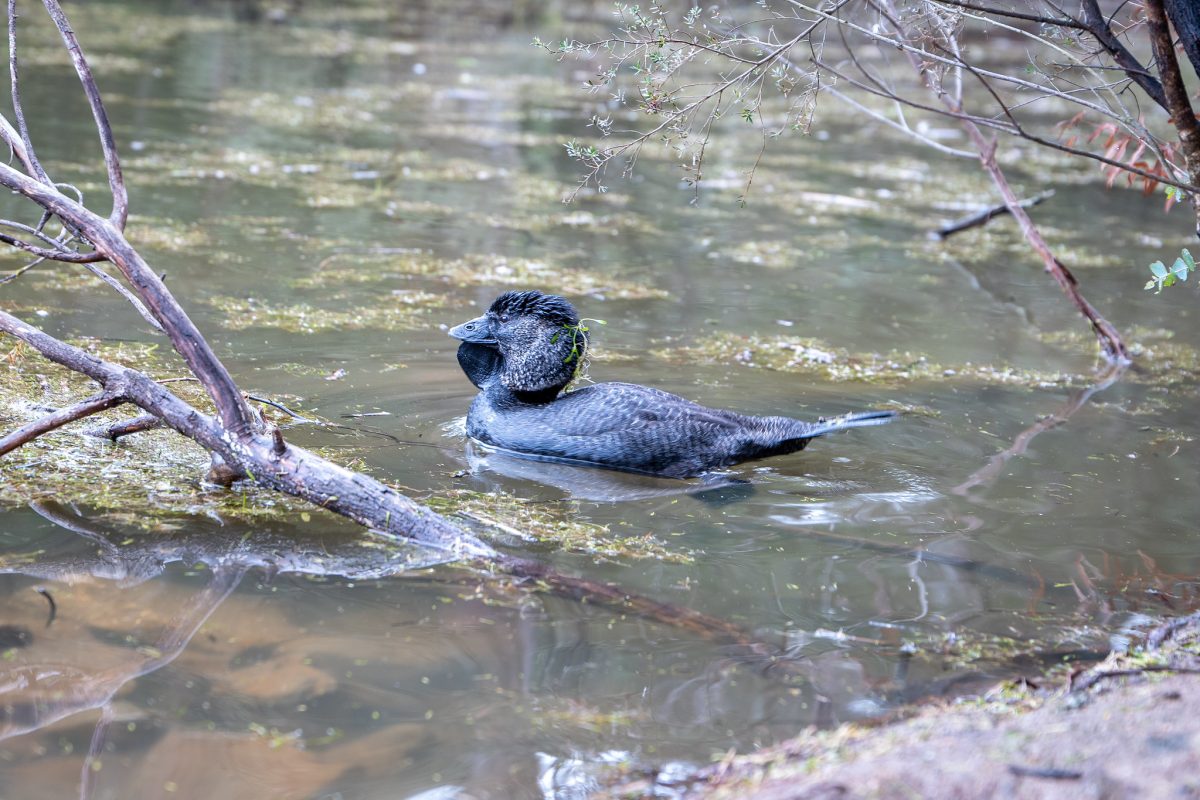
Little Ripper, the Musk Duck. Photo: ACT Government.
Little Ripper, he’s called. And with good reason.
He’s a musk duck, Australia’s largest duck species, and is the last surviving member of his family out at the Tidbinbilla Nature Reserve. And this year, he also became the oldest known musk duck in Australia. Indeed, the world!
“Happy Birthday to Ripper – Tidbinbilla’s resident musk duck, who turned 27 this January,” the ACT Parks and Conservation Service wrote in a Facebook post.
“As far as we know, this makes Ripper the oldest-living musk duck in the world.”
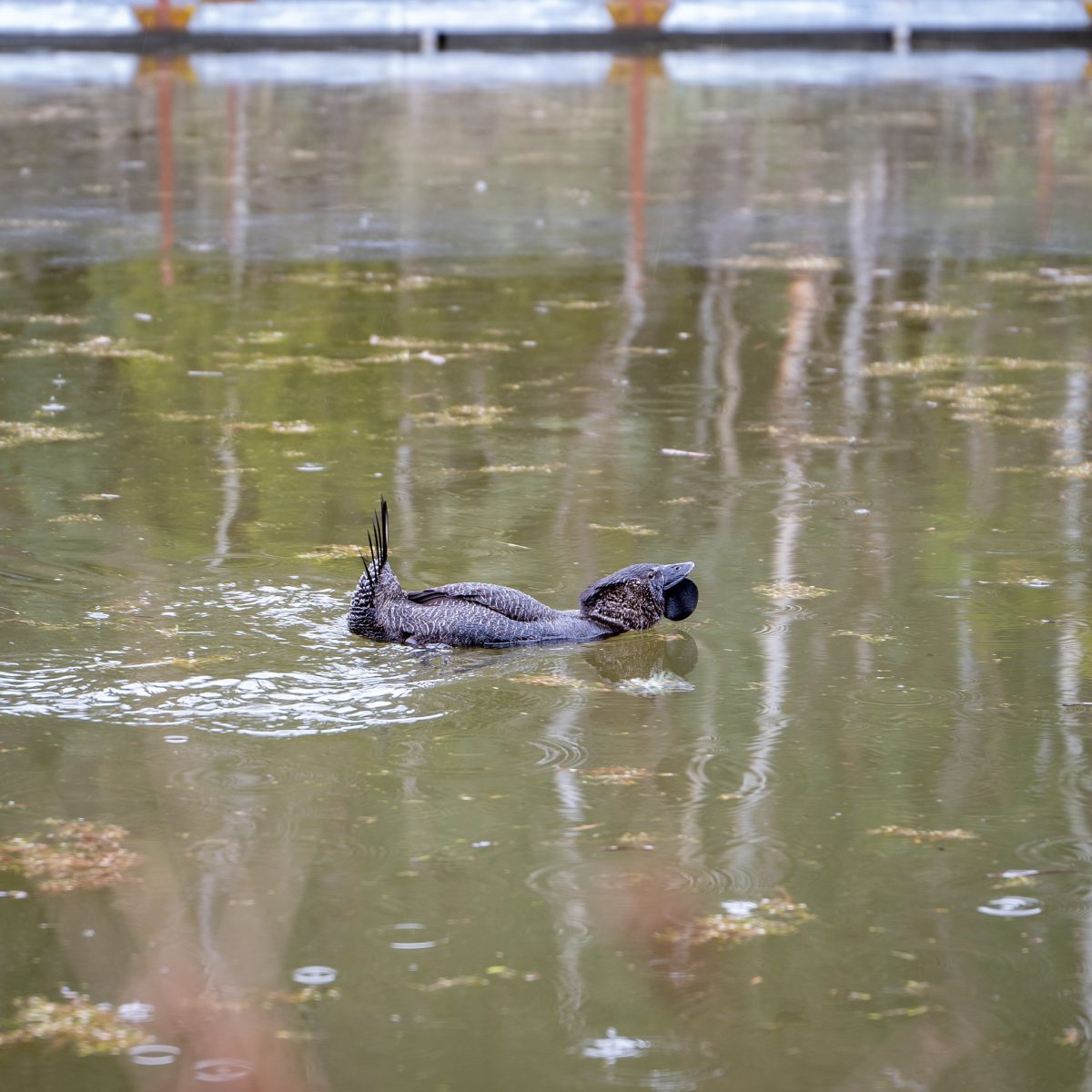
Male musk ducks can grow to 73 cm long. Photo: ACT Government.
What is a musk duck?
A fully grown musk duck, like Little Ripper, is not actually so little, measuring between 47 and 73 cm. They’re usually found in deep freshwater lagoons, ranging from northern Western Australia all the way along the south and east up to southern Queensland.
The musk part of the name comes from the pungent odour the males produce from a gland on their rear end – designed to help attract females during breeding season.
He can also inflate a lobe of skin on the throat to create a really loud whistle.
“You’d comfortably hear him from 60 to 80 metres away,” Tidbinbilla ranger Scott Ryan says.
“It’s pretty loud.”
Musk ducks dive for their food, hence a shape “more like a submarine” than other ducks, with long and sleek bodies and legs that point backwards.
A less endearing point is that they’re also the only meat-eating duck species in Australia.
“They mostly feed on aquatic invertebrates, like beetles, snails and crustaceans,” Scott adds.
“But they’ll also eat fish and frogs and – more unpleasantly – other tiny ducklings. Not generally from their own species, but certainly other species of ducklings.”
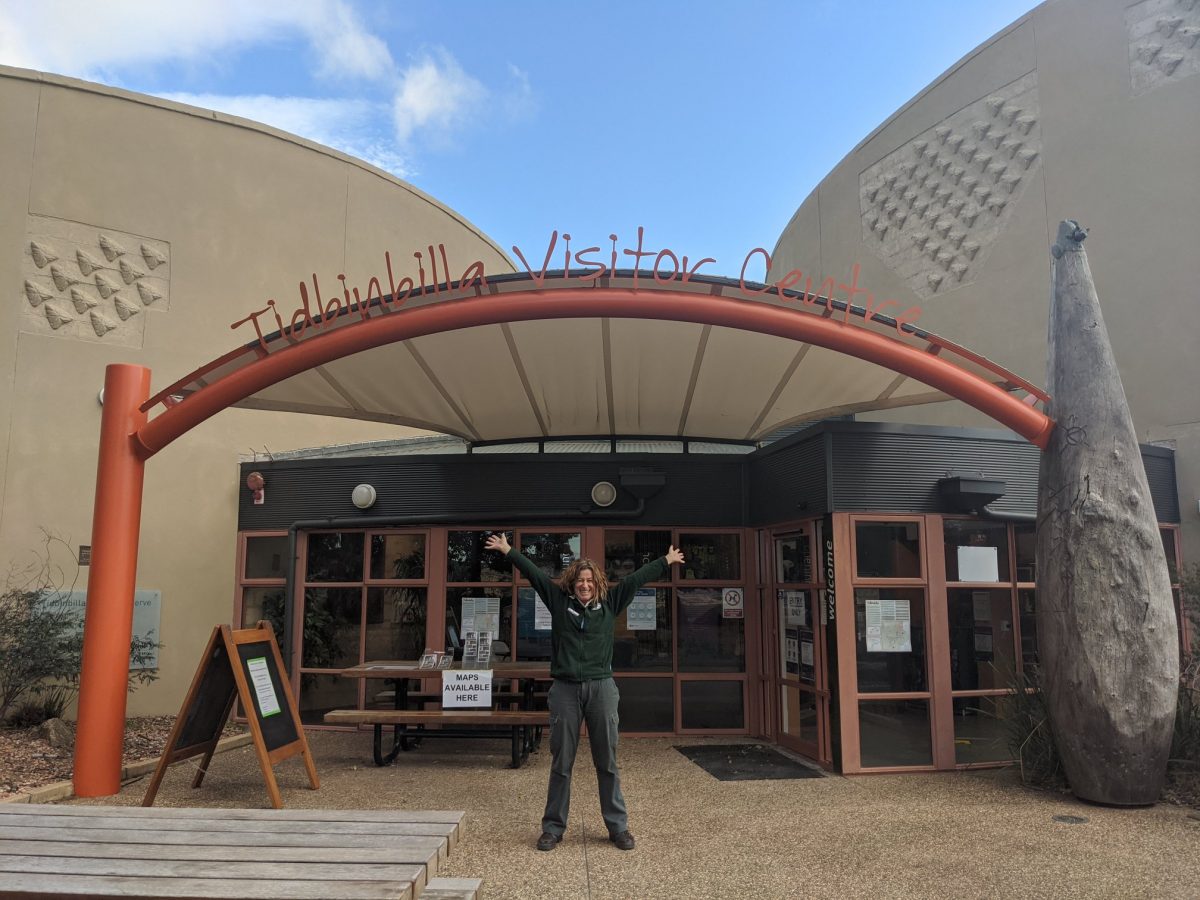
Tidbinbilla ran a musk duck breeding program in the 1980s and ’90s. Photo: ACT Parks and Conservation Service, Facebook.
How this duck became ‘Little Ripper’
The Australian musk duck population is mostly secure, but Tidbinbilla did run a breeding program for the species in the 1980s and 1990s.
But Little Ripper, hatched on 5 January 1999, is the last surviving member of his family. The rest perished during the 2003 bushfires.
“Ripper is one of the very few animals out here that actually survived the fires, and certainly the only musk duck,” Scott says.
His name is actually carried from his father, though.
Ripper Senior was hatched in 1989 from an egg that had been handed into the rangers, and not one they ever expected to come to anything.
“Someone had found an egg, and handed it in to Tidbinbilla, and the rangers didn’t think that it would hatch because it actually smelled a bit bad – which is often what happens when you have a few eggs in a nest and a couple go bad,” Scott explains.
“But they hatched it, underneath a Bantom Hen, and the person there at the time rang the head of wildlife and their response was ‘You little ripper’.”
The name has stuck through two generations now.
A cushy retirement
Scott says Little Ripper is a gentle soul, certainly not aggressive and usually only interested in you if you’re carrying a white bucket of food.
“He comes up close enough to see if you’ve got a fish. If you don’t, he leaves you pretty quick.”
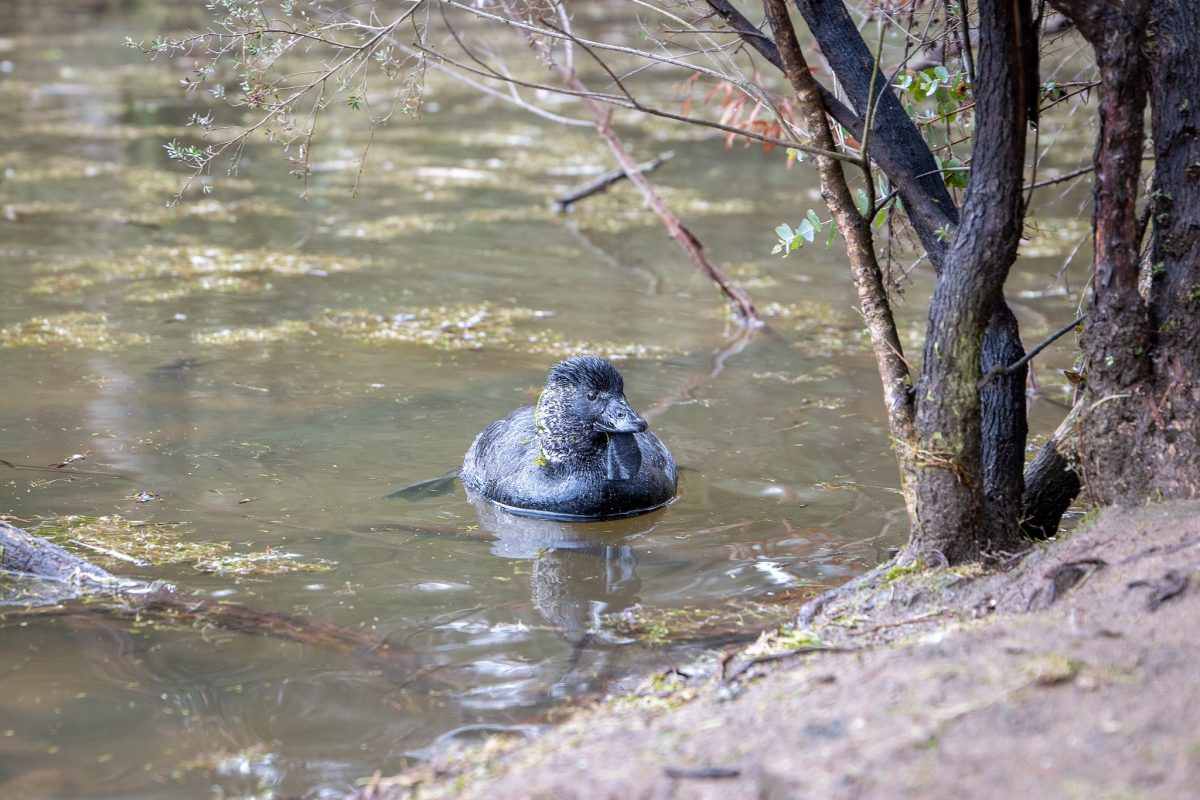
Little Ripper inherited his name from his father. Photo: ACT Government.
He and the other ducks are fed grain and vegetable matter every day, but how hungry he is depends on how much food he’s been able to find for himself by foraging. He certainly shows no sign of slowing down in his old age.
“Musk ducks normally live for about 20 years in the wild, but obviously Little Ripper lives in captivity and doesn’t have to deal with predators like cats and foxes,” Scott says.
“But the reality is he lives a pretty normal, wild-like kind of life.”
Scott says the happy occasion passed by just like any other day for Little Ripper – with the exception of an extra fish.
“He still carries on with courtship behaviour, kicking his legs and splashing and letting off that really high-pitched whistle. It’s quite a spectacular sight to see.”
Tidbinbilla Nature Reserve’s Temporary Visitor Centre is open from 9 am to 5 pm every day (except Christmas Day).