2 September 2026

The road toll is rising - are e-scooters and gig workers contributing?

| By Peter Strong
Join the conversation
10
People riding a Lime e-scooter and e-bike past the front of Parliament House, Canberra.

Government is encouraging active travel but are people being seriously injured because of it? Photo: ACT Government.

Region Canberra recently published the story: Enough of these shenanigans: Is Canberra’s love of Lime turning sour?

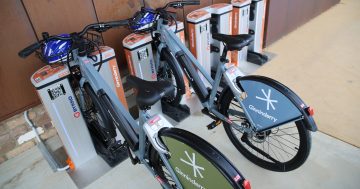
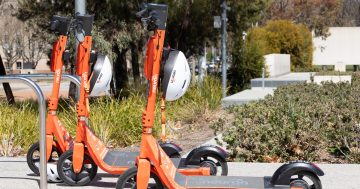
This reported that in April, 1800 e-scooters and e-bikes suddenly hit the roads. Four months later there are complaints about rider behaviour, dumped scooters and bikes obstructing paths, and concerns about intoxicated riders.

And in the story is a really important point. There is a lack of consistent data.

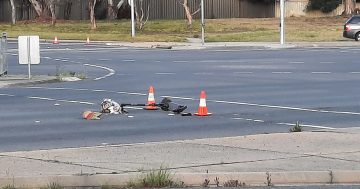
The national road toll has been rising.

In 2024, around 1300 Australians died on our roads – up from the low point reached during the pandemic (understandably).

Motorcycle deaths have risen particularly sharply. The number of injuries has also increased.

In that time our streets have changed. There are more e-scooters, more e-bikes, more motorcycles and a lot of people riding around delivering food for a living.

And we don’t really know how much these changes are contributing to road deaths and serious injuries – if at all.

E-scooters are fast enough to cause serious injury while offering the rider virtually no protection. They also challenge our transport system. Pedestrians, cyclists, motorists and e-scooter riders are increasingly sharing spaces that weren’t necessarily designed for all of them.

We are encouraging a new form of transport while struggling to answer a valid question – are people being seriously injured because of it?

And then there is the recent Fair Work Commission ruling which guarantees delivery workers roughly $31.30 an hour for “engaged time”- that is, the period from accepting a delivery until completing it. It also provides accident insurance and other protections.

The extra protections are welcome. And yes, some of the cost will eventually be passed on to consumers. If someone wants to pay $40 for a cold hamburger and chips, that’s their call.

But does the new higher pay encourage safer riding and driving – which is the claim – or does it still reward completing each delivery as quickly as possible?

READ ALSO Young bear brunt of rising e-scooter and e-bike injuries, landmark report finds

If a person is paid for the delivery and not for the time spent waiting for the next one, is there an incentive to complete deliveries quickly? The faster one delivery is completed, the sooner another can begin.

And anyone who spends time on Australian streets will recognise some of the behaviour that results: riders moving quickly between roadways and bike paths, filtering between cars, taking shortcuts, and sometimes treating traffic lights as a suggestion.

We know people are being hurt. Safe Work Australia recorded 10 food-delivery workers killed at work between 2019 and 2021. NSW records from 2021 identified 183 injury claims and four fatalities involving food-delivery gig workers.

Menulog reported 85 injuries and four serious injuries nationally over roughly 17 months in 2020-21.

These are snapshots rather than a comprehensive national picture – which is a problem.

We have national data on road deaths. We have national data on workplace fatalities. But we don’t have reliable national data on how many gig workers are injured on the job.

READ ALSO WATCH: E-scooter rider caught overtaking car on Southern Cross Drive

The increase in gig-worker pay has been mainly justified on safety grounds. But if it is a safety reform, we should be able to measure whether it worked.

There is already research, for example, that has found fewer accidents when transport drivers are paid per hour and more when they are paid per delivery.

If a worker is financially rewarded for completing jobs faster, there can be pressure to work faster. If a worker is paid for their time, there will be less financial incentive to take risks to save a few minutes.

There is another group missing from much of this debate. The delivery rider is sharing the road and public spaces with pedestrians, cyclists, car drivers and their passengers, people walking their dogs, fitness addicts, old people, kids coming home from school, buses, trams and so on.

The delivery rider may be trying to earn a living, but are others not considered in this arrangement?

This isn’t an argument against e-scooters or gig work, or against giving poorly protected workers better insurance and minimum standards. It is an argument for taking road safety seriously.

We must collect data that allows us to see whether changes to gig-worker payment arrangements actually make roads safer because we have fundamentally changed who is using our roads and how they are being used. Perhaps those things are unrelated. Perhaps they aren’t.

If we are going to call something a safety reform, let’s make sure it actually makes people safer – the riders, drivers, pedestrians, cyclists, teenagers and children.


Free Daily Digest

Want the best Canberra news delivered daily? We package the most-read Canberra stories and send them to your inbox. Sign-up now for trusted local news that will never be behind a paywall.
Loading
By submitting your email address you are agreeing to Region Group's terms and conditions and privacy policy.

Join the conversation

10
All Comments
  • All Comments
  • Website Comments
LatestOldest

Thanks for pointing out the need for better data. Existing hospital data collection systems are unlikely to capture whether people injured on an e-device were on a legal one or an illegal one – so we don’t know how big a safety problem that is. Most delivery riders seem to be on throttle-controlled bikes which are outside the scope of a legal e-bike. We might need another vehicle class for these and appropriate training and licensing. Surprisingly, we don’t see evidence of enforcement. This could be put down to resourcing or wilful blindness. Without some obvious enforcement there is little deterrence to use of illegal devices and general disregard for road rules and courtesy.

I rode a motorcycle for 20 years, and invested in leather jacket, boots and gauntlets and a full face crash helmet – and an attitude of extreme caution coupled with some assertiveness. The bicycle, scooter and e-bike riders are see almost always have none of these….

What happens if a pedestrian is injured by a Lime scooter? E-scooters are not motor vehicles requiring traditional Compulsory Third Party registration. Most riders of rental scooters won’t have their own separate third-party liability insurance. Lime carries its own insurance so if an accident occurs due to mechanical defect (like brake failure) the company covers itself for injuries to the rider, but the Lime user agreement states the user of the Lime scooter is solely responsible and liable for all consequences, claims, damages injuries, costs… etc etc as a result of their use. So if the Lime scooter rider doesn’t carry their own insurance then the injured pedestrian will have to claim compensation directly from the scooter rider. Which will be problematic if the scooter rider is a kid. We regularly see young Lime scooter riders around Canberra regualrly putting pedestrians and themselves at risk. Perhaps the ACT Government could be sued after an accident for contributory negligence for allowing them on the road.

Capital Retro11:19 am 02 Sep 26

What is a “gig-worker”?

Douglas Catling9:15 am 02 Sep 26

What?

If they’re being paid an hourly rate while engaged, that’s obviously an incentive to stay engaged longer, i.e. to slow down the delivery.

What on Earth makes you think an hourly rate will cause them to minimise their time engaged?

Quite simply, cars are dangerous, cyclists (delivery riders or not), pedestrians, and scooter riders are not dangerous but vulnerable. Cars are getting more dangerous (heavier, higher bonnets) and walking and cycling are becoming more common means of transport. The solution is obviously not to disuade people from using more vulnerable modes of transport, it is to use infrastructure to protect them, and maybe to disuade people from using more dangerous forms of transport (high-bonnet US style pickups, which are also particularly dangerous to people driving conventional cars, but also suvs in general compared to sedans are more dangerous to pedestrians and cyclists).

How about bikes stay off the damn road and use the paths/lanes taxes went to. Or how about they pay insurance and registration to be on the road. Don’t blame the cars when entitlement and idiots also use bikes/e-scooters running lights riding 5-6 deep into a lane to go get a latte.

I think they generally do when the bike paths are suitable for their needs. Canberra’s are mostly suitable for people who ride for recreation, and some are suitable for people who ride for transport. But they are not suitable for people who ride for sport, and they are not sufficient for some people who ride for transport (I.e., if they don’t go from where someone is to where they need to go, in a sufficiently direct manner, that person must also use the roads).

Totally agree! Unfortunately, the horse has bolted for now on unnecessarily massive cars, but the ACT Govt could help by reducing speed limits in neighbourhood streets, installing more pedestrian crossings, and other traffic calming measures.

Daily Digest

Want the best Canberra news delivered daily? Every day we package the most popular Region Canberra stories and send them straight to your inbox. Sign-up now for trusted local news that will never be behind a paywall.

By submitting your email address you are agreeing to Region Group's terms and conditions and privacy policy.