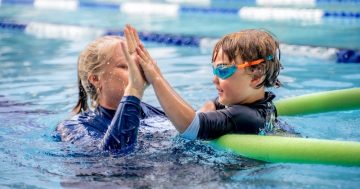

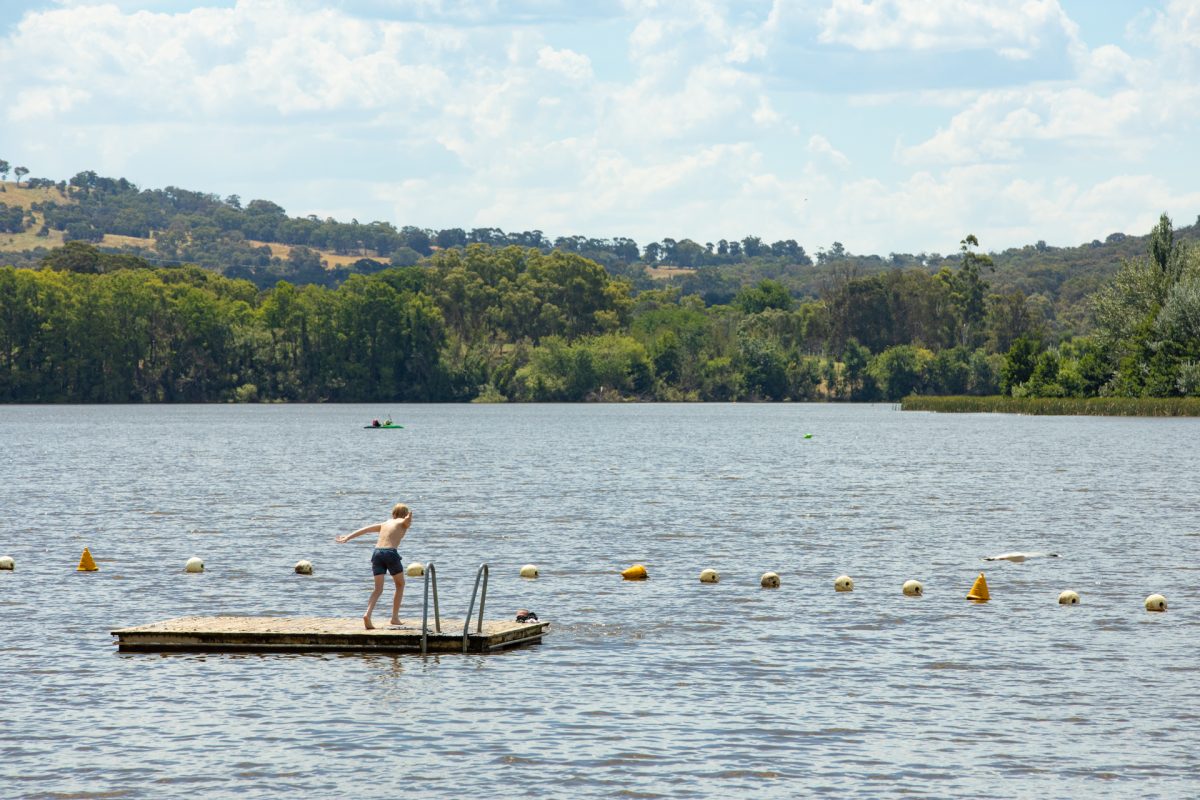
There are plenty of ways to keep yourself safe in the water this summer, from checking water quality levels to supervision and never swimming alone. Photo: Michelle Kroll.
Whether you’re in the Territory or popping across the border, inland waterways remain the leading locations for drowning deaths in Australia.
Predictions are pointing to another hot summer, with Royal Life Saving ACT regional manager Lucas Hayden urging everyone to take time to prepare before the mercury really starts to soar.
“Preparation is the key to prevention. Many drownings happen when people aren’t expecting to be in danger,” he said.
“They fall in, misjudge the conditions, or overestimate their ability. Being summer-ready is about doing a few simple things now that could make a difference later.
“It’s about understanding the risks, planning ahead, and making safe choices so you can enjoy the water with confidence.”
In the ACT, 83 per cent of people who died by drowning in the past 20 years were male, with 35 per cent of drowning deaths occurring while swimming or doing other water activities.
City and Government Services Minister Tara Cheyne said people needed to remember that swimming holes and rivers were natural areas that were unpredictable and conditions could change quickly.
“We want everyone to be able to enjoy our waterways, but to do so safely. No matter how confident you are in and around the water, hazards like hidden rocks, strong currents and sudden depth changes can catch you by surprise,” she said.
“We know that simple actions, like checking conditions, swimming with others and wearing a lifejacket, can save lives.
“Taking small steps to protect yourselves and others can make a big difference this summer, so please take every precaution when visiting our parks and reserves to make sure you can enjoy them safely.”
Many Canberrans will also flock to the coast and other areas during the summer, so it’s important to remember that 13 per cent of the people who drowned in NSW lived more than 100 km from the drowning location.
Swimming remains prohibited in the Molonglo River Reserve, Googong Foreshores, Jerrabomberra Wetlands, Lower Cotter Catchment, and the Cotter Catchment within Namadgi National Park.
Warning signage in multiple languages has been installed across the Cotter Recreation Area and Murrumbidgee River Corridor to ensure hazard messaging is clear and accessible to the Canberra community.
The ACT Government also regularly monitors Canberra’s lakes, ponds and rivers for changes in water quality.
Recreational areas may be closed for primary and/or secondary contact if there are spikes in the levels of bacteria or blue-green algae, so people are advised to check the current water quality conditions and closure advice on the ACT City Services website.
Some pets have died or become seriously sick in Canberra recently due to suspected or confirmed contact with blue-green algae-contaminated water.
An ACT Government spokesperson told Region that visual inspections and sampling frequency were increasing for the summer months, and that additional online education material about the potential risk to dogs was included.
“[We have] installed temporary Warning Signs for Algae Contamination at key beaches during higher risk periods. These signs contain a QR Code to the City Services Water Quality in our lakes, ponds, and rivers page and can be reinstalled during periods of high risk,” they said.
“Discussions are continuing with ACT Government agencies on developing new signage at waterways with advice on animal and human safety.”
Ways you can reduce your risk around waterways this summer include:
- Research where you are going and understand local dangers before you head out
- Never swim alone and always tell a trusted person where you’re going. Supervise children closely near water
- Know your limits and be honest about your swimming ability
- Avoid hidden dangers such as strong currents, slippery rocks, and changing depths
- Check weather conditions and stay out of the water during floods or after heavy rain
- Wear a lifejacket when boating or kayaking
- Be prepared for emergencies by carrying first aid supplies and multiple communication options
- Locate emergency phones near remote waterways in case of poor reception
- When checking for hazards in the water, take a moment to assess the water for any visible signs of algae or unknown debris floating on the surface.
Alerts can also be found at Parks ACT.