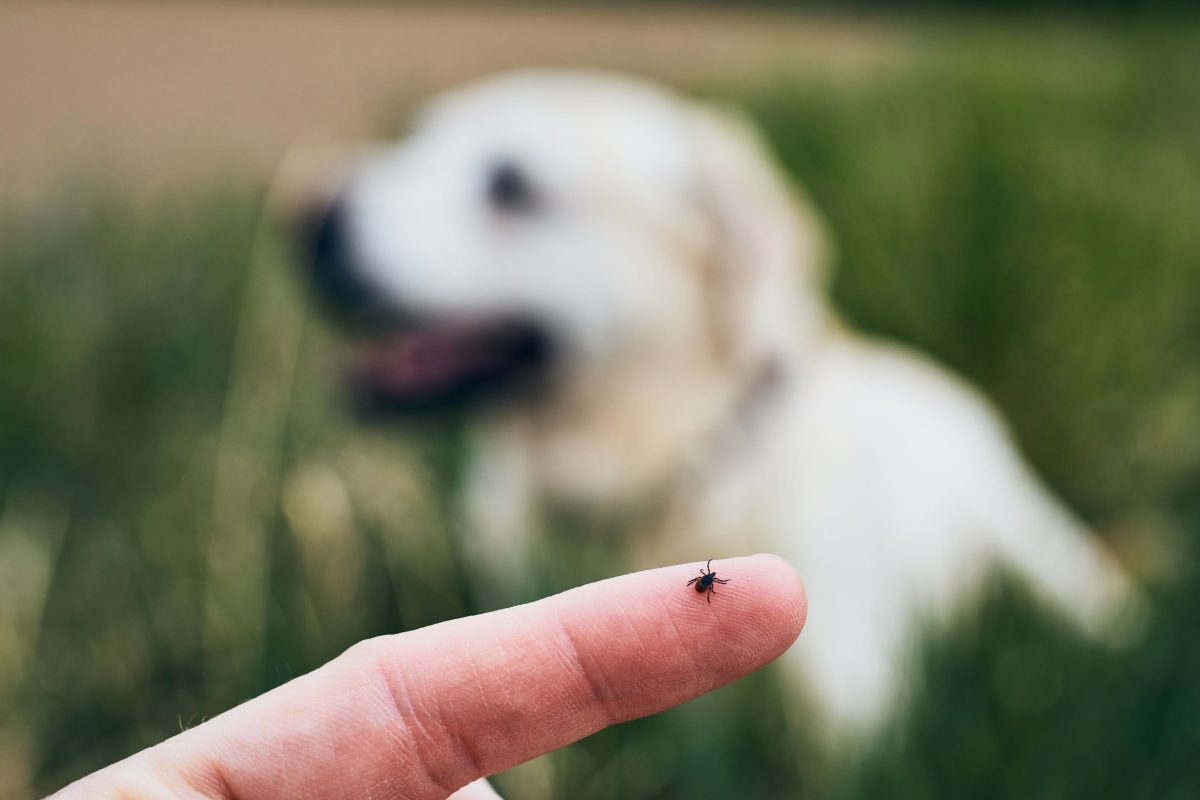
We might think of ticks as a threat to coastal animals, but any household can be affected. Photo: Chalabala.
Paralysis ticks “haven’t really gone away” over wintertime, leading regional vets to urge pet parents to make sure their four-legged friends are protected.
Australian paralysis tick – also known by its scientific name Ixodes holocyclus – is found along the east coast.
While it used to be most active in the warmer months, coinciding with when more people are out in nature, that appears to have changed.
In late August, Bomaderry Veterinary Hospital warned that tick cases had already been detected.
“This year, we have seen an unbelievable number of paralysis tick cases, and what is particularly concerning is that we have been seeing them all year, not just during the usual spring and summer months,” they wrote on social media.
“And now, as we head into spring, we are already seeing the number of cases increase.”
Snowy Vets’ Dr Grace Butler told Region that the mountains are now seeing cases into April and May, several months after it was traditionally most active.
“It’s definitely concentrated more towards spring and summer,” she said.
“We have noticed, the last couple of years, that the tick season is not necessarily a season … We are still recommending that people use prevention all year round.”
She said most of their tick cases come after hours through their Cooma location, as pet owners realise something isn’t right with their animals over time.
“Quite often these cases start with quite mild clinical signs … which owners come home to, and it’s not really that big of a deal. But as the night progresses, you see the clinical signs.”
“All of our cases have some core history [of] travelling to the coast without protection, or someone’s arrived from the coast [in the home].”
Infection can be deadly within three to four days of the tick attaching.
Early symptoms include tiredness, loss of coordination in the hind legs, loss of appetite, vomiting and breathing difficulty.
Dr Butler said preventative medications can “100 per cent” keep an animal alive.
“I say to clients, prevention is cheaper than treatment, or trying to cure,” she said.
“It comes with less risk of the animal dying, which is a real factor when we start talking about tick paralysis.”
Dr Gianna Zuch of Braidwood Veterinary Surgery echoes the need for ongoing protection.
She believes that Braidwood’s position further inland means they see fewer tick cases than their coastal counterparts.
While there aren’t any known tick ‘hotspots’ locally, she said it’s still important that owners keep their pets up to date on medications throughout the year.
“We’ve heard, anecdotally, that people down the coast are seeing paralysis ticks all through winter, because it’s been such a warm winter … There hasn’t been a tick season – they’re just all year round now.
“They haven’t really gone away as they normally do between May and September.”
If a tick bite is suspected, pet owners should call their vet immediately for advice and carefully check their pet’s coat.
“We see so many snake bites and a lot of the symptoms overlap. In the summer, if the dog has been to the coast, that’s a possibility,” Dr Zuch said.
“It’s just doing a really thorough tick search and checking with the owners if that dog is on an effective tick prevention [medication] to try and rule it out.”