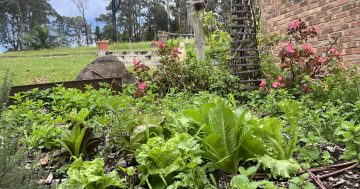
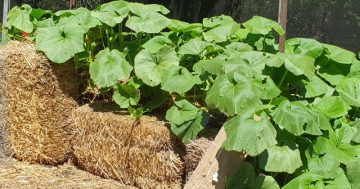
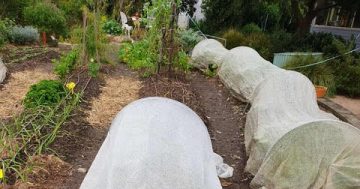
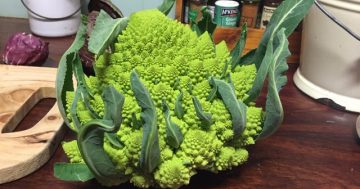
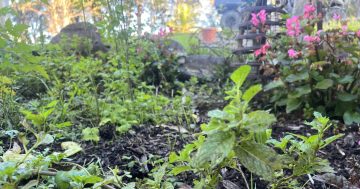
Now is the time to start planting lots of vegetables. Photo: Wynlen House.
The exciting part of beginning a new season is speculating about the weather. Happily it looks like March will bring with it a bit more rain and some cooler weather, but overall, warmer than usual days and nights will persist to the middle of the season. In other words, good food growing weather.
There are plenty of vegetables to be planted, as well as late summer produce to be harvested such as tomatoes, eggplants, sweet corn, beans, potatoes and pumpkin, with the excess being preserved for eating in the colder months.
Many parts of our cool climate region, including parts of Victoria and ACT, have been quietly experiencing drought. It is possible that the Canberra region may experience some heavy and/or prolonged rainfalls through autumn. Let’s hope so!
When there is rain after dry periods there are actions we can take to ensure that these rains do not cause further damage to dry soils.
First of all, after a productive summer, planting spaces need to be refreshed with plenty of nutrients and organic matter.
As you harvest, remove and compost spent plants and prepare beds for further planting by adding at least two buckets of compost per square metre, add complete long acting fertiliser such as Active Grow, Seamungus or similar, according to manufacturer’s instruction, add lime/dolomite mix at about 1/2 cup per square metre and Blood & Bone at 3/4 cup per square metre.
Adding seaweed meal at a ¼ cup per square metre helps maintain peak levels of micro nutrients. Lightly dig in this and any decomposing mulch that remains on the planting bed. If there has been recent rain on dry soil, a little digging or forking over will refresh oxygen in the soil and break up any compaction.
Planting quick-growing crops such as Asian turnips, radishes, pak choi, bok choy, choy sum can help reduce the risk of erosion particularly when planted thickly and close to bed edges. Keeping beds planted will also improve water infiltration.
When beds are bare put down plenty of mulch even though you may need to remove some later in the season and after rain also watch for weed infestations and pests such as snails and slugs who will breed very quickly.
Looking in our garden I was surprised (somewhat repulsed actually) by the waves of baby snails making their way across new plantings and into existing vegetable hearts.

Get your Asian greens in now. Photo: Wynlen House.
There are many vegetables that are great for planting in March particularly with a warmer than average March and April predicted, which may well see a delay in the first frost, which usually occurs in April.
Take advantage and plant Asian greens as mentioned above and plenty of lettuces including radicchios, endives, mizuna, mibuna, mustards, rocket and English spinach.
Dill and coriander also do exceptionally well in autumn. You don’t need to plant these all at once. Set aside some space in the garden or a pot, refresh nutrients by adding compost and complete fertilizers and plant a small patch of each vegetable. Do this every few weeks through autumn and you will have a continuing wonderful supply of salad greens well into winter.
March and April are also a good time to plant many of the lovely winter root crops. Carrots, parsnips, turnips and swedes planted now as seeds will ensure you have these wonderful vegetables to eat through winter and into early spring giving you plenty of perfect casserole fillers for your winter one-pot dishes.

If you have some space, try broccolini this autumn. Photo: Wynlen House.
Autumn is a great time to continue to plant cabbage, broccoli, broccolini, cauliflower, kale and kohlrabi, everything you planted last month, along with more beetroot seedlings, that is if you still have growing spaces!
If you have some space left try broccolini. For those who don’t grow it, it is a sweet, mild hybrid of Chinese broccoli and European broccoli. It has long, thin stalks with small leaves and small florets at the end of the stalk and is a “cut and come again” vegetable, producing multiple shoots over quite a few weeks.
As a cold climate vegetable that grows faster than the fully-headed broccoli, it is ideal for planting as the cooler seasons approach. Another plus is that broccolini is a little more heat tolerant so if we have an outlier heatwave or two it should come out of the event unscathed.
Being slightly sweeter in flavour and more tender, kids who turn their noses up at broccoli may well be tempted into eating broccolini. Broccolini or sprouting broccolini is the fastest grower amongst these brassicas and it is very hardy. Within eight to 10 weeks of planting out as seedlings you should be harvesting the tasty small sprouting stalks. They are fabulous for adding to stir fries or steamed for poke bowls.
All brassicas like full, well-drained rich soil and are partial to deep watering and frequent feeds. Before planting, add plenty of compost and well-aged animal manure as well as the additives already mentioned.
Don’t forget that salad greens can be tucked in between the bigger brassica as a major space saver in the garden. By the time the broccoli, broccolini or cauliflower get large and start to take up space you will have already harvested your salad greens!