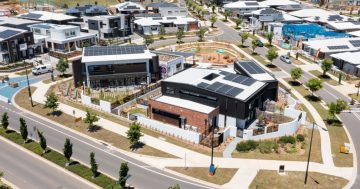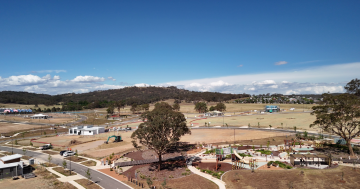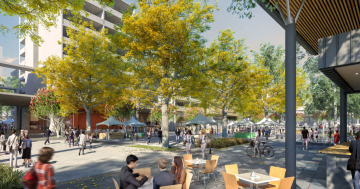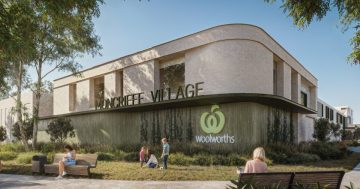

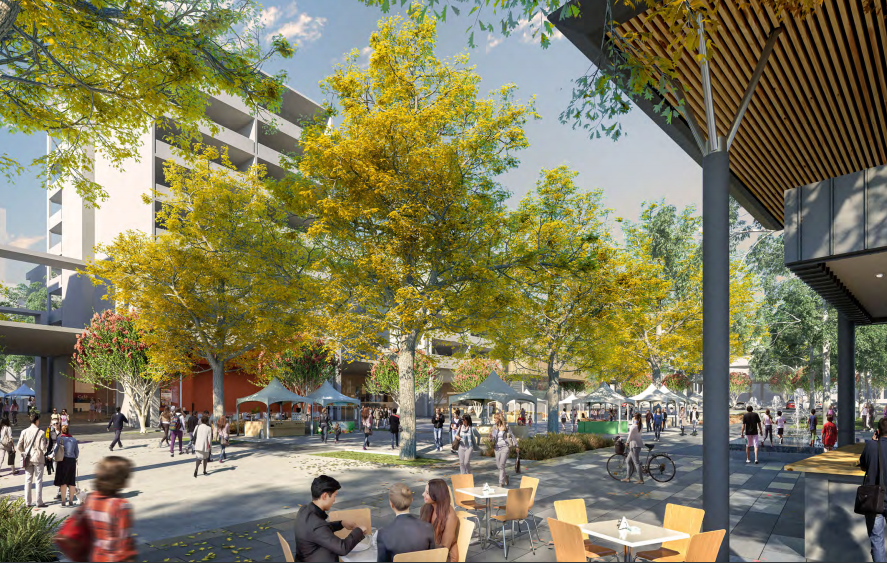
Too much detail: an early artist’s impression of the proposed Coombs village. Image: SLA.
Sale conditions for land slated for local shopping centres in the ACT have been overly prescriptive and demanding, scaring off developers and causing long delays and frustration in growing communities, according to the government’s development tsar.
ACT Suburban Land Agency CEO Adam Davey told a Master Builders ACT event on Wednesday (18 February) that the failed release of land for the Whitlam Local Centre and the Coombs-Wright village had reinforced the need to give developers more certainty about the project they were expected to buy into and more room to use their own initiative.
Mr Davey, who became CEO in 2024, also said the SLA’s desire for great outcomes had sometimes raised false community expectations.
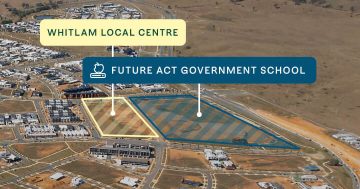
The 1.97-hectare Whitlam Local Centre site was first released in 2022, then passed in at an auction held on 10 December 2025 and has now been re-released with fewer conditions for $11 million.
In December, developers complained that land prices were too high and that too many conditions were imposed for projects to stack up, prompting the Property Council to call for the SLA to review its approach.
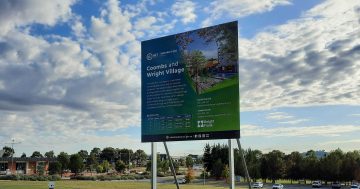
The Coombs-Wright village package of three corner sites totalling 25,000 square metres was pulled from the market last year after a four-year sale process, citing the need for design changes.
Mr Davey said requirements for a community centre and rooftop gardens were among the conditions removed for the Whitlam land, where 233 apartments, including 35 affordable dwellings, and a supermarket are planned.
“We’ve heard feedback that it was too prescriptive in terms of what we’re asking, so as a result, we have revised the design and place framework to make it less prescriptive,” he said.
The fact that no one made a bid when the land went to auction told Mr Davey that there was uncertainty about what a buyer might be getting themselves into, in terms of viability.
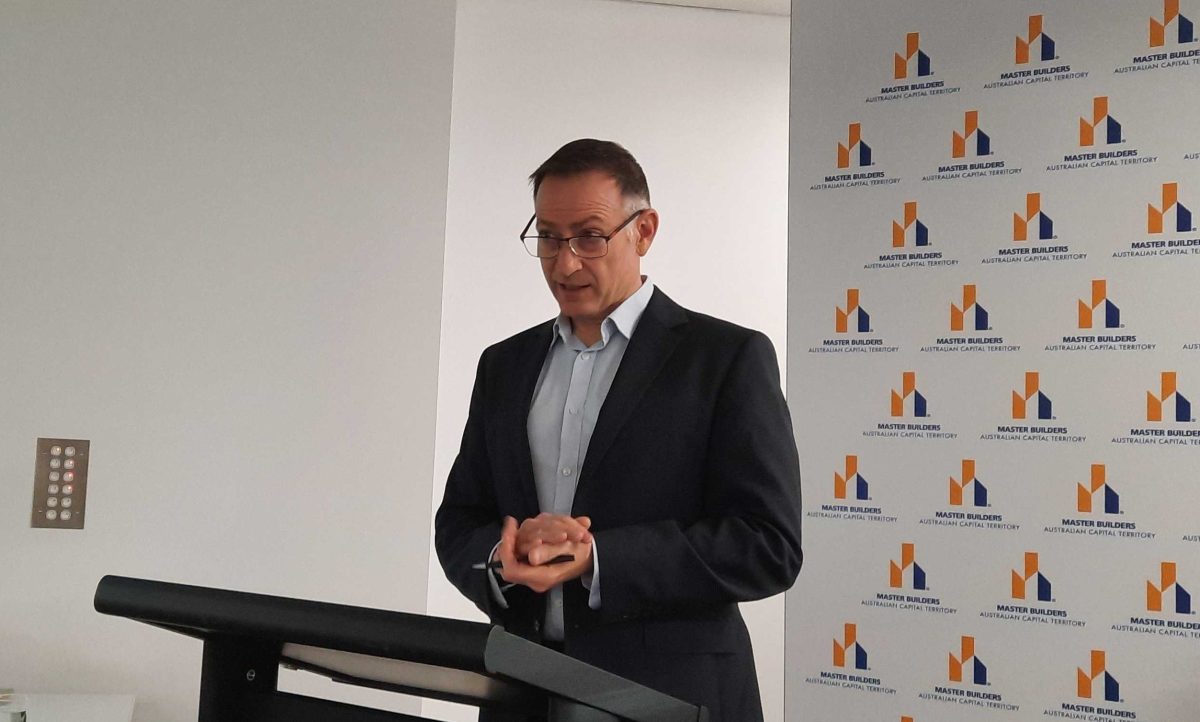
Suburban Land Agency CEO Adam Davey: “Certainty is really crucial for successful land development.” Photo: Ian Bushnell.
In the Coombs-Wright release, Mr Davey said one of the mistakes was trying to meet every community expectation, including providing too much detail about the proposed development.
“We presented a lot of high-res images, which then set up expectations,” he said.
“I think we need to pull back a bit and be a little bit less descriptive and detailed with the colour about what it is that we’re doing until we’re very sure that’s what you’re going to get, and if we’re selling it to the market we need to leave space for whoever buys it to do what they want to do.”
Mr Davey did not believe Canberra communities were unrealistic in their expectations; in fact, he had found many to be pragmatic, but they wanted good development.
“We do want people to get excited and engaged in what we’re developing, but we just need to make sure that we temper that with caution,” he said.
Mr Davey said the SLA did not want to just sell land and hope for the best, but secure good outcomes for the community.
However, sometimes too many requirements were loaded into a site, including yields that weren’t achievable.
“The word ‘certainty’ [from builders] was interesting,” Mr Davey said.
“I think that certainty is really crucial for successful land development. What’s really lacking is certainty across a range of things and if we can get settings right so that we have more certainty, I think that’ll really help.”
Master Builders ACT CEO Anna Neelagama agreed, but also said flexibility, infrastructure support and regulation also needed to be reviewed
“The building and construction sector needs certainty so we can move forward and deliver vital infrastructure and deliver the housing that Canberrans so badly need,” she said.
Ms Neelagama said that the ACT builders faced additional burdens compared with those in other jurisdictions. For example, Development WA paid for all the headworks, so builders could snap up blocks and get moving, whereas in the ACT, that was left up to the sector.
“There’s also practicalities around regulation,” she said.
“We’re in a city of hills, and we’ve got various requirements under the National Construction Code livability standards to actually build completely accessible buildings on sloping blocks,” she said.
She said it was important to ensure accessible housing for all, but it had to take into account the ACT’s challenging terrain.