Keep it simple and low-risk: One of the Connect Up activities that brought people together. Photos: UC.
A 12-month pilot program run by the University of Canberra to combat loneliness among young people in Belconnen has delivered some impressive results that government, urban designers and community groups are being urged to act on.
Connect Up 2617 offered trivia nights, badminton and pizza, board games and craft sessions at local bars and community centres in a string of “low-cost, regular events” designed to boost social connection.
The program also helped residents in apartment buildings start their own regular get-togethers, from dinners to casual craft sessions, to get to know their neighbours.
It employed 10 “community connectors” – local casual staff aged 18 to 30 who ran activities, welcomed participants and helped people meet each other, but also recruited 15 volunteers.
UC has now published a report on its findings and made eight recommendations to government.
Connect Up attracted 645 participants across an average of 28 activities per month, with 379 attending one activity only, 177 attended two to four activities and 89 attended more than five activities.
The report says that the positive impacts on participants were significant, reducing loneliness and improving a sense of belonging and social connection.
Survey data showed statistically significant improvements in participants’ feelings of companionship (+32.25 per cent), isolation (+36.25 per cent) and exclusion (+32.5 per cent).
More than 70 per cent of respondents said they had more friends to connect with monthly, almost 50 per cent had more friends they could rely on for help and more than three-quarters felt they were part of a like-minded group.
The recommendations focused on government taking responsibility for developing social infrastructure to prevent loneliness as a public health measure, including providing financial incentives to support activity venues and encouraging urban design that incorporates community spaces and meeting place and creates opportunities for incidental connection.
The report urges government to adopt the Connect Up model to begin implementing programs, using trained “connectors” to help people get together and keeping activities small and low risk with low entry barriers but regular and consistent.
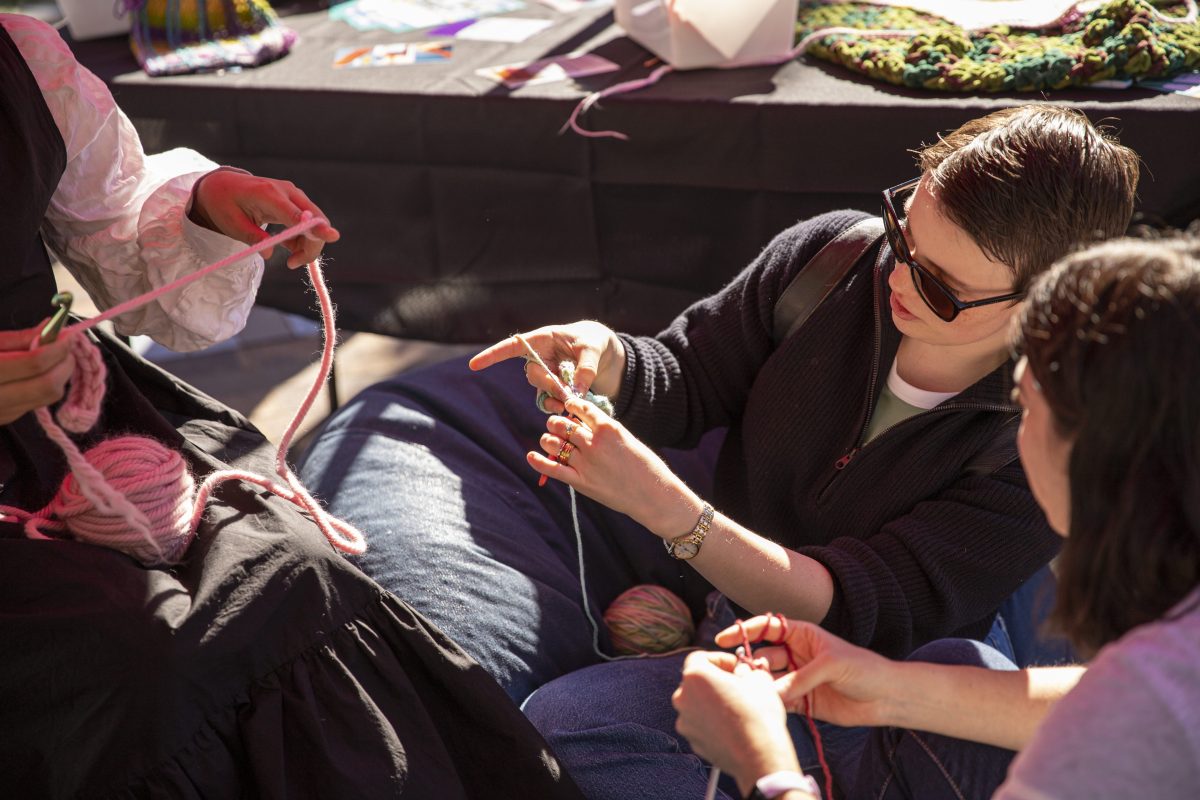
A Connect Up craft event. The program produced significant positive results.
Project Lead Dr Barbara Walsh said loneliness was a recognised, significant public health issue that US Surgeon General Vivek Murthy had equated with the impacts of smoking.
Dr Walsh said loneliness was not only associated with mental health issues, depression and anxiety but also cardiac, or heart, issues.
It affected young people the most and in the Belconnen Town Centre and Bruce, many were busy students with jobs living in apartments.
Dr Walsh said the urban environment was isolating and lacked opportunities for people to gather that didn’t involve alcohol or spending money.
“There’s very few low-cost opportunities for young people to get together and if they’re living in smaller places and they can’t have people over or they’re not comfortable doing that, how do they do that if they don’t want to go to a pub,” she said.
“It’s not just intentional places where people can gather, it’s the bumping-into places, the incidental gatherings.”
Dr Walsh said participants experienced a range of benefits such as developing more social stamina and confidence so they could talk to strangers and get to know their neighbours so they felt part of a community and could make friendships.
“They had more companionship, they felt less isolated, they felt less left out, they had more friends that they connected with on a monthly basis,” she said.
“They had a 90 per cent improved sense of belonging.”
People also reported that they felt differently about their neighborhood, with the program having an impact on their sense of community and sense of place, to the extent that it changed their minds about moving.
Dr Walsh said government and the community needed to start looking at how to create the conditions for social connection in the programs, the policies and the design of urban environments.
She said the report would be distributed widely and the authors would be meeting with MLAs in the coming weeks, as well as representatives of the City of Sydney which had shown interest in the project.
The program has now been adopted by Capital Region Community Services (CRCS), extending the age range to the early 30s and opening it to residents of other Belconnen suburbs such as Scullin, Holt, Latham and Dunlop.
The Belconnen Community Council (BCC), which advised the project, said the findings highlighted the lack of social infrastructure and accessible third places for people to gather in the Belconnen Town Centre and the impact this was having on the wellbeing of the people who lived, worked and socialised in the area.
“This is exactly the kind of community-led evidence base we need to drive better outcomes for Belconnen residents,” said BCC chair Lachlan Butler.
He said the ACT Government had encouraged and financially benefited from the rapid densification of the Belconnen Town Centre but with that growth came a responsibility to invest proportionally in the public realm, community spaces and local amenity that made higher-density living viable.
“You can’t continue driving density and collecting the revenue while failing to deliver the social infrastructure that makes density work,” said Mr Butler. “Our community deserves a fair return on its contribution.”
The BCC called on the ACT Government to respond to the Connect Up 2617 findings with a concrete action plan, including a funded, coordinated mechanism for social infrastructure and the cohesive uplift of the Belconnen Town Centre across the public realm, transport, employment, streetscapes and strategic planning.