13 October 2026

Uriarra community fears data centre could follow battery

| By Ian Bushnell
Join the conversation
55

A concept image for the Flat Rock BESS at Uriarra/Coree. Opponents say it will be much bigger in reality. Photo: Quinbrook.

Opponents of the proposed big battery on Uriarra Station on Canberra’s western edge fear the project could be just a precursor to a data centre being added to the site.

They are ramping up their campaign ahead of a community meeting with the multinational proponent this weekend.

The Save Uriarra Valley movement has set up a website and social media page, and begun reaching out to local politicians.

It is also leafleting visitors to the mountainous rural and recreation area frequented by day trippers, cyclists and motorcyclists, asking if they would still be able to do the Uriarra Loop during the 36-month construction period when trucks and heavy machinery will clog Uriarra Road, the only route in and out.

The group says the project will change the area forever.

READ ALSO Community will be winners, says Uriarra battery proponent

Project proponent Quinbrook bought the historic 1200-hectare property in May, and has proposed a 520-megawatt Battery Energy Storage System (BESS), twice the size of the Williamsdale BESS, making it one of the largest in the country.

It will also require a substation and overhead lines.

The Flat Rock Energy Storage project would store electricity when it is plentiful and demand is low, and then release it to the grid when it is needed most. The development would play a significant role in improving energy security, grid reliability and resilience.

Quinbrook is yet to submit a development application for the project, which will have a 60-hectare footprint, 10 ha bigger than Uriarra Village, in the northwest of the station near the ACT-NSW border.

The property will continue as a working station, with Quinbrook appointing the Hyles family as the long-term grazing operator, following a tender process.

But opponents in nearby Uriarra Village fear the project will destroy the area’s integrity and have raised several environmental and heritage issues.

Resident Erin East said it was not the right location for industrial development and that Quinbrook might not stop at a battery, but would add a data centre like the one it is developing in Brisbane.

Ms East said scope creep was a real issue, and that it could set a precedent for similar developments.

“We know that Quinbrook’s built one [BESS] the same size in Brisbane, the 520 megawatt in Brisbane, and they’re using it to power a hyperscale data centre,” she said.

“There’s more land here, so where does this end?

“The concern is not just on the immediate impacts but also the unknown and trying to get a straight, concrete, transparent answer.”

The BESS will operate around the clock, producing noise and light, but trees will screen it to mitigate this.

But Ms East doubted that would be enough to prevent noise travelling across open country to the village about 2 km away and other homes.

Uriarra Village and the countryside beyond. The BESS site is about 2 km away. Photo: Save Uriarra Valley.

Ms East said the site was in a known bushfire corridor and that lithium batteries can ignite, producing hazardous smoke and fires that are hard to extinguish.

The website documents BESS fires around the world in recent years.

But Quinbrook says a fire is highly unlikely because of multiple layers of safety design, including built-in mechanisms to automatically detect fire, allow battery ventilation and manage temperature across the system.

The BESS will also use Lithium Iron Phosphate (LFP) batteries, which the proponent says are more thermally stable and less prone to overheating than other batteries.

But Ms East said that even if the probability were low, a fire would be catastrophic for the area.

The BESS is expected to last 50 years, but the batteries have a life of 10-15 years, and will need to be replaced, again placing pressure on the roads.

Ms East said the proposal runs contrary to decades of careful, environmentally focused planning that successive governments and Canberrans have applied to this area, noting that Uriarra Village has strict planning controls.

“What is the most concerning, or certainly one of the major concerns that we have, and it’s the most jarring, it feels like a backflip that hasn’t come from the ACT Government, but has come from external business interests,” she said.

Ms East said the project won’t even service the ACT, feeding into the NSW grid.

The Commonwealth’s decision that the proposal did not require its environmental approval disappointed the group, given Uriarra Station’s history, the surrounding habitat, wildlife corridors, waterways and potential Indigenous sites.

Ms East said that, as the Australian Conservation Foundation and Wilderness Society say, being part of the renewable energy transition was not enough to support such projects, because location mattered, including the surrounding land.

Quinbrook will still need to address heritage, cultural and environmental questions, including fire risks, noise, traffic and visual impacts, in its development application.

READ ALSO Huge battery complex proposed for historic ACT grazing property

The ACT Greens want to protect Canberra’s western edge from development but also back the energy transition.

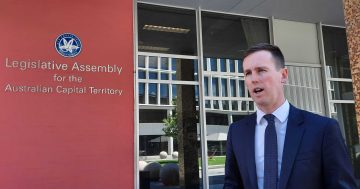
Leader Jo Clay said the party would raise residents’ concerns with Planning and Sustainable Development Minister Chris Steel and seek further information when the Legislative Assembly sat next week.

Ms Clay said residents had raised legitimate questions, and many still felt they had not received clear answers.

“The Greens support the transition to 100 per cent renewable energy, but local communities must be brought along on that journey,” she said.

“For any good renewable energy project to work, we need both strong environmental outcomes and proper, meaningful community engagement,” she said.

Ms Clay said she would soon meet with residents to discuss their concerns.

The community meeting will take place on Saturday, 17 October, from 9 am to 12 pm at the Uriarra Village Community Centre.


Free Daily Digest

Want the best Canberra news delivered daily? We package the most-read Canberra stories and send them to your inbox. Sign-up now for trusted local news that will never be behind a paywall.
Loading
By submitting your email address you are agreeing to Region Group's terms and conditions and privacy policy.

Join the conversation

55
All Comments
  • All Comments
  • Website Comments
LatestOldest

I see Axon, Chewy, Capital retro and Pen are out of the Canberra sewers again.

With nothing new to add to the argument calling residents NIMBYs.

We know who the true NIMBY”s are because none of these good Canberran’s have yet to put their hand up to host it in their own backyard – Fake YIMBYs!.

Perfectly happy to have these types of facilities located at similar distances to my home as these ones.

With all these horrendous risks, perhaps its time to move the residents out of the area? By the NIMBY’s logic, their own homes should never have been built.

Wow, contribution John. What is your argument related to the battery? None? Was that a quack you uttered?

As a practical matter a suitable battery would not fit in my backyard. Nor would a wheat field, an aluminium smelter, a sheep station, bus depot, copper mine, hydro-electric power plant, or anything else that needs a bit more space or different resources. Your attempted point is silly. Try again.

I am wondering who all the pro-data centre people who are commenting on this site and attacking others as NIMBY. Communities across the USA are demonstrating strongly against date centres. Social licence has been lost, and will likely impact mid-term elections. Communities in Australia are also increasingly raising concerns from Moss Vale, to Western Downs in Qld, to Melbourne. They are greatly concerned about environmental impacts of data centres. There is great concern about exorbitant energy and water usage by data centres, and a host of other issues such as noise, air pollution, and chemical pollution. So who are these people pushing the Big tech agenda, and why?

Just people who’ve actually scratched beyond the surface to find that the claimed impacts are greatly overstated, with identified risks having straightforward and proven mitigation options available.

The objections are using well worn NIMBY tactics, so the label seems to fit. Repeating them ad nauseum doesn’t suddenly make them more valid.

A solid regulatory framework addresses everything you’ve mentioned, so what exactly is the apparent issue making these facilities so incompatible in your mind?

Also “big tech agenda”? LOL.

Why would people argue in favour of data centres when none is proposed? Raising a spectre of something not in the project proposal nor discussed by its proponents is absolutely classical nimbyism.

The two are unrelated. A data centre could be built without a battery and a battery is proposed without a data centre.

Good luck with that. Other than Big Tech reps, there are not a whole lot of you out there. I suppose you think Albanese will develop a “solid regulatory framework”? Just tell Australia’s writers, artists, and musicians that, and you won’t find any support at all.

Better to be prepared rather than trying to close the gate after the horse has bolted.

And once Murray’s “serious environmental concerns” have been answered he switches to worries about a lack of public support.

Because it never really was about those things in the first place, the claims just being used as a cover for outright opposition to these types of developments no matter what.

Good luck with that indeed.

Exactly. There are serious environmental concerns AND a lack of public support.

NIMBY is looking pretty apt right now.

Stop avoiding the subject, Murray May. Rattling on about data centres when the only proposal for the area is a battery is irrelevant and you know it. You fail to make a case so you try to work up a scare campaign about something else completely. It’s pitiful.

Jack, more misinformation.

Capital Battery and the Big Canberra Battery are government-backed projects. The Uriarra solar farm was also part of the ACT’s renewable energy program before it was moved to Williamsdale. Flat Rock, however, is a commercial development by Private Energy Partners, part of multinational Quinbrook Infrastructure Partners (PROFITS). These are not the same thing.

And what about jobs. Once construction is finished, how many permanent jobs will Canberra actually get. Perhaps two. Let’s stop confusing temporary construction jobs with lasting employment.

Calling residents NIMBYs and accusing them of racism doesn’t answer legitimate questions about bushfire risks, heritage, environmental impacts or community benefits.

Supporting renewable energy doesn’t mean giving multinational developers a blank cheque. Learn the facts before dismissing an entire community.

Also before having a go at the ACT Government, remember the ACT has already achieved its 100% renewable electricity target.

Capital Retro12:25 pm 14 Oct 26

The Williamsdale big battery is a partnership between the ACT Government and global energy storage leader Eku Energy.
Eku Energy is jointly owned by a Macquarie Asset Management (MAM) managed fund and British Columbia Investment Management Corporation (BCI).
You can bet the the ACT Government has got the wrong end of the pineapple with this deal.

You appear to be opposed to capital investment, Peter H, given your shouting of (PROFITS) and “…giving multinational developers a blank cheque.”

“… remember the ACT has already achieved its 100% renewable electricity target.”
Does that mean everything can stop now, The ACT is OK and the rest can be ignored?

What happens if some local residents do not want to accept legitimate answers about bushfire risks, heritage and environmental impacts or community benefits? Did you mention energy needs, fitness of locations other than waving loosely beyond your back yard? No, your presentation was wholly unbalanced.

Your comments in this thread Peter H. reveal your ignorance and I wonder what your interests are in opposing this project. I think you are just another NIMBY seeking to protect your own selfish interests.

You should take your own advice and learn the facts yourself rather than criticising supporters and peddling the same wrong and spurious claims in opposing the development. This has included opponents using Indigenous cultural history pivoted towards the Bogon Moth to bolster their NIMBY efforts and applying for an emergency heritage listing which was rejected by the Heritage Council. These actions were taken despite the legally mandated regulatory processes being completed and independent cultural and environmental impact assessments conducted with the relevant authorities and stakeholders including Indigenous groups for the work to proceed.
But this alarmist nonsense is what we have come to expect from the Uriarra Residents Group and local NIMBY’s opposing this proposal.

Hopefully this time around the government is successful in putting these NIMBY’s firmly back into their box. The same troublemakers back again claiming Uriarra as their own little fiefdom, using spurious, racist and alarmist tactics and our political and legal system to disrupt progress.

Shamefully their past efforts were supported by our city’s then opposition and MLA Nicole Lawder. All claiming to support the government’s renewable energy efforts as long as it didn’t impinge on their rural views and property values.

Thankfully the project was moved to Williamsdale in our city’s south creating jobs and investment, powering thousands of ACT homes and supporting the government’s 100% renewable energy targets by preventing 450,000 tonnes of CO₂ into the atmosphere over its lifespan.

Yes, great point Jack, the hypocrisy around this expensive, wasteful and inefficient source of energy is quite something to behold. Look on the bright side though – trees have more food.

It was also impressive the way you snuck racism into a discussion about renewable energy, covering all bases i suppose.

No data centre has been proposed or announced for Uriarra Station. These people simply speculate that one might be built in the future, based on the developer’s involvement in a project elsewhere. Presenting an entirely hypothetical scenario as a reason to oppose the current proposal is fearmongering and ridiculous. Let’s stick to the facts.

Far from speculation, Peter. You’re the one making assumptions about what the community is saying.

Members of Parliament have asked the developer about the possibility of a data centre, and the answer has not been NO. Community members have also asked the question, and the answer has not been NO.

Nobody is claiming a data centre has been formally proposed. We’re asking for a clear answer and a commitment that it won’t happen as a future expansion of this development.

You’re asking the proponents to rule out a co-located data centre, irrespectiveof whether it makes sense sometime in the future. Why should they? In any event no such commitment would be binding on a future owner if they sold the facility.

It’s amazing how many people are commenting without understanding the site or even having visited this location.

Uriarra is associated with the meaning “running to the feast”, linked to the Bogong moth and its cultural significance. Given the recent media attention surrounding the return of the Bogong moth, you would hope more people would appreciate the importance of this landscape.

So let me understand: we’re being labelled NIMBYs because we’re questioning a proposal by a multinational developer, where a significant share of the profits will flow overseas rather than directly benefiting Australian communities?

Before anyone responds by saying we need to support climate action and renewable energy, I agree that the transition to cleaner energy is important. But that doesn’t mean every project is appropriate for every location.

The Uriarra Valley has a history of major bushfires, including those in 1939, 1952, 1983, 2003 and 2020. If we are increasingly concerned about extreme fire conditions, why are we considering placing hundreds of battery containers in a known fire-prone landscape?

A major battery fire can produce hazardous smoke and contaminated firefighting water. With the proposed site near Uriarra Creek, there are legitimate questions about how runoff could affect the creek and, potentially, the Murrumbidgee River.

This isn’t about opposing renewable energy. It’s about asking whether this is the right location for an industrial facility of this scale, and whether the risks to residents, firefighters, cultural heritage and the environment have been properly assessed.

Where the profits go is irrelevant to the merits of the proposal.

The facility has controls to minimise the risk of bushfire damage, and if a significant bushfire affects the region, you’d have far more to worry about than a nearby battery facility.

The facility also has numerous risk controls around battery fires and the minuscule risk of contamination to water sources or groundwater.

If thats the breadth amd depth of your concerns, NIMBY is a generous description.

“we’re being labelled NIMBYs because… This isn’t about opposing renewable energy. It’s asking whether this is the right location…”

If you are being labelled NIMBYs it is because that is exactly your position. Any further questions?

Capital Retro8:14 am 14 Oct 26

Well thought out and presented, Peter H.
Almost critical thinking level.

Data centres have caused strong community resistance in the USA, in particular from 24/7 noise hum and air pollution. The noise hum can travel several kilometres and never stops. There are plenty of highly informed submissions on this at the federal inquiry on AI and date centres. They can be downloaded. Moss Vale is another rural community being threatened by the invasion of these industrial scale facilities. Any NIMBY concerned by this development should act strongly to resist it. Data centres are currently planned far too close to communities in Lane Cove and also Western Sydney. The big tech developers don’t care about community interests.

Daoine R Amadanach2:27 pm 13 Oct 26

Yeah, I don’t understand why people are complaining about the noise. I’ve worked at a Data Centre and there’s no noise. You have to be inside the Data Halls where the machines are to be in a noisy environment. I suspect the US is being cheap and cutting corners with Data Centres, probably skipping insulation therefore causing noise.

You only need to download some of.the detailed submissions at the federal AI and data. centres inquiry website to see how widespread. the concerns are with data centres. A new book also raises PFAS as well. The largest class action ever by the federal government is. talking place against 3M, manufacturers of PFAS.

I tried a random couple that did not look like supporters, Murray May. The first turned out to be supportive and the second objected only to a gas-fired power plant. Where exactly among the 200+ submissions will I find these concerns? Are you not referencing them because they are not credible so you do not want that exposed?

You must be kidding. Heaps of environmental groups and local councils have submitted. Just try a few, but there are many. See submission numbers 1, 12, 27, 32, 44, 67, 93, 99 just for a start. I could go on, and will if need be. I have not downloaded all submissions, but let me assure many raise serious environmental and community concerns. See also the public hearings listed on the federal AI and data centres inquiry website, as this will show you many of the concerned groups already heard in person by the committee.

Murray,
I’ve also read many of the submissions and the sensible ones are mostly calling for proper regulations and policy frameworks to control risks that are already well understood.

The ones you’ve referenced mostly outline the concerns you would expect and nothing that fundamentally shows data centres are incompatible for most areas with controls put in place.

There’s no real “serious environmental concerns” that are outside of normal planning considerations.

If you are saying these facilities should be well regulated, I’d agree.

If however, you are saying these facilties have some special significance or inherent risks that cannot be mitigated then I’d disagree.

The thing is even normal planning guidelines are being ignored. A massive data centre is being built in Lane Cove in Sydney very close to residents. No consultation with residents because it’s considered a state significant development. Who would have thought?

Murray,
Are you talking about the Mars project in Lane Cove that has been withdrawn from progressing by the proponent, due to the developing regulatory framework being put in place by the NSW Government?

The State Significant Development rules exist specifically to put proper planning at the heart of these decisions and away from local councils who don’t have the capability or objectivity to assess them.

Isn’t that what you want?

Murray May, I looked up Nos 1 & 99. The Climate Council is concerned about damaging the rollout of renewable energy. They want it to happen in a timely fashion if data centres are to be accommodated. They say nothing about noise or hum, and pollution is mentioned in the context of needing faster rollout of renewables.

The Hume group does mention noise and hum, concluding “…minimum buffer zones based on independent, scientific modelling …”

That is, like others I read, submissions raised amenable issues, whereas you seek to suggest issues are terminal merely by their existence.

Capital Retro6:02 pm 14 Oct 26

“The noise hum can travel several kilometres and never stops.”

Same as the fugitive emissions from the MLRMC.

Speaking of things that never stop….

The Nimbys whinging again to stop a facility that won’t affect their lives in any meaningful way, spreading illogical and ignorant arguments.

They would fit in perfectly with many of the daily groupthink comments we see on this website.

Daoine R Amadanach12:29 pm 13 Oct 26

I predict that people against this battery will try to come up with points about the negative effects on the environment or about how expensive it will be. Just watch….

Residents should be far more concerned with the possibility of a wind farm turning up to charge the big battery than a data centre to use a bit of intermittent power from it.

I read an article the other day which suggested that when the Chinese are doing the maths on building energy infrastructure – coal, gas, nuclear and renewables – they estimate that for every megawatt promised by renewables they expect the average output of them to be around 8% of stated capacity.

Daoine R Amadanach12:33 pm 13 Oct 26

I’m sorry Penfold but I’m not convinced that Wind Farms are all that bad. I haven’t heard any ligitimate bad news about them, at least not enough to suggest we shouldn’t have them. But I coudn’t help but notice the majority of people who are against Wind Farms are frightened by change. As for what’s happening in China, do you have a web link referencing that? I’m interested…

Well Joey besides the significant noise health issues and the maiming of birds, perhaps there isn’t much bad news.

As for the 8%, here you go, though it’s paywalled:

“China’s planners have put a number on how much wind and solar power they believe they can actually rely on when the electricity system is under stress. They call it “confidence output” and they set the bar high: a measure of average available energy across 95 per cent of periods of peak demand. Their answer is a risible 8 per cent.”

“Put bluntly, for every 100GW of wind and solar capacity, China’s planners reckon they can confidently rely on just 8GW at critical times.”

https://www.theaustralian.com.au/inquirer/beijing-prioritises-grid-reliability-with-coal-while-australia-races-towards-risky-2030-targets/news-story/782d8c414f099c58cfd991d16eaf781a

Crime n Punishment2:32 pm 13 Oct 26

Not quite.
The article by PV Magazine cites China’s 15th Five Year Renewables plan and says that by 2030, wind and solar projects, including source-side storage, should deliver average firm capacity equivalent to 8% of installed capacity. Reuters reports the same figure: wind and solar, backed up by storage, should be able to supply 8% of their installed capacity during periods of peak demand.

8% is how much wind and solar can be counted on during peak demand as a target. Not an actual. It’s the system reserve.

Pengold not actually understanding the groupthink talking points that he blindly parrots.

Another day ending in why.

Daily Digest

Want the best Canberra news delivered daily? Every day we package the most popular Region Canberra stories and send them straight to your inbox. Sign-up now for trusted local news that will never be behind a paywall.

By submitting your email address you are agreeing to Region Group's terms and conditions and privacy policy.