
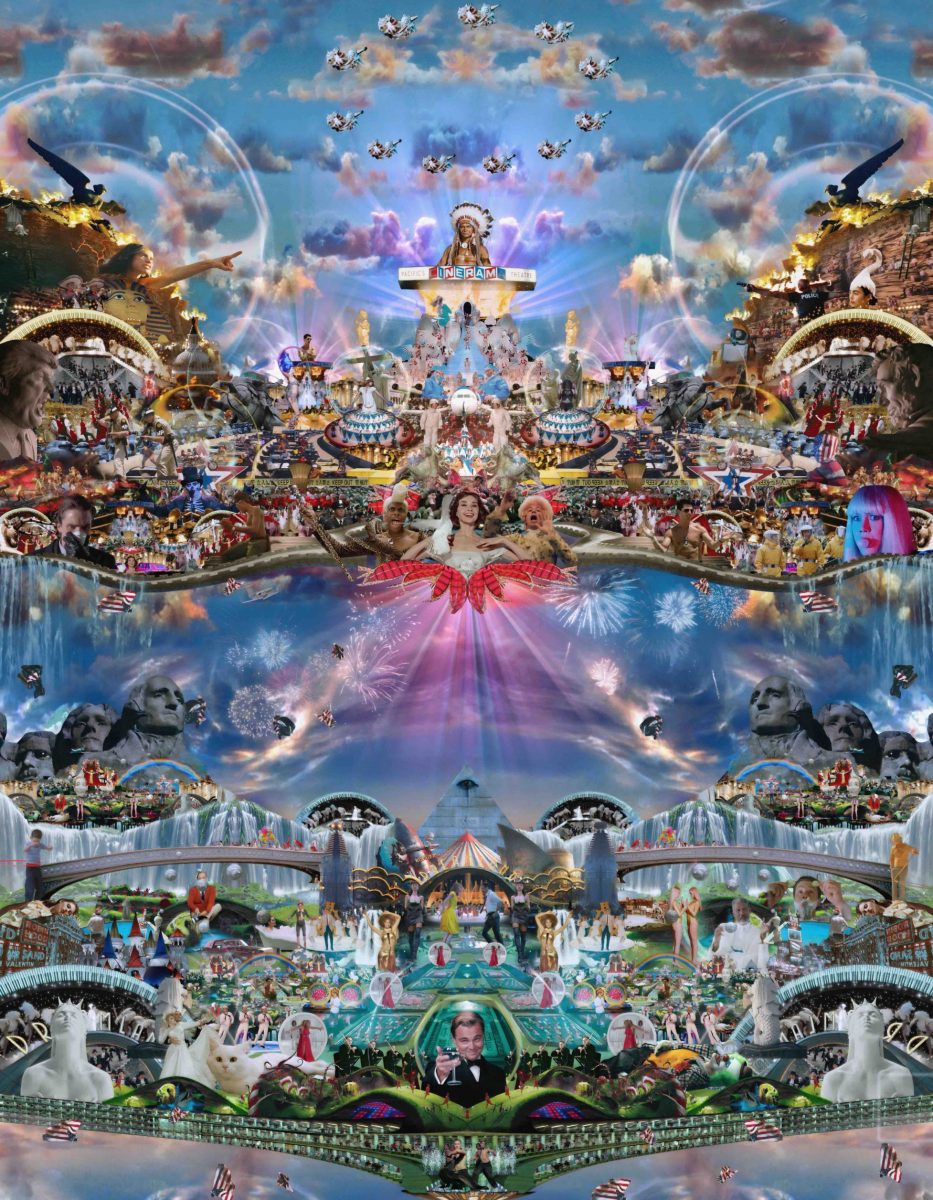
Marco Brambilla’s Heaven’s Gate draws on Hollywood dreams and excess. Photo: NFSA
If, in the last video installation at the National Film and Sound Archive Mikaela Stafford took us to hell, in this new video installation, Marco Brambilla takes us to Heaven’s Gate.
Heaven’s Gate is spectacular, dazzling and awe-inspiring video experience, but at the end of the five-minute loop, there is a moment of profound pathos, as if we have been given a glimpse of our world on the eve of destruction.
Marco Brambilla is an Italian-born Canadian film director and video artist who is based in Europe. Some would remember him as the director of Demolition Man (a 1993 sci-fi flick with Sylvester Stallone, Wesley Snipes and Sandra Bullock) followed by Excess Baggage, 1997, with an equally impressive cast.
He then turned to making his films as short video installations, drawing exclusively on existing film footage with a sort of “sampling” of film clips and the layering of them in the form of a visual collage.
Frequently, the most unexpected realities emerge through the juxtapositioning of visual clips – they are not even stated but intuitively felt by the viewer.
Heaven’s Gate was made by the artist during the COVID lockdown in 2020. Brambilla explains: “This piece specifically was made during lockdown and there was a lot going on in the last year so there’s a kind of anxiety and apocalyptic underscores which run through the piece.”
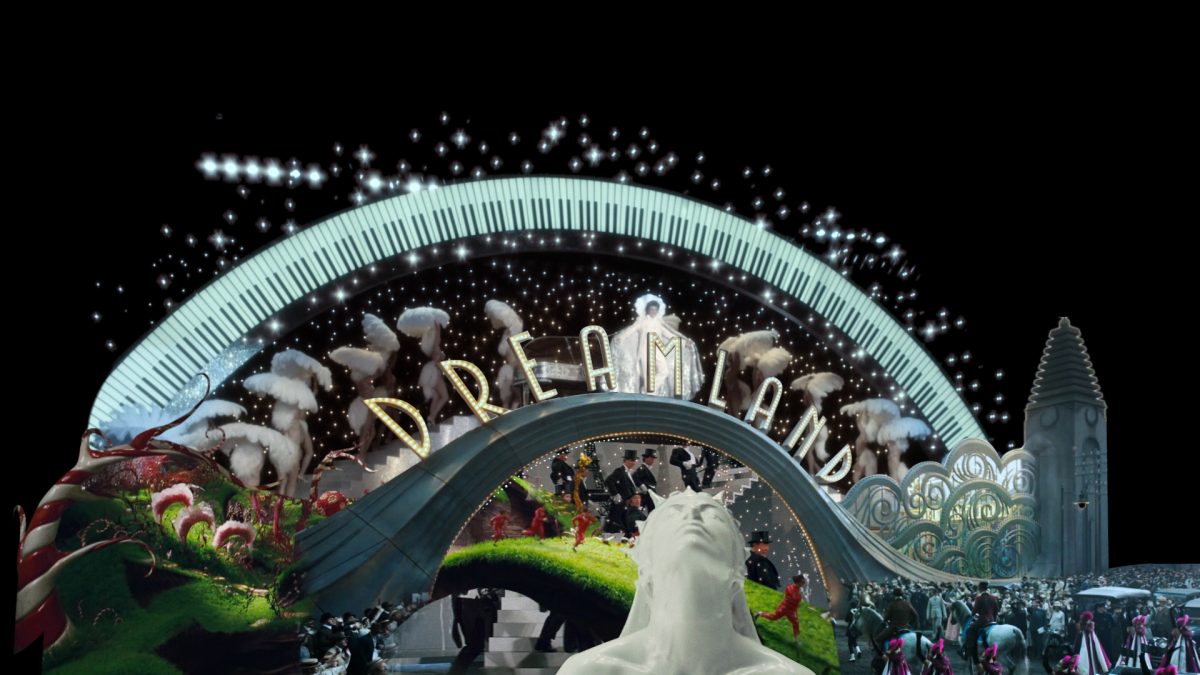
A scene from Heaven’s Gate. Photo: NFSA
It is a disturbing, knockout piece where themes of darkness are contrasted with smiling and dancing figures.
It is possible to speak of a narrative where we begin in darkness, where there are small bursts of blue light and over the course of the next five minutes the viewer ascends into an increasingly frenzied atmosphere.
Apparently about 500 Hollywood film clips were employed in the film as we encounter a wall of images and sound and we catch a glimpse of Beyoncé, Audrey Hepburn, Leonardo DiCaprio and Christopher Walken.
Others who devoted more time to repeated viewings claim to have caught glimpses of Donald Trump and various scantily clad women.
The important thing is not recognising each of the hundreds of Hollywood characters, but the sense of constant overlapping realities and the pulsating music score that ranges from a soft drum beat to high energy techno.
“I’ve always been fascinated with this idea of consciousness and what is consciousness and how we remember images and forget other images and these moments that kind of stay in your mind and this idea of expressing it through the language of film,” Brambilla says.
Brambilla took his title from the 1980 film Heaven’s Gate directed Michael Cimino that was reputedly the most expensive film ever made and that famously bankrupted the United Artists studio.
It is a tale of excess and glamour, it is “more Hollywood than Hollywood”, the dream factory that is leading to an abyss that is about to collapse and take the American empire with it as it is dancing its way to heaven without realising that it is about to enter hell.
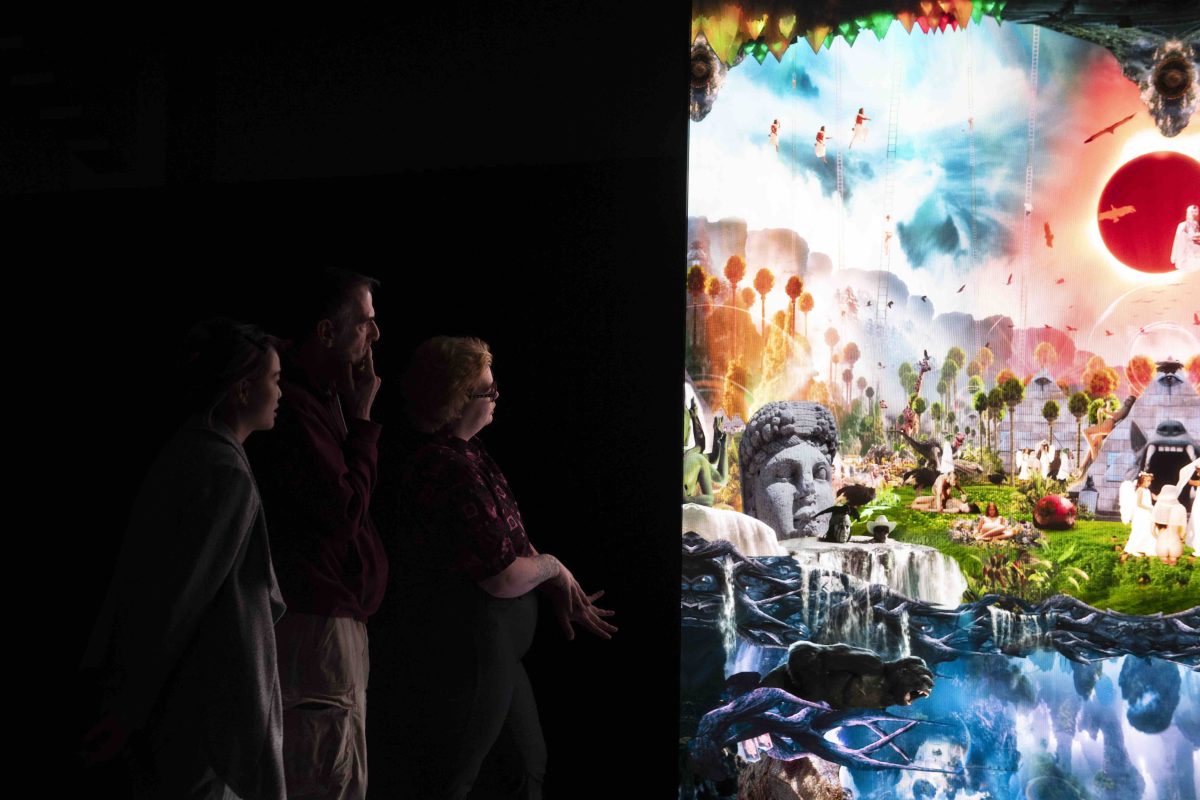
Visitors take in Heaven’s Gate. Photo: Grace Costa.
When this video installation was originally released in 2021, it was received with great fanfare.
Now, four years later, at its Australian premiere at the National Film and Sound Archive, despite the high-octane energy and spectacular visuals, there is something prophetic about this video installation and we are now witnessing the fall of a great empire where many in its ranks are oblivious of its impending doom. They have arrived at a party, not realising that it has already morphed into a funeral.
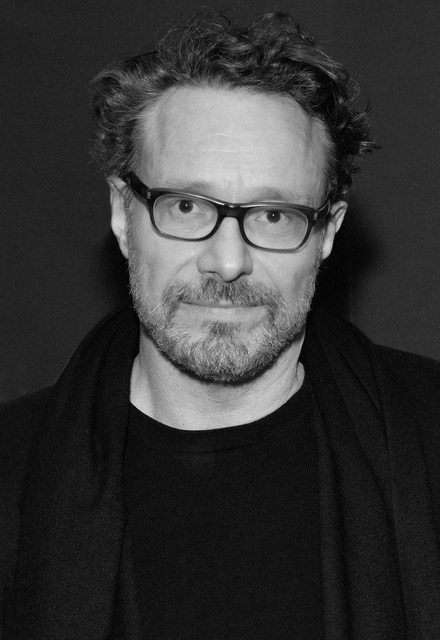
Marco Brambilla. Photo: NFSA
Marco Brambilla: Heaven’s Gate is at the National Film and Sound Archive of Australia until 9 March 2026, daily from 10 am to 3 pm. Admission is free.