ABS head of prices statistics Rachael McCririck: “Rises paid to state government public service jobs were the main driver of public sector growth.” Photo: ABS.
Growth in public sector wages has outpaced that in the private sector for the sixth quarter in a row, according to the latest data from the Australian Bureau of Statistics.
Overall, however, Australian wages have failed to keep up with inflation over the past 12 months.
The ABS’s Wage Price Index (WPI) rose 0.8 per cent in the June quarter and 3.2 per cent annually (seasonally adjusted), which is slightly down from 3.4 per cent at the same time last year.
Public sector wages rose 3.4 per cent, down from 3.7 per cent a year earlier.
Private sector wages rose 3.1 per cent in annual terms, easing from 3.4 per cent the same time last year.
ABS head of prices statistics Rachael McCririck said the decline in the share of jobs with larger wage rises had contributed to slower wage growth overall.
“Although we’re currently below the late 2023 peak of 4.3 per cent, annual wage growth remains above the 2.2 per cent that we were seeing in the December quarter 2019 prior to the COVID-19 pandemic,” she said.
Jobs with a wage change of less than four per cent over the past 12 months rose to 79 per cent, from 75 per cent in June quarter 2025.
This is the largest share recorded since June quarter 2022 (+84 per cent).
The WPI measures change in rates of pay for a given bundle of jobs, so does not include the impact on pay from people changing jobs or working more hours.
The sixth consecutive quarter of public sector wages growing faster than private sector wages is thanks to a combination of factors in the Australian Public Service as well as state and territory public workforces.
“Rises paid to state government public service jobs were the main driver of public sector growth, supported by scheduled rises paid under the existing APS-wide enterprise agreement for Commonwealth employees,” Ms McCririck said.
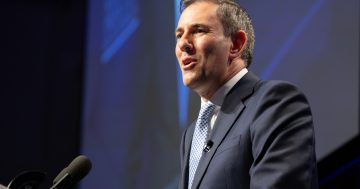
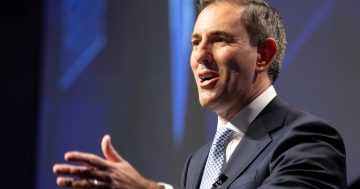
Treasurer Jim Chalmers responded to the figures, saying real wages were continuing to grow.
“Real wages were up in quarter but down through the year, not because wages have been too low but because inflation is still too high,” he said.
“We’re helping to deliver higher wages for workers because we know this is one of the best ways to help with the cost of living …
“When we came to government, real wages were going backwards by 3.6 per cent. Both annual and quarterly real wages fell for the last five quarters under the previous government.
“While annual inflation is higher than we would like, it’s much lower than we inherited and it has moderated for the previous three months.
“We already had an inflation challenge in our economy before the war in the Middle East, but this conflict is making it worse and its impacts are broadening beyond fuel.
“People are under pressure and we’re taking action by helping to address inflation and rolling out more cost of living relief including higher wages and more tax cuts.”
But shadow treasurer Tim Wilson said the data proved real wages were continuing to go backwards under Labor.
He said the WPI for the June 2026 quarter showed real wages have declined across the life of the Albanese government by 1.5 per cent.
Mr Wilson said real wages have sat below their June 2022 level for every one of the 16 quarters since Labor took office.
“For every $100 pay rise, inflation has eaten up $111. On the average full-time wage, pay rates are about $1600 a year behind prices since the election,” he said.
“The Albanese government’s active inflation agenda has corroded the wages of Australians.
“Pay rates on the average full-time wage have gone backwards $1600 a year since the election and they’re now doubling down on their strategy to stoke inflation, tax inflation and spend inflation in a vicious cycle that makes Australians poorer.”
The ABS data was released on Wednesday (19 August), which was also the one-year anniversary of the Federal Government’s Economic Reform Roundtable that brought together leaders from across the country.
Dr Chalmers noted the anniversary, releasing a statement saying the roundtable helped shape more than 60 economic reforms and deliver the biggest shakeup in a quarter of a century.
“Each of these reforms are key parts of our efforts to boost productivity and economic growth,” he said.
“It has been a big 12 months for economic reform and it wouldn’t have been possible without the contributions and broad consensus at the roundtable.”