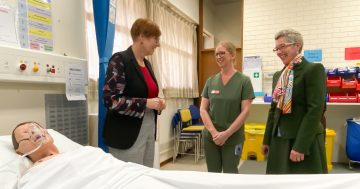
Workers frequently experienced psychological trauma, hypervigilance, cognitive fatigue and ongoing concerns about their safety after violent incidents. Photo: Claire Fenwicke.
After a decade in healthcare, one Canberra worker recently reached a breaking point. Posting anonymously in a local online community, they asked a question they never imagined they would have to.
“Is anyone else thinking of leaving healthcare because of the abuse and disrespect?”
For years, they had accepted long shifts, emotional exhaustion and the pressure that comes with caring for sick patients. What they were no longer sure they could accept was the daily abuse.
The response that hit hardest came from another health worker. They had already left.
Not because they no longer loved the profession, but because they no longer felt safe or respected doing it.
Their exchange reflects what health unions, ambulance leaders and police say is becoming one of the biggest challenges facing Canberra’s health system.
Occupational violence – ranging from verbal abuse and intimidation to physical assaults – is becoming increasingly common, with frontline workers warning it is taking a growing toll on staff wellbeing, retention and ultimately patient care.
For Professor Dipti Talaulikar, President of the Australian Salaried Medical Officers Federation ACT Branch, the stories are no surprise.
She said reported incidents, together with anecdotal reports, had doubled over the past few years. The reasons are complex.
Patients are arriving at hospitals older, sicker and with increasingly complicated health needs than ever before.
“Patients presenting with acute problems, those with mental health issues, drug and alcohol dependence, dementia or behavioural issues can get frustrated, especially when facing longer wait times, leading to occupational violence,” she told Region.
Dr Talulkar said staff shortages often intensified those pressures, while poor reporting and inconsistent follow-up meant some incidents were never fully addressed.
Hospital design could also play a role.
Areas with poor visibility, limited escape routes, inadequate duress systems and a lack of secure rooms all increased the risks faced by staff.
In a multicultural city like Canberra, communication barriers and differing cultural expectations could also contribute to misunderstandings that sometimes escalated into aggression.
The consequences extend well beyond the individual worker. When violence erupts inside a hospital, patient care often stops. Procedures are delayed, clinical activity is interrupted and waiting times grow longer.
The impact doesn’t end when the incident is over.
Professor Talaulikar said workers frequently experienced psychological trauma, hypervigilance, cognitive fatigue and ongoing concerns about their safety.
That, in turn, contributed to higher rates of personal leave, burnout and staff turnover.
“It is our view that occupational violence is a preventable occupational hazard. It should not be considered an inevitable consequence of healthcare delivery,” she said.
If hospitals are feeling the pressure, ambulance crews often experience it first. In the previous financial year, ACT Ambulance Service recorded more than 190 incidents of occupational violence – more than one every two days.
Chief Officer David Dutton described the figures as a “sad reality”.
“Within just the past few months, we have seen cases where the very paramedics providing care have themselves become patients following acts of workplace aggression,” he said.
The issue was a recurring theme during International Paramedics Day events this week, where ACT ministers acknowledged paramedics remain among the emergency workers most exposed to violence while simply doing their jobs.
“Our paramedics and emergency services personnel encounter these situations far too often, and it is completely unacceptable,” Minister for Police, Fire and Emergency Services Dr Marisa Paterson said.
“These are dedicated professionals who come to work each day to help members of our community during some of the most difficult moments of their lives.”
The ripple effects are also increasingly being felt by police. The Australian Federal Police Association says officers are regularly being called into volatile situations inside hospitals after incidents have already escalated.
AFPA President Alex Caruana said violence in hospitals had become a public safety issue as much as a healthcare issue.
“Police officers should not be expected to repeatedly walk into dangerous environments because another system has failed to control the risk.”
In May this year, Mr Caruana came out with a few demands asking for police attendance data, including repeat call-outs, assaults, threats and weapons-related incidents, to be included in public reporting on hospital violence. He is also calling for stronger legal protections for frontline workers, better hospital security and regular reporting on measures taken to reduce violence and police call-outs.
For Professor Talaulikar, however, the solution begins long before police are needed.
She is calling for a zero-tolerance approach to violence against healthcare workers, mandatory reporting of every incident, better staffing levels, stronger security in high-risk areas and greater involvement of frontline clinicians in workplace safety decisions.
She also believes staff need better support after traumatic incidents, including access to mental health services and specialist drug and alcohol resources.
“All staff at Canberra Health Services have the right to come to work and know they will be able to work safely and without fear,” she said.
Because if healthcare workers continue reaching the point where they feel they have no option but to leave, Canberra risks losing not just experienced professionals, but the people the community relies on most when it needs help.