

Record levels of ACT junior doctors said they would recommend their workplace for training in the latest Medical Training Survey. Photo: Michelle Kroll.
Sustained investment in wellbeing and workplace support has seen Canberra’s junior doctors report record levels of satisfaction.
The Medical Board of Australia’s 2025 Medical Training Survey found there’s been a turnaround from the “concerning dip” in satisfaction reported by medical staff.
There’s been a steady rise in the number of ACT respondents who would recommend their workplace for training, up to 81 per cent, the highest level since the survey began.
That’s up from 78 per cent in 2024 and 73 per cent in 2023.
Australian Medical Association ACT president Dr Kerrie Aust said this demonstrated the value of investing in doctor wellbeing.
“In Canberra we’ve seen additional supports put in place for medical trainees over the last few years following concerted advocacy, including more support staff and greater attention to unpaid overtime,” she said.
“It’s really pleasing to see improvements reflected in trainees’ experiences.”
ACT satisfaction now aligns closely with the national average of 83 per cent, a stark contrast to between 2019 and 2022, when rates fell as low as 60 per cent.
Canberra participants also rated orientation, teaching sessions, supervision and workplace culture on par with national averages.
The Territory’s junior doctors reported being paid for unrostered overtime most of the time (79 per cent), compared with 75 per cent nationally.
Despite the positive trends, some challenges still persist in the workforce.
ACT trainees worked longer hours than their interstate counterparts (47.3 hours per week on average compared with 44 hours nationally), and 70 per cent of them clocked more than 40 hours per week (compared with 58 per cent nationally).
Inappropriate behaviour continues, with 37 per cent of ACT doctors reporting they had experienced or witnessed bullying, harassment, discrimination or racism in the past 12 months. This figure is consistent with national trends and previous surveys.
In Canberra, the person responsible for this behaviour was most often the patient or their family member/carer, followed by senior medical colleagues, other staff members and nurses and midwives.
Medical Board of Australia chair Dr Susan O’Dwyer said this showed the “fault lines in the culture of medicine run deep”.
“Work across the profession and the health sector to improve cultural safety and address racism remains urgent and essential,” she said.
However, ACT doctors reported their highest levels of confidence yet in raising concerns about inappropriate behaviour (82 per cent) and accessing workplace support for stress and trauma (82 per cent).
Dr Aust said this showed wellbeing work needed to continue.
“For Canberra to have the health system our community deserves, we need to keep investing in doctor wellbeing and fostering a zero-tolerance approach to inappropriate behaviour. AMA will not stop advocating for further reforms in these areas,” she said.
The results come shortly after the ACT Government announced it would be providing $440,000 over four years to the AMA to support its continuing operation of the Drs4Drs ACT helpline.
This is a 24/7 service that provides a free, independent and confidential service for doctors and medical students who need advice on personal health and wellbeing matters, including stress and mental health challenges.
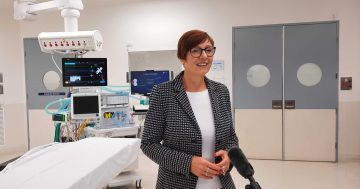
Health Minister Rachel Stephen-Smith said investing in the wellbeing of Canberra’s healthcare workforce was a priority.
“Our GPs, specialists and doctors at all levels of training play a vital role in our community, delivering quality care to Canberrans. However, we know that at times this can come at a cost to their own wellbeing,” she said.
“Drs4Drs ACT offers a vital service and makes a real difference in the lives of our doctors and medical students.”
The money will be issued in $110,000 instalments each financial year, starting from 2025-26, to support the helpline and a series of wellbeing workshops and events for doctors and medical students in the ACT.
The investment in the Drs4Drs program is part of the ACT Government’s broader $4 million Professional Development and Wellbeing Fund and delivers on an ACT Labor election commitment.