11 September 2026

Why can't we celebrate falling house prices instead of calling it another crisis?

| By Oliver Jacques
Join the conversation
98
Sold sign in front yard

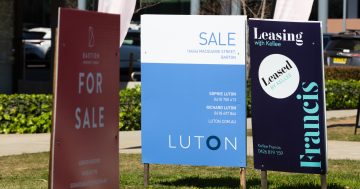
House price falls have been portrayed as a crisis by those who said the same about price rises. Photo: Michelle Kroll.

Property values are falling in almost every suburb in Australia, creating an economic problem and a “political issue” for the Albanese Government, so says The Sydney Morning Herald.

This is the same paper that previously complained that “cashed-up investors are pushing aside first-home buyers as property prices continue to rise”.

Rather than celebrating the fact that houses are becoming more affordable, it seems everything has to be a crisis.

That’s the great Australian housing contradiction: we desperately want houses to be cheaper, right up until the moment they actually become cheaper.

READ ALSO House prices: Alarm bells were ringing in 2004 but Howard and Costello ignored them

For years, we have been told that soaring property prices are locking young Australians out of home ownership. Housing affordability has been described as a crisis, a catastrophe and an intergenerational injustice. We have hassled politicians to make housing more affordable.

But when prices actually start going backwards, the language changes.

Suddenly we have a “downturn”. Prices are “spiralling”. There are warnings of a “crash”. Household wealth is being “wiped out”. The economy is apparently at risk.

Even our national broadcaster peddles the hypocrisy.

In an article dotted with negative adjectives, ABC business correspondent David Taylor recently reported that the property downturn had spread to 93 per cent of capital-city suburbs, with prices expected to keep falling.

He had previously described the fact that so many Australians couldn’t afford a house as a “complete and utter disgrace”.

It’s true that falling property prices can hurt recent buyers with large mortgages, reduce household wealth and, in a serious enough downturn, weaken spending and construction.

But somewhere along the way, we have forgotten that falling prices are actually the only way to make housing more affordable.

And this particular fall hasn’t come entirely out of nowhere.

The Albanese Government has changed the tax settings that helped make property such an attractive investment, including restricting negative gearing on existing properties and changing the capital gains tax discount. Those changes were explicitly intended to improve housing affordability, even if the government is afraid to brag about its success.

That’s because the idea of ever-rising property prices is ingrained in Australian politics.

John Howard once famously said he had never met a homeowner who complained about their house value going up.

But that’s an old-fashioned attitude from a man who lived with his mother until he was 31, saved up and was able to buy a harbourside home for $54,000.

In an era when many first homes cost seven figures, Howard’s adage is no longer true. A recent Resolve poll found 61 per cent of Australians supported the objective of bringing house prices down. That included most homeowners.

I’m one of them. I bought my house in 2017. It has more than doubled in value since then.

In the past few months, it has probably lost around 5 per cent of that value.

I think I’ll probably survive.

In fact, I’m quite happy if that small fall makes it a little easier for someone else to get into the market.

The extra value of my home gained over the last decade doesn’t put money in my bank account. I still need somewhere to live. If I sell, I have to buy another house in the same inflated market. Unless I decide to move overseas, the paper gain is largely meaningless.

I’ve previously written about Singapore’s unusual attitude towards housing – seeing it as a form of shelter rather than a money-making vehicle for wealthy investors. Its philosophy has seen it create an enormous public housing system, with around 90 per cent of citizens owning their own home and homelessness virtually non-existent.

Bathroom feeling like a time capsule from 1985? Upgrade it now with Canberra’s best bathroom renovators.

Australia has moved in the opposite direction. We have turned the house into a retirement plan, an investment vehicle and a tax strategy, and then wondered why making housing affordable has become so politically difficult.

We also wonder why we now have tent camps of homeless people in many of our towns and cities.

As economist Saul Eslake recently said, if the price of food, petrol, childcare or any number of other things fell, we would welcome it. Yet when the biggest component of household expenditure falls, somehow the sky is falling in.

We have spent years demanding that governments make housing more affordable.

Now, when one of those governments actually changes the rules and prices start to come down, we are told to panic.

Is it any surprise that it’s so hard for policymakers to implement much-needed economic reforms in Australia?

Perhaps we should stop making everything a crisis.

Perhaps, just occasionally, we should recognise a rare thing in Australian housing policy: a government doing something that might actually make houses cheaper.

And maybe we should celebrate it.

Free Daily Digest

Want the best Canberra news delivered daily? We package the most-read Canberra stories and send them to your inbox. Sign-up now for trusted local news that will never be behind a paywall.
Loading
By submitting your email address you are agreeing to Region Group's terms and conditions and privacy policy.

Join the conversation

98
All Comments
  • All Comments
  • Website Comments
LatestOldest
HiddenDragon8:32 pm 10 Sep 26

The media hypocrisy on this issue is a reflection of public hypocrisy – just as there are people who claim to be “passionate about climate change” (so long as doing anything about it involves minimal cost and inconvenience for them), and willing to see taxes go up to pay for better public services (so long as their own taxes don’t go up), there are people who will tell pollsters that they support falling home prices (so long as it’s other people’s homes which lose value).

The government obviously understands this reality, which would be why, along with blatant self interest, they chose to ignore calls for negative gearing on existing property investments to be cut, or at least phased out – a move which would have been “courageous” in Yes, Minister parlance, but would surely have done more to lower prices and free up the sorts of properties that many first home buyers dream of.

More broadly, the dissonance over this issue is another symptom of the wheels falling off the economic model which this country has followed for the last few decades – i.e. a population Ponzi scheme (now the subject of public debate between Labor luminaries), puffed and fluffed with the illusion of property wealth, the debt-funded expansion of a bloated public sector and the squandering of windfall mining revenues.

This is a great article. Thank you.
There are several components to housing affordability but to deny that the price of the house is an important one, is just wrong.
Many home-owners have children and grandchildren that they see not being able to afford to buy homes and so are not bothered by a decrease in their house value.
I understand that for the few who go into negative equity that that feels distressing but unless they sell and don’t re-buy, the fact is that nothing has really changed except perception. (One rule of investing – time in the market, not timing the market.)

The constant doom and gloom reported by MSM is a disgrace. It’s an agenda driven by vested interests. I would like to know at what point does a cost of living crisis actually cease. Do we judge it on inflation rates or interest rates, the price of bread or a beer. What is the line?

Steve Anderson1:26 pm 10 Sep 26

Best and most concise summary of the current situation Ive read yet.

Yes – we need more articles like this.

All that shows is how little you read

It would have been far better for the government to focus on increasing productivity and real wages, rather than to have engineered this wipe-out of asset value and increase in rents.

Productivity definitely needs work if we are to be better off over all. The rest of your comment is evidence-free blather.

Productivity will only increase when business owners and managers start investing in training their people, the technology and resources they need to do their jobs effectively, instead of skimming all profits away from the business and into their pockets.

Axon – where is your evidence for that blather?

Don’t worry Matt, i got the same senseless “blather” comment further down. Don’t expect a sensible answer.

“the government …to have engineered this wipe-out of asset value and increase in rents” You made the claim, Matt Watts, back it up with real evidence of causal relationships after accounting for all other factors. Failing to do so is blather.

Incidental Tourist11:14 am 10 Sep 26

Many people including the author, confuse falling property prices with improved housing affordability. The reality is different. Cheaper houses are not affordable houses.

Indeed all major banks report drastic falls in first home owner applications. Banks tell that less people can afford houses today than before the budget. The housing supply pipeline is drying up. Construction companies and many businesses become bankrupt. And per ca-pita Australia is already in recession. This means that people are getting poorer.

So why falling prices do not make housing more affordable?

Because falling housing values is a reflection of people getting poor. Property prices fall at the end of a chain of economic events.

The housing affordability depends on incomes, interest rates, sate and federal taxes, elasticity of supply, investment and capital, regulations, borrowing capacity etc. Hence when minister Wells starts playing Ooshies and ministers O’Neil or Chalmers talk headlines instead of Economics then it becomes everyone’s problem.

Property prices need to fall in relation to income and other assets. Improving productivity is certainly an issue, and interest rtes have the most telling market impact.

So cheaper houses are not more affordable? Crazy talk. House prices have decreased in the last month or so with no changes in buyer income, interest rates, state taxes, etc. That has to make them more affordable.

Inflation, Karen10? It is a place otherwise disposable or investable income goes.

Celebrating falling property values as a consequence of tax changes is a bit like polishing a “t_rd”.

The tax changes were explained as removing the tax advantaged investor from the market, enabling first home owners to enter the market.

If we accept that argument, we then need to ask why the changes applied to all asset types, not just property?

Sounds like a tax grab to me.

There are always consequences with tax changes, and with these changes, confidence is a significant one. Hypothetically, say there is a 20% fall in values. The property owner with what was a one million dollar property and a half million debt, has lost two hundred thousand dollars, however because their debt remains, the loss of their equity has a physiological effect on their perception of wealth. They rethink their spending, they are less likely to help their kids into a property etc.

That same person is also less likely to buy an investment property (which was said to be the intent if the taxes), and with that we are seeing rents increase (that old supply and demand thing).

And frankly, if I were a property investor, and I’m not, buying a “new build” to secure NG etc wouldn’t encourage me one iota. When eventually the property is sold, it’s no longer classified as “new build”, and any subsequent buyer doesn’t get those incentives. To me, it’s a recipe for a financial loss, because you always pay a premium for new construction.

Then there are those who now find themselves with negative equity; paying off large debts on a property worth less than their debt.

How is their perception of financial well-being? Are they spending in the economy, or bunkering down?

Ken Henry had recommended to government in 2010 that there be no changes to property taxes, until housing supply was strong. With a shortage of housing (and high immigration numbers pushing that demand), the government did the opposite of what Dr Henry recommended. 🤷‍♂️

The real problem isn’t so much the tax changes, but the speed of implementation. The decision was one of political opportunism, with the Greens having control of the Senate, the government could introduce their ideology, despite electoral pledges to retain the tax system.

Governments usually tinker around the edges, as to not disrupt the economy.

These types of political decisions removes trust in the community.

Celebrating? Not so sure.

Opening with a false premise negates the rest of your blurb, Colin Wood. Try interest rates, inflation, and productivity issues.

Capital Retro8:27 am 10 Sep 26

The banks who are the major home lenders are publicly saying that home prices will fall further so the claim that affordability is improving is simply nonsense.

Lenders are now insisting higher minimum deposits to balance the loan to valuation ratio so the risk of the lender being exposed to a loss if they become mortgagee in possession is offset.

And while it may be the narrative to bag old people like John Howard remember that in his era home loans were regulated and you had to have one third deposit to get one. This meant hard work and determination but the reward was equity in your home from day one and a maximum repayment term of 15 years so that your home would be debt free by the time you retired.

I was horrified to hear recently from a young couple I know that in order to afford the monthly payments on the 90% advance for a home loan they had just arranged they had to take a 35 year term.

It was Keating’s government that deregulated home loans.

CR making it up as he goes along. What a shock lol.

Capital Retro, Keating was Prime Minister before Howard, not after. Deregulation was sustained under Howard, and home loans were certainly not regulated by him as you describe. Check the operation of your memory.

If you are horrified that people are taking a 35 year term, then you will be cheering if prices fall while incomes go up.

Capital Retro2:57 pm 10 Sep 26

I was referring to Howard’s “era” namely when he was a first-home buyer.

Similarly I was referring to Keating’s “government”, not the time he bought his first home (or was that a pig farm?).
I never said Howard regulated the home loan market either.

My memory is OK but you ability to see the opposite side of the socialist narrative is a problem.

“I was referring to Howard’s “era” namely when he was a first-home buyer.”

😂😂😂

Stephen Saunders7:07 am 10 Sep 26

Sure, a small fall’s cause for a small celebration. To induce a meaningful correction in Albanese Labor’s world-level rental and housing pain, he’d have to really lay into their 2m-plus temp visas with 400k bridging visas. Don’t hold your breath.

The majority of Australians, especially the two thirds who are home owners, are unlikely to celebrate their asset value and wealth being reduced, their standard of living falling and the looming recession. But if some want to celebrate, go right ahead.

The worst housing slump since the 1980s it’s being called, fully owned and operated by the federal government.

Clueless Penfold blathers out his talking points devoid of facts again.

The last time house prices fell as far as they have in the last year was 2022-2023; Before that they fell more in 2017-2019. Better talk to the LNP, Pengold? In each case it is associated with rising interest rates.

Pengold’s premise is wrong anyway. It is false to claim that two-thirds of Australians own their own homes. Census data calls every adult living in an owned home an “owner”, eg. adult children or other relatives or visitors. The real figure is 51%. Pengold does not want the other 49% to own a home unless they strip their superannuation assets to pay thus inflated prices. What a pernicious dill.

Pengold’s propaganda zone is always fact-free.

Daily Digest

Want the best Canberra news delivered daily? Every day we package the most popular Region Canberra stories and send them straight to your inbox. Sign-up now for trusted local news that will never be behind a paywall.

By submitting your email address you are agreeing to Region Group's terms and conditions and privacy policy.