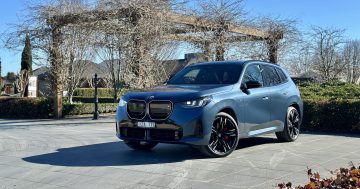
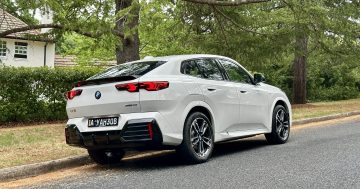
Electric cars might make more headlines, but plug-in hybrids offer serious savings at the pump … without the range anxiety. Photo: Canberra BMW.
Canberra enjoys some of the highest electric vehicle adoption rates in the country, with more than 18,700 registered EVs in the territory as of August this year. But while the motoring world sprints toward an all-electric future, plenty of everyday drivers still feel hesitant about taking the plunge.
Plug-in hybrids offer the ideal middle ground if you’re not quite ready for a full EV.
These multi-drive-train vehicles combine an electric motor with the combustion engine we’re most used to, meaning they can drive in petrol, electric, or combined mode at the drop of a hat.
Plug-in hybrids produce energy while you drive through regenerative braking and the like, but you can also charge them externally like a regular EV. The combustion engine kicks in automatically when that charge runs out, so you get emissions-free driving for as long as possible and a stress-free switch over as needed.
This keeps your trip independent of regional charging infrastructure, effectively eliminating range anxiety for Canberrans heading to the snow, the coast, or bigger cities like Sydney or Melbourne.
Most models have an electric range of around 100 kilometres – depending on how you drive them, of course.
The savings potential plug-in hybrids pose continues to grab local motorists’ attention, according to Canberra BMW dealer principal Marty Martin.
“We’ve all seen fuel prices continue to skyrocket across the board. While we’re still not sure what that looks like going forward, it’s pretty safe to say filling up will never be cheap,” he says.
“Because plug-in hybrids allow you to drive in electric mode only, they give you great control over when and how you use that fuel. Most of our plug-in hybrid customers drive locally in electric mode and only use petrol on longer drives.
“I spoke with one who drives a BMW 330e, which is from a previous generation, and he only fills up once a quarter. Another drives an X5 50e and fills up once every two months, which is remarkable for such a big, heavy car.”


Canberra BMW already has three plug-in hybrid models to choose from, and more are coming onto the market every year. Every model they release moving forward will come in a plug-in hybrid version.
“Our newest model to market and our most popular overall is the BMW X1 25e. This is a small SUV with an all-electric range up to 86 kilometres; perfect for getting around town,” Marty says.
“The X3 30e is a mid-size SUV with an all-electric range up to 91 kilometres. This one’s popular with families.
“Then there’s the X5 50e. This is a big, powerful car ideal for long trips, towing your caravan, boat or camper trailer, so it’s still very popular in diesel. The plug-in hybrid model has an all-electric range of about 94 kilometres.
“Don’t forget that low-emissions vehicles enjoy discounts on rego and stamp duty in the ACT, and since hybrids have fewer wearable parts, they’re usually faster and cheaper to service.”
For more information, visit Canberra BMW.
Region Media Partner Content