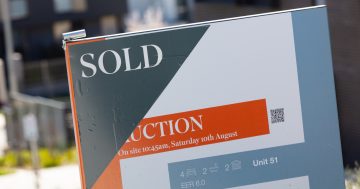
The scrapping of stamp duty will inject more mobility into the market. Photo: Michelle Kroll.
The abolition of stamp duty for all ACT first-home buyers is a game-changer for the residential market, according to a prominent Canberra property lawyer.
Principal at Velocity Conveyancing Group, Andrew Satsias, said the ACT Budget decision was one of the most significant incentives provided by the ACT Government in more than a decade.
Mr Satsias said it was a welcome reform that would reduce one of the major upfront barriers to home ownership and provide meaningful assistance to first-home buyers seeking to enter the Canberra property market.
He said the move would create a much more dynamic market and stimulate higher property turnover, particularly as older homeowners see an opportunity to downsize.
“It’s going to serve its intended purpose, which is to help the first-home buyers enter the market, but I think it’s also going to generate the right sort of activity in the market as well,” he said.
Mr Satsias said the pensioners’ stamp duty concession already encouraged downsizing to more appropriate homes, but the complete abolition of stamp duty for first-home buyers would bring more young people into the market and tempt those hanging on to their properties to sell.
This would bring more stock onto the market, particularly family homes, and contribute to the rejuvenation of older suburbs.
“The incentive that’s being provided isn’t being provided to investors or the like, it’s the first-home buyers looking to move into a home for their families,” Mr Satsias said.
The current means-tested stamp duty exemption for first-home buyers applies to properties up to $1,000,020 and represents a maximum possible saving of almost $37,000.
For those who weren’t previously eligible, the savings will be significant.
But Mr Satsias said that in Canberra, with its relatively high incomes, it did not take much for a couple to breach the income threshold, and despite a softening market, prices aren’t cheap.
According to the May Cotality Home Value Index, the overall median price in Canberra is $890,000. For a standalone house, it’s $1,040,000.

Velocity Conveyancing principal Andrew Satsias says the move will encourage older home owners to consider selling. Photo: Thomas Lucraft.
Mr Satsias said scrapping stamp duty altogether, no matter the price or what you earn, would have a more direct impact on the market than Federal Labor’s proposed changes to negative gearing and capital gains tax.
It would also inject life into what was already a dampened market due to higher interest rates and the rising cost of living, but without necessarily driving prices up, unlike other demand-side incentives such as first-home buyer grants.
“If anything, it’ll provide a more stable market, but importantly, it’ll also encourage people that otherwise might have held on and not sold to actually sell,” Mr Satsias said
He said such a payoff from the rate rises of the 20-year tax reform program was a positive outcome.
Treasurer Chris Steel said on Thursday that the government had decided not to means-test the stamp duty reform because it wanted to get as many people into their own homes as possible.
He said the tax reform program was at a stage where the decision to abolish stamp duties for first-time buyers, pensioners and people on the NDIS could be made.
“We know that house prices have gone up over the last few years, particularly in the wake of the pandemic,” Mr Steel said.
He said it made more sense to scrap stamp duty for first-home buyers altogether than to simply fiddle around the edges.
Mr Steel said the pensioner concession also supported people in making the transition to a home that’s more manageable for them in the later part of their lives.
“It will provide opportunities for downsizers, older Canberrans who want to purchase a missing middle, unit, under the government’s missing middle housing reforms, and that will free up larger homes for families to move into, so we think that this will have really positive impacts on the housing market,” he said.
Mr Steel said stamp duty was neither efficient nor fair, and it prevented people from moving and finding a home that suited their needs.