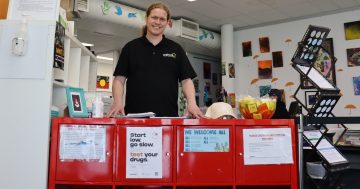

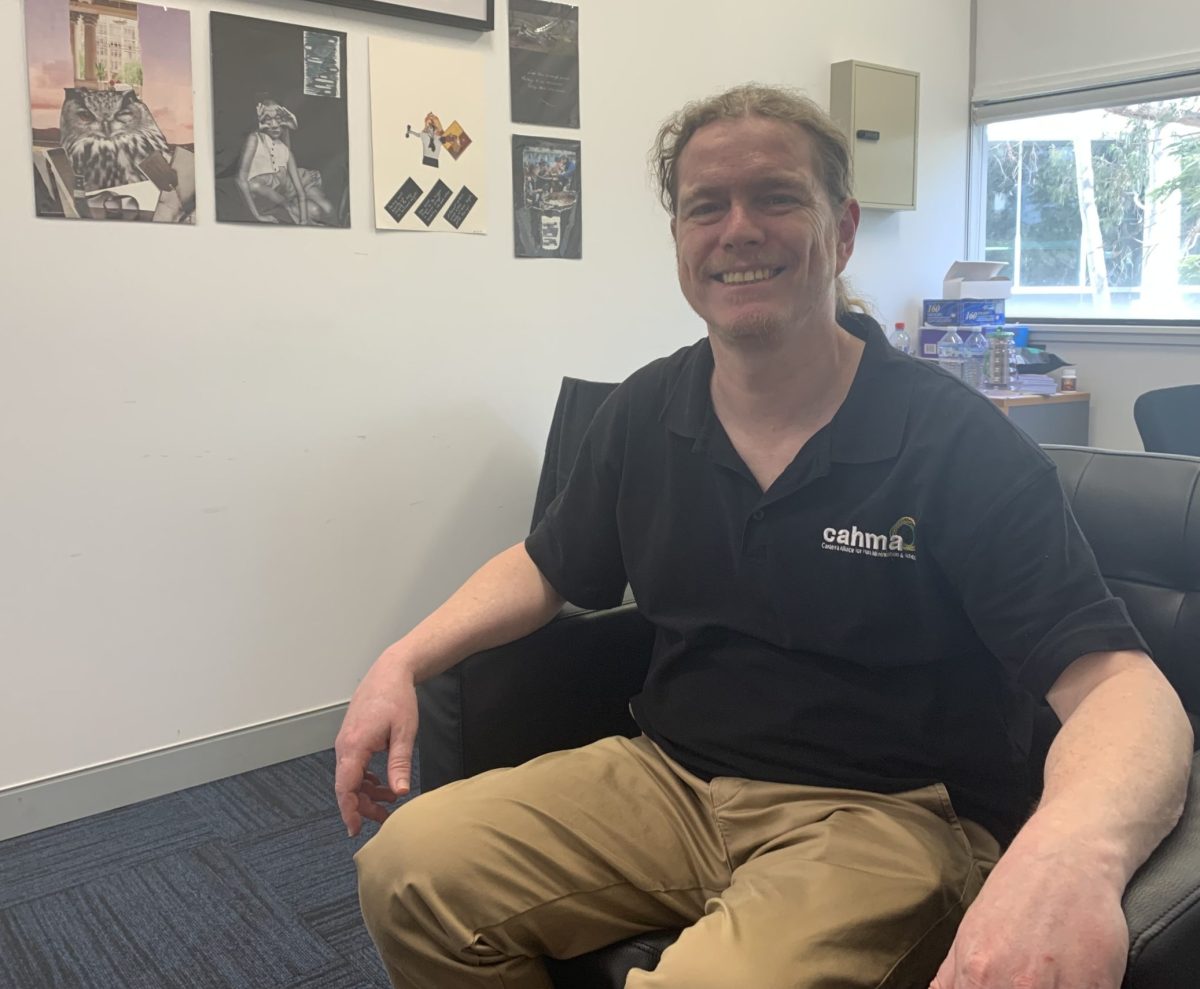
CAHMA CEO Chris Gough said the PTSS was about providing one-on-one support to help people achieve their best possible life. Photo: James Day.
A world-first peer support and case management framework to improve access to drug treatment led by people with lived and living experience has been launched in Canberra.
The Peer Treatment Support Service (PTSS) Model of Care was developed by the Canberra Alliance for Harm Minimisation and Advocacy (CAHMA), providing guidance on how to work one-on-one with those seeking to achieve their alcohol and other drug goals.
CAHMA executive director Chris Gough said it was about promoting a person’s dignity, autonomy and empowerment as they progressed through their healthcare journey.
“Whether you want to stop using drugs, or reduce the harms of using drugs and gain control of your health and wellbeing, the PTSS provides one-on-one support to help people achieve their best possible life,” he said.
“The goal of the service is to empower people to gain control of their health and wellbeing and gather around them a support network that builds their social capital.
“It blends the heavy lifting and goal-based support elements of case management with the role modelling, hope and compassion of peer support to create a truly person-centred model of care.”
The PTSS Model of Care demonstrates how CAHMA provided accessible support for marginalised people, providing them with tools to take control of their health and wellbeing, and how to navigate the service sector.
It can also be used as a resource for the wider sector, providing practical guidance for organisations seeking to employ peer workers ethically and effectively and set a standard for person-centred care.
“The PTSS framework shows just what can be achieved with an inclusive approach and a wide range of peer workers with different lived experience,” Mr Gough said.
“People who have been through the challenges of drug treatment are best placed to help others achieve their goals and this model of care enables peer workers to provide that hope, help and inspiration to others.”
The ACT Government supported the development of the PTSS under the Drug Strategy Action Plan.
Health Minister Rachel Stephen-Smith said CAHMA’s peer-led approach challenged the stigma faced by people seeking support for drug taking, describing their dedication to the community as “extraordinary”.
“This model provides a strong foundation for peer workforce development in the ACT and recognises that people with lived and living experience of drug use can transform our understanding of the needs in our community and how we can better deliver person-centred care,” she said.
“Peer workers use their lived and living experience and group identity to inform their work, disassemble stereotypes and connect with their clients. Peer Treatment Support workers have walked the same path as the people they support.
“They bring their strength of lived and living experience as a professional asset and use that shared experience to deliver care and support that truly meets people’s needs.”
To access 24/7 free and confidential advice about alcohol and other drugs, call the National Alcohol and Other Drugs hotline on 1800 250 015. CAHMA is open from 10 am to 4 pm during weekdays at the Belconnen Churches Centre.