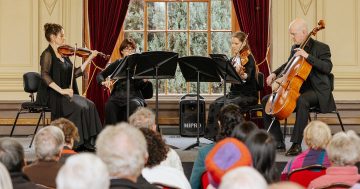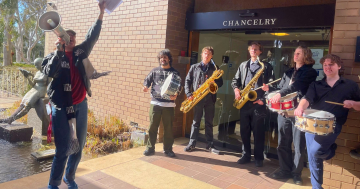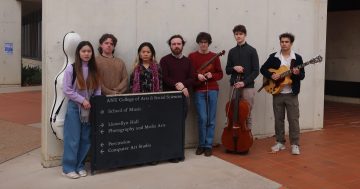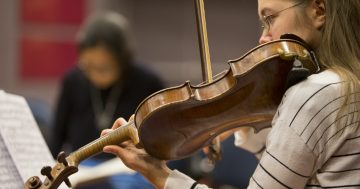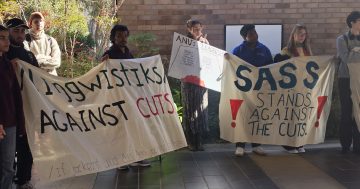

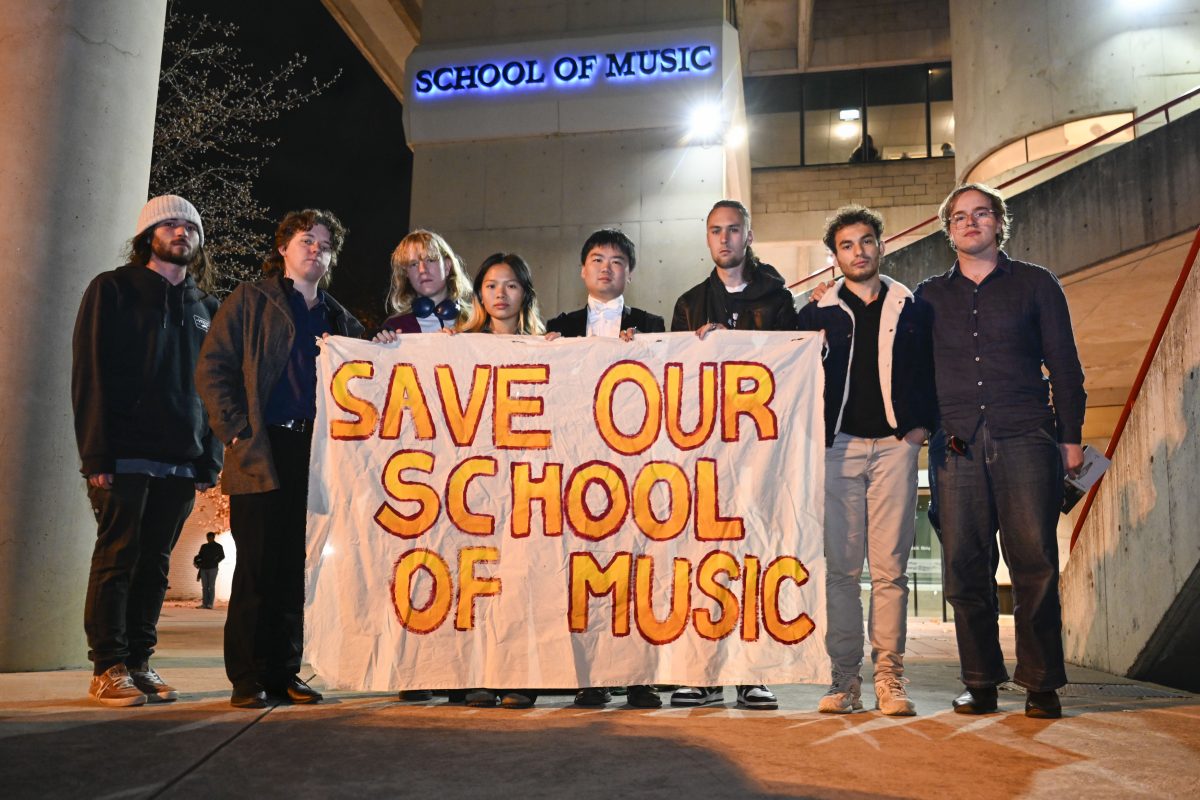
The calls of ANU students, staff and the broader community have finally been answered. Photo: Martin Ollman.
It’s taken five months, but today the Australian National University has confirmed the School of Music will not be touched as part of the now-complete RenewANU program.
The original suggestion to dismantle the institution and create a School of Creative and Cultural Practice drew outrage from staff, students, professional musicians and the broader community, with some students prepared to take legal action if the proposed changes went ahead.
On Tuesday (2 December), the College of Arts and Social Sciences’ implementation plan was released, showing there would be no structural changes to the School of Music.
“We are pleased to confirm the continuation of the School of Music in its current structure, and we remain committed to performance, student experience and the partnerships that connect our musicians to Australia’s cultural life,” CASS Dean Professor Bronwyn Parry said.
“Performance remains at the heart of the ANU School of Music and that’s not changing. What we will be offering is greater flexibility in how students can structure their study while continuing to be supported through one-to-one tuition, ensemble work, group learning and live performance.
“This Implementation Plan reflects the extensive feedback received during consultation and demonstrates that we have listened and responded … [it] sets ANU on a path that strengthens academic excellence, preserves national cultural institutions, and supports our people and ensures our students receive an outstanding education and experience.”
Prof Parry previously defended the original suggested changes.
The extensive consultation process received more than 1100 submissions from staff and stakeholders, both across the country and internationally.
Interim Vice-Chancellor Professor Rebekah Brown said that since the organisational change proposal for CASS had been released, things had changed at ANU.
“Due to higher-than-expected voluntary separations, staff attrition, retirements and vacancy management, the University’s financial position has improved,” she said.
The Australian Dictionary of Biography and the Australian National Dictionary Centre’s futures had previously been assured thanks to a sizeable donation and alternative long-term funding.
Prof Parry said students could audition for a new Performance+ Hub from 2026.
“The Hub will offer further one-to-one instrumental or vocal tuition, ensuring that students with strong performance ambitions continue to receive personalised, advanced training alongside a contemporary and flexible degree structure,” she said.
“The Performance+ Hub has been designed to be open, flexible and demand-driven, with teaching allocations based on student requirements.”
It’s unclear whether this means ANU is walking back its previous announcement that one-to-one performance teaching would be removed from its core curriculum.
The new year will also see the establishment of a new Major in Music Practice for the Bachelor of Music, which will bring together the former Performance and Composition majors.
Prof Parry said students could either specialise in one area or combine the two.
“This renewed curriculum preserves our core teaching traditions while offering greater flexibility and expanding opportunities in composition, contemporary music production, music technology, and research pathways, ensuring students are prepared for the full spectrum of contemporary music careers,” she said.
Prof Brown added that the university was excited to continue working with both the community and elite music organisations in the future.
“[This includes] the Canberra Symphony Orchestra, the Canberra International Music Festival and the National Folk Festival, [so we can] offer exceptional student experience, industry access and professional pathways.”