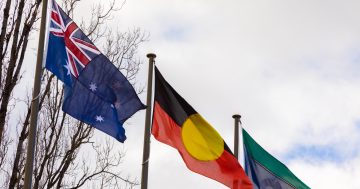


Krystle Johnson is one of 11 Aboriginal Liaison Officers in Canberra to undergo a new training course to become a qualified health worker. Photo: James Coleman.
According to Krystle Johnson, there’s still racial stereotyping taking place in Canberra’s health centres.
The graduate of a new Certificate III in Aboriginal and Torres Strait Islander Health is also one of three Aboriginal Liaison Officers (ALOs) at North Canberra Hospital, assigned to patients as soon as they tick the box on the intake form for Aboriginal or Torres Strait Islander heritage.
“Like in the Emergency Department, for instance, an Aboriginal person will come in with pain in the stomach, and I get it a lot from the staff here that ‘they’re here drug seeking’,” Johnson says.
“But how do you know? We also have mums who have reports made on them for being young Aboriginal mums. Okay, they’re young, like 19, but that doesn’t mean they’re not going to be a good mum.
“It’s still happening a lot. And we’ll pull the nurse aside and have that conversation, and ask how we can get supports in place for when she gets home, or how we can connect Mum with places, rather than putting a report in.
“This is where we come in.”
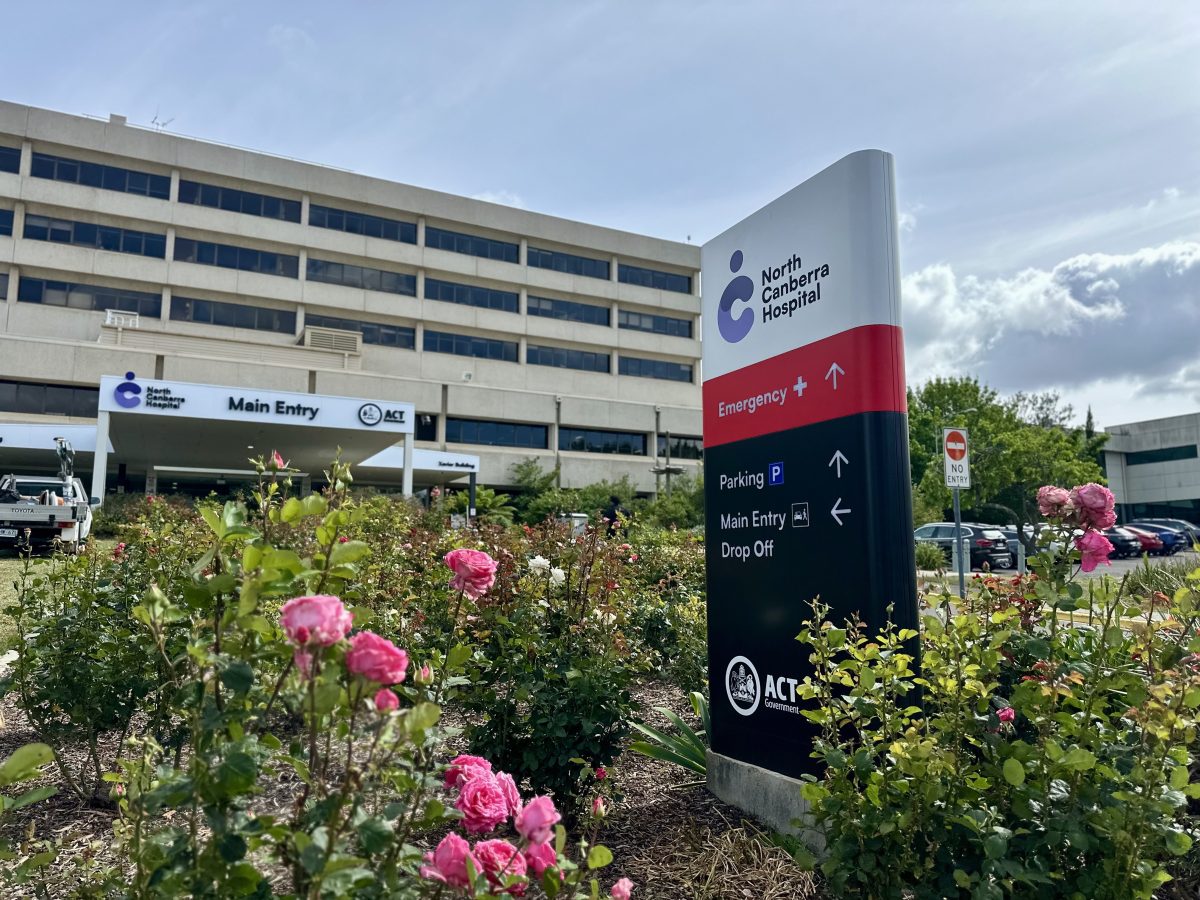
Johnson is one of three ALOs stationed at North Canberra Hospital. Photo: James Coleman.
Starting with the new Certificate III, Canberra Health Services (CHS) now aims to scale up the skills of ALOs across the city’s health and medical facilities, and build a team of local Indigenous health workers and doctors.
The first 11 students, including Johnson, graduated in September last year and now have the same qualifications as health workers. Meanwhile, a Certificate IV – still in development and about a year away – will take their qualification up to the level of an enrolled nurse.
Johnson hails from Wiradjuri country in central NSW, including Dubbo, Bathurst, Wagga Wagga and Albury. She moved to Canberra with her husband 12 years ago and has worked on and off, first at the Canberra Hospital in Woden and then at the North Canberra Hospital in Bruce, while raising their six kids.
She’s worked as an ALO since their youngest child started preschool three years ago.
“So we provide cultural, social, and emotional support to Aboriginal and Torres Strait Islander people and their families in the hospital, and after they are discharged,” she says.

Aboriginal Liaison Officers can be requested by anyone of Aboriginal or Torres Strait Islander heritage. Photo: James Coleman.
Examples of her work include attending midwife calls with Indigenous people in the community and, before surgery, ensuring patients understand the doctor’s explanations.
“Like a young girl who came in last week. She was very concerned about an operation and she asked us to be there for the appointment with the surgeon, so we went and sat down with her and helped her understand,” Johnson says.
“And if the doctor’s talking big doctor talk, we’ll ask the doctor to put that a bit clearer or talk down a bit. We also understand different things around aunties and uncles, and women’s and men’s business. They just feel more comfortable just having another ear there to help them.”
But up until now, that’s where the Indigenous-specific training has stopped.
“We can’t just go into a ward and do someone’s blood pressure or anything,” Johnson says.
“ALOs aren’t nurses … so they can’t help medically at all. But now, the new certificate means they can jump in for procedures like blood pressure, diabetes, and urine tests.
“It’s not that we’re always going to do that, but if it comes up – like there’s an elderly female patient and there’s a male nurse, and a lot of the women only want women to touch them, because of men’s business and women’s business, we can do that.
“I wouldn’t have been able to do that before – I’d just have to go and get a female, or wait hours for one to come out from the hospital.”
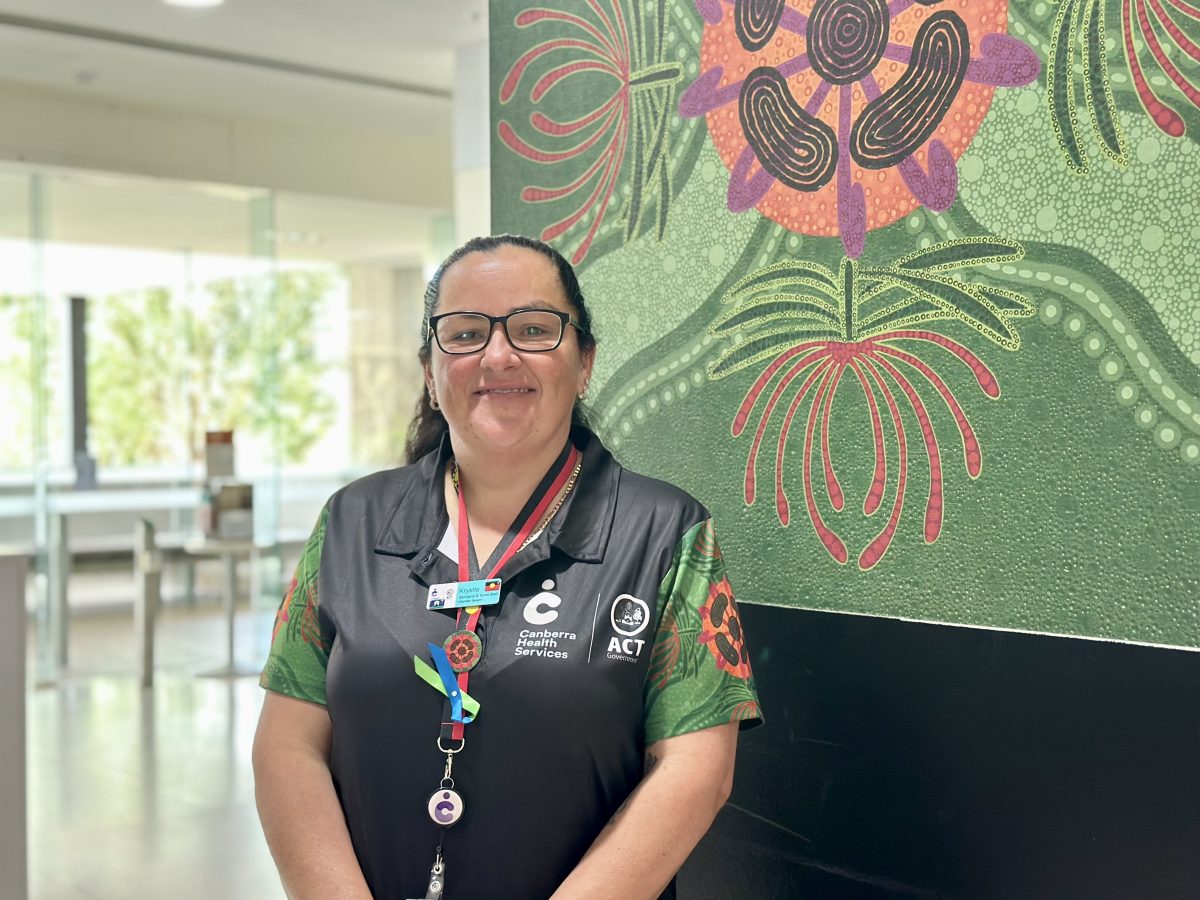
Johnson says the new training is an important step in rearing more Indigenous health workers. Photo: James Coleman.
For now, Johnson is “happy as an ALO” and doesn’t have plans to undergo any further medical training.
“This is my core. I like being in here, helping our mob understand the doctors so everything’s culturally safe.”
But she adds that it will be an important step as more Aboriginal and Torres Strait Islander people become nurses and doctors in Canberra.
“There aren’t many Aboriginal doctors or nurses or dentists or dentists – there’d be a handful of them,” she says.
“This is the start; this is going to progress your career past where you wouldn’t think you’d go … Hopefully, it’s going to grow into something big.”