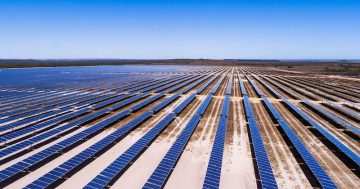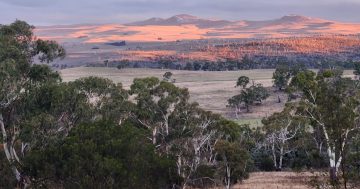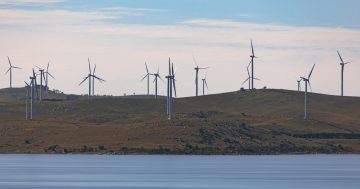

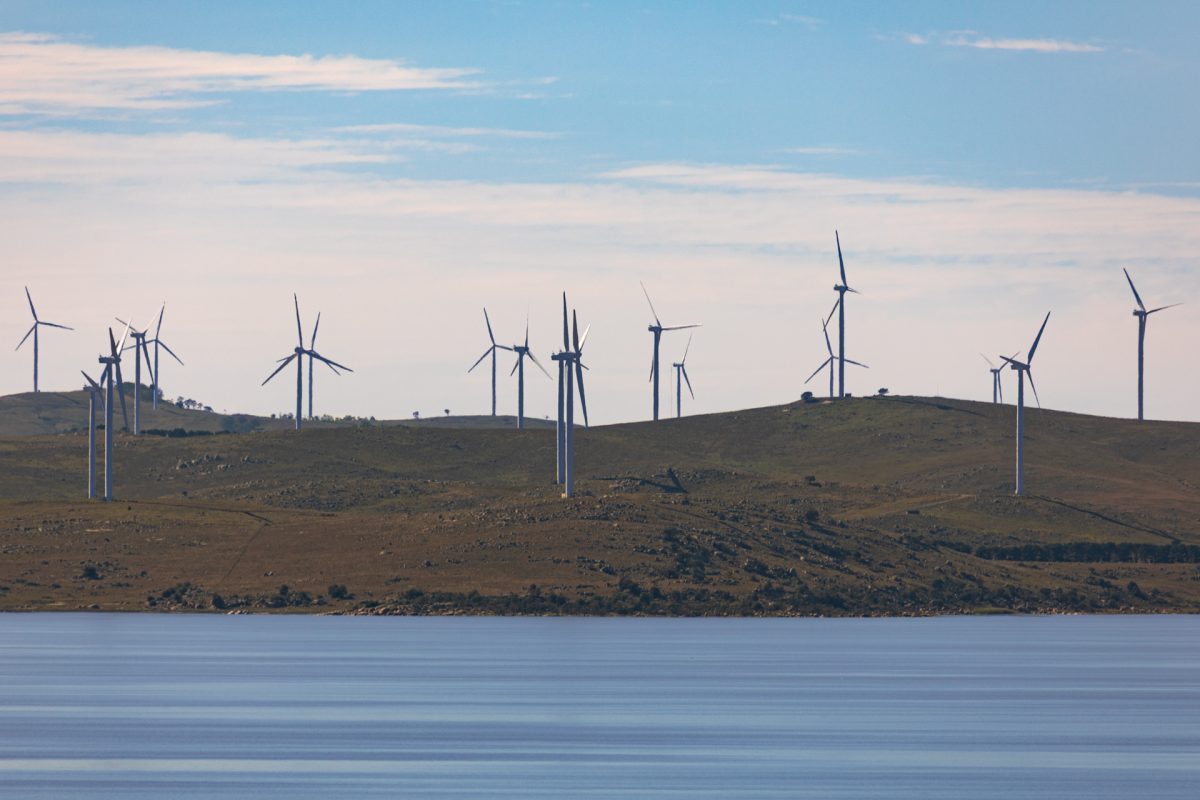
Wind turbines along Lake George. The nation needs fewer barriers to renewable energy and transmission projects. Photo: Michelle Kroll.
If Australians want cheaper electricity prices, the key is accelerating the rollout of renewable generation, transmission and battery storage.
That’s the message from the Australian Energy Market Commission’s (AEMC) new Residential Electricity Price Trends report.
The independent report projects that residential electricity prices (not bills) will fall by around 5 per cent over the next five years, if supported by new renewable generation growth.
But those prices could rise by 13 per cent from 2030 to 2035, if the three legs of the renewable rollout are not delivered faster than currently projected.
The risk is that renewables and transmission do not increase enough to meet demand as coal-fired power recedes.
Yet, while there is a long pipeline, actual construction of renewable energy projects and associated infrastructure has fallen away as proposals collide with resident and farming groups in rural Australia, and the fossil fuel lobby deploys social media to fan the flames of discontent.
One only has to look in our own backyard to see this happening.
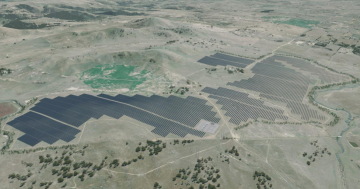
A solar farm proposal in Yass was abandoned this year due to resistance there from a small number of residents, supported by the Yass Valley Council, which has become increasingly strident about renewable energy projects.
A wind farm proposal at Binalong is also getting a buffeting from some residents.
At least a battery project in Murrumbateman was recently approved, but not without local vintners and the Council continuing to rail against fire and contamination risks.
Underlying the rural arguments against renewables is an age-old fear that Arcadia is under threat from a new industrial revolution.
Everybody loves renewables, just not near us. They should be located in industrial areas, not ruining the countryside, they say.
Rural residents also expect reliable, affordable electricity, but some do not want to think too much about where it comes from, as most old-style power stations are out of sight and out of mind.
The countryside itself has not been pristine for a long time. Most modern farms are mechanised and wedded to industrial farming practices, including the use of pesticides, fungicides and synthetic fertilisers, which are also stored on the farm.
The wine growers of the Hunter Valley have had to coexist with the coal industry for years. The town of Acland on the Darling Downs in Queensland was actually consumed by the local coal mine, and the gas industry experience there has not been kind to farmers.
If the choice is between coal mines, gas wells and renewables, then the latter is a better bet for a safer and more pleasant countryside.
Not all farmers and property holders are hostile to renewables, of course, because they can also provide a reliable income stream if they can host a solar or wind farm, which can be compatible with certain farm operations.
There are also jobs and economic benefits for rural areas, struggling with service and infrastructure costs, something the financially challenged Yass Valley Council should be thinking about.
The number of objectors is usually small, but they are skilled enough to marshal the media and the internet to make things difficult for proponents, aided and abetted by a politically opportunistic National Party.
That is not to say that proposals should be waved through without proper assessment wherever they are.
Just because we are talking about ‘green’ energy does not absolve proponents from meeting environmental requirements.
But the AEMO report is clear that barriers to new renewable and transmission projects need to be reduced by implementing credible mechanisms to ensure sufficient renewable generation and firming capacity, and by speeding up planning and approvals processes.
It also stresses the importance of continuing to build social licence for new transmission projects; otherwise, delays to wind and transmission projects could increase annual household electricity prices as much as 20 per cent.
Prolonging the life of existing coal plants risks more power outages and potentially adding up to 5 per cent to prices, but faster wind and transmission delivery could reduce prices by up to 10 per cent.
That is the stark choice before Australians.
Nimbyism, hysteria, and deliberate misinformation to undermine the case for renewables should not be part of the process.
Australians should also remember why the energy transition is happening. It’s not just about cheaper electricity.
If you believe the science that global heating is an existential threat, then the choice is even clearer.
If not, I hope you’re right.