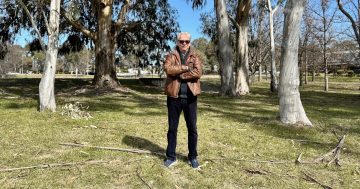

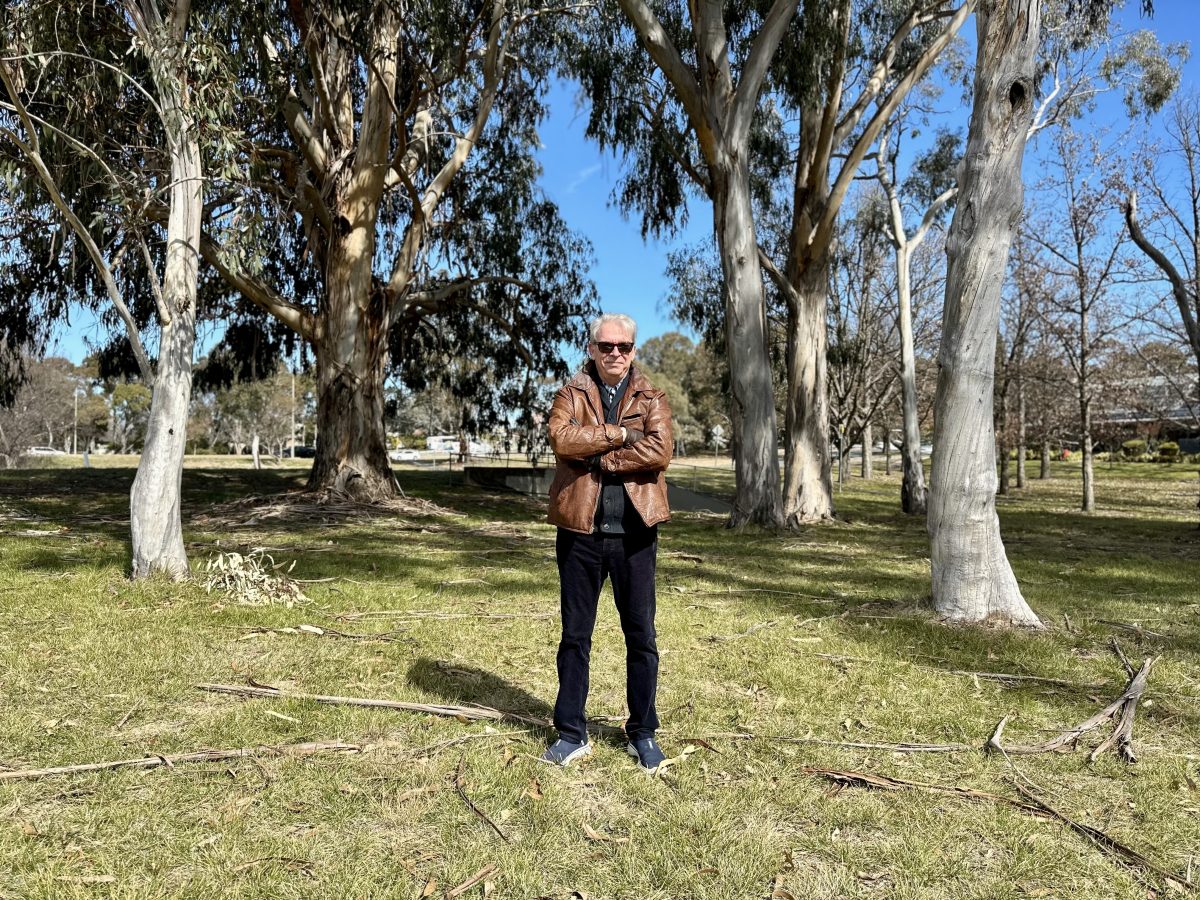
Robert Herrick from the Yarralumla Residents Association (YRA) argues the green space is the wrong spot for the power station. Photo: James Coleman.
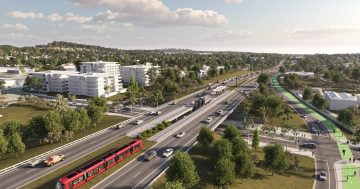
The ACT Government has signalled it will look again at where to place a major power station for Stage 2B of light rail, after months of concern from Yarralumla residents about plans to drop it into one of the suburb’s green spaces.
It comes after a petition with 84 signatures – lodged earlier this year – urged the government to find an alternative to the grassy corridor between a strip locals say is as important for family footy games as it is for native wildlife.
The traction power substation (TPSS) proposed for the site is no small piece of infrastructure. Estimated at up to 40 metres long, 6 metres wide and as tall as a two-storey building, it would convert AC power from the local grid into the DC power needed to move light-rail vehicles between Commonwealth Park and Woden.
The government’s draft Environmental Impact Statement (EIS) has acknowledged that the structure and related works would affect habitat for several threatened species, including the Golden Sun Moth, Superb Parrot, Gang-gang cockatoo and Diamond Firetail.
It also identifies “unavoidable clearing” of native vegetation along the route, amounting to five to six hectares and up to 126 mature native trees.
“We’re worried about the biodiversity that’s going to be destroyed,” says Robert Herrick from the Yarralumla Residents Association (YRA).
“There are four species of animals that are going to suffer from this … power station [that’s] going to be smack bang on top of their habitat.”
But there’s more, because a stormwater creek runs straight through the green pocket – carrying a once-in-100-year flood risk that locals have already seen up close. In January 2024, the creek burst its banks, sending water across the area where the TPSS would sit.
“It would have inundated this power station had it been here,” Mr Herrick says.
“There are lots of risks we’re all concerned about.”
The YRA has argued the impacts are avoidable, nominating what it says is a more suitable location on the south side of Adelaide Avenue, at a small carpark off Denison Street in Deakin.
The site is within 200 metres of the track – satisfying a key technical requirement – but avoids housing and does not carry the environmental sensitivities of the Yarralumla green space.
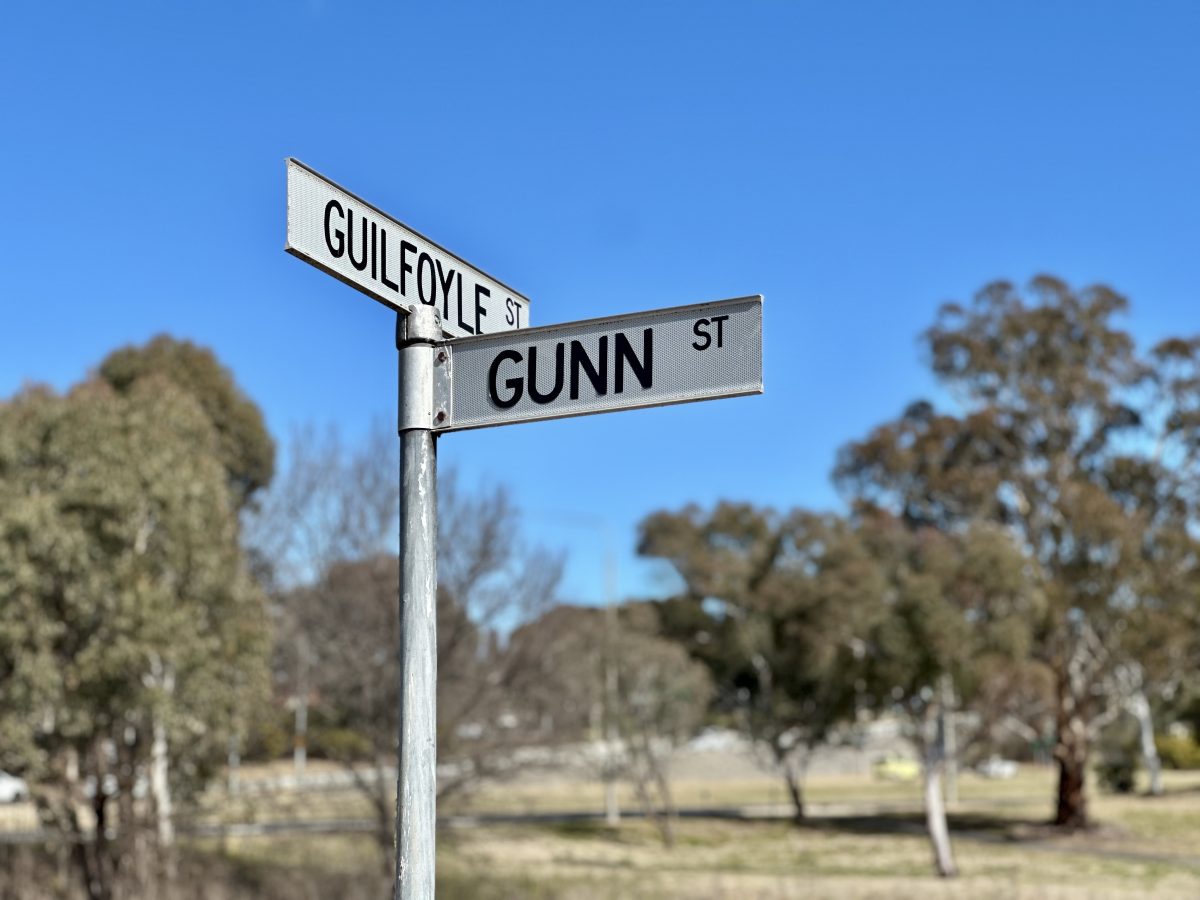
The government has agreed to look at an alternative site in Deakin. Photo: James Coleman.
“There’s open ground, so no habitat problems, and there are no houses,” Mr Herrick says.
“We don’t want to mount a campaign to stop the tram at all … We just don’t want this big power substation built in an open grassland area between houses. It just seems to be the wrong place to put it.”
In a letter responding to the petition, Transport Minister Chris Steel confirmed this week that the government is still assessing multiple possible locations for “Traction Power Substation 8” – including the Deakin option raised by residents.
“As outlined in the Draft EIS and Public Domain Master Plan, several potential sites … were assessed during the design development phase,” he wrote.
These include areas “spanning from north of Hopetoun Circuit to south of Kent Street”, with each site considered for technical feasibility, land use, ownership, heritage and environmental factors.
“Importantly, the site identified in the Draft EIS is indicative only and subject to further survey and design,” he said.
Mr Steel stressed the Deakin site “is also under consideration”, and that the “final location and design … may change in response to community and stakeholder feedback”.
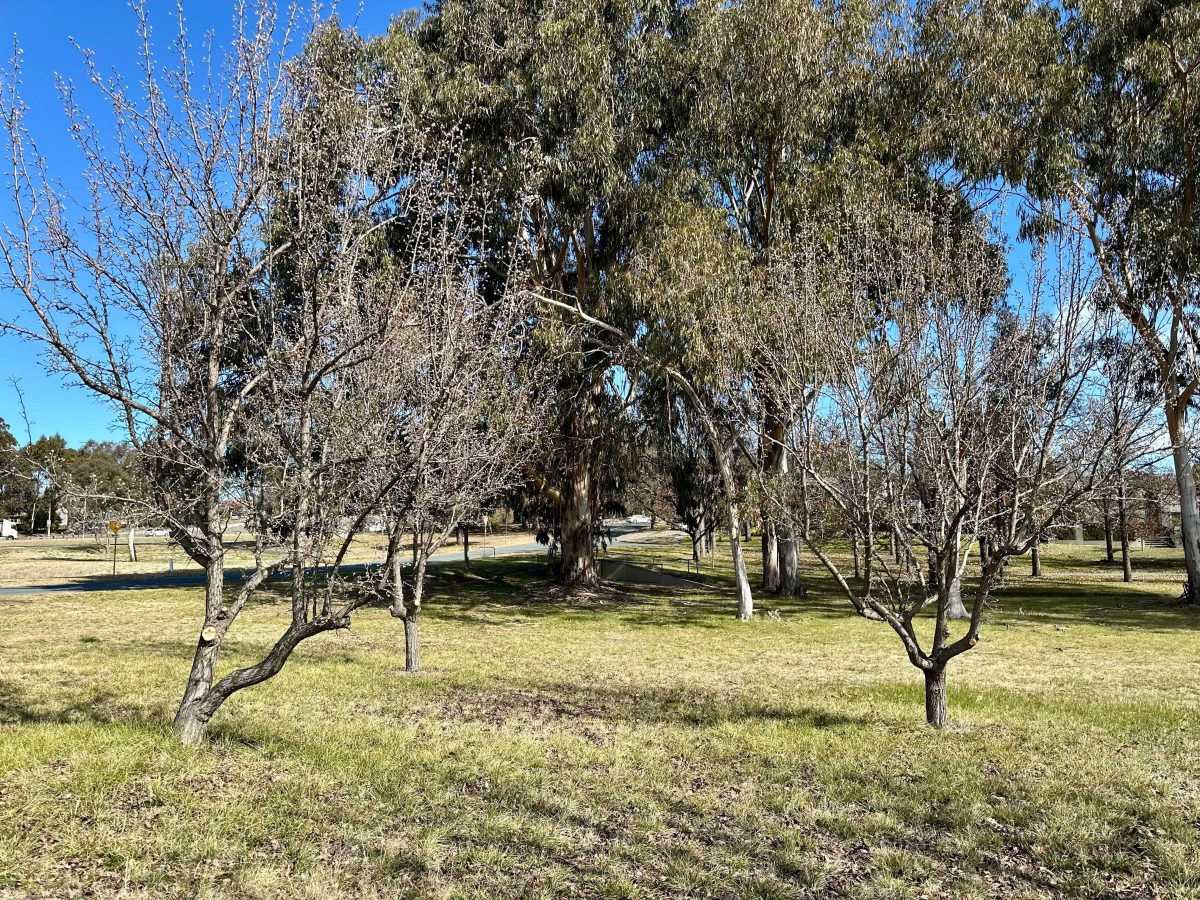
The green space last flooded in January 2024. Photo: James Coleman.
The government received 230 unique submissions during the public exhibition of the draft EIS between July and September. Work is now underway to revise the document before it is resubmitted to both the Territory and Commonwealth governments.
The revised EIS will include a summary of community feedback, responses to issues raised, and a single route alignment for the project. Only once that process is complete will the project proceed to approval – or conditions – from both governments.
Mr Steel said the government remains “committed to minimising visual and environmental impacts and integrating infrastructure sensitively within precinct settings”, adding that community feedback “plays a vital role” in shaping the final design.