

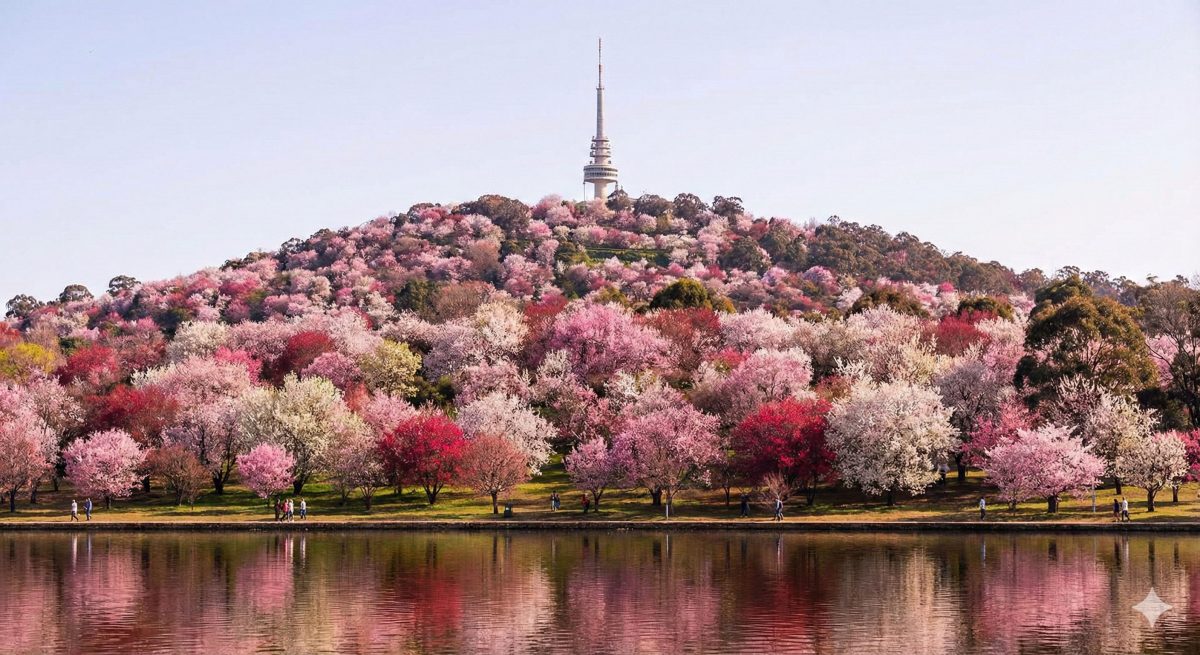
The Griffins envisioned Black Mountain as ‘Pink Mountain’. Image: AI-generated.
If you think the Arboretum – the brainchild of former ACT chief minister Jon Stanhope – is pretty special, Canberra originally had another thing coming.
2025 marked the centenary of the Griffin Plan – the vision for the nation’s capital set out by Walter Burley Griffin and Marion Mahony Griffin – being formally gazetted.
You’d have come to terms with parts of it personally every day on Canberra’s sweeping circular roads and grand leafy avenues, the Parliamentary Triangle, and the ‘Garden City’ suburbs of Forrest and Griffin (where it’s also incredibly easy to get lost).
Even light rail vehicles down Northbourne Avenue was a feature in the original plan – although they were called “street cars” and also envisioned to run down all of Canberra’s major avenues too.
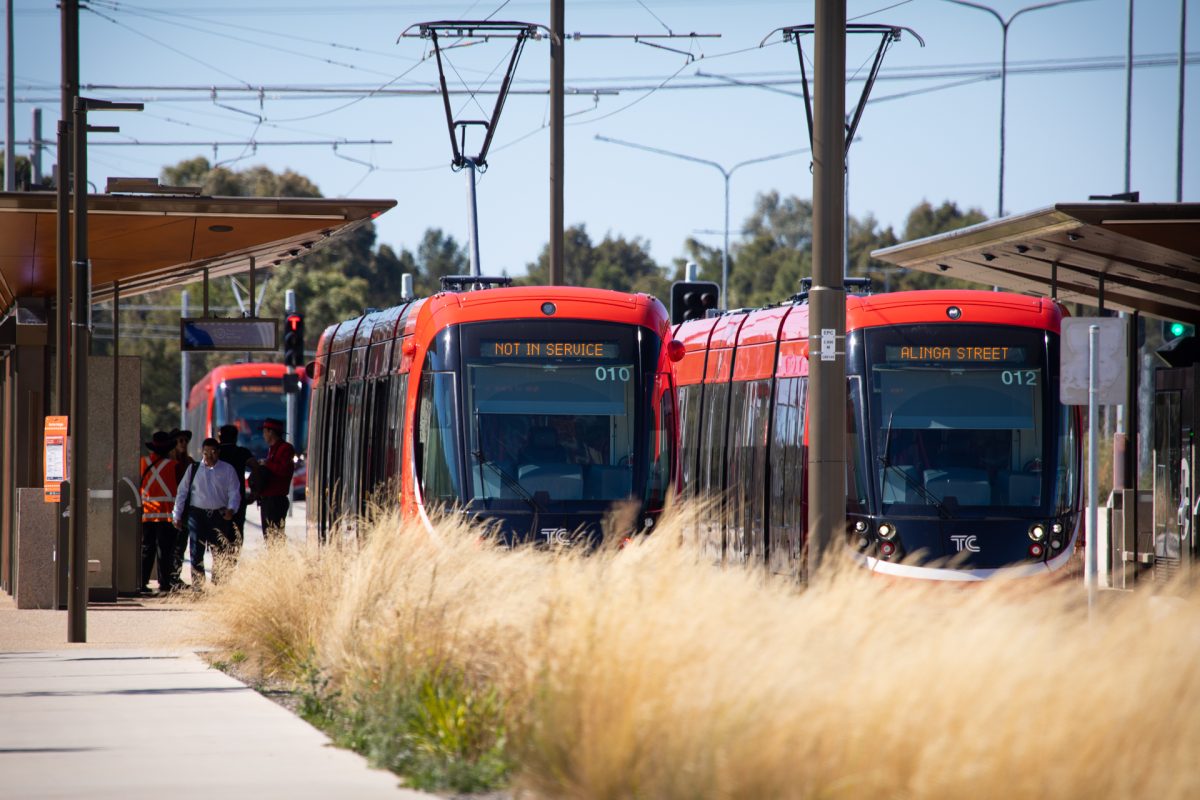
Light rail running down Northbourne Avenue was part of the Griffin Plan that came to fruition. Photo: Michelle Kroll.
But if you dig into all the details, you’ll find one of the couple’s most imaginative ideas that never truly came to life: a plan to “paint” the hills surrounding the fledgling capital in bold, seasonal colours.
It was called the ‘coloured hills scheme’ – and a century on, only fragments of it remain.
When the Griffins arrived in Canberra in 1913, they were, in the words of the ACT Heritage Council, “enchanted” with the region’s landscape and flora. They saw the bare slopes and low mountains ringing the Molonglo floodplain as a canvas.
So in 1916 – backed by his wife Marion, who described it as “planting together a splendour one rarely sees” – Walter devised a different colour palette for each of the city’s major hills, using various blossoms and foliage.
According to this, Mount Ainslie would be planted with yellow, primarily through wattles; Mugga Mugga would be white and silver with eucalyptus cinerea; Red Hill, as the name suggests, would turn red with flowers such as callistemons; while Black Mountain would, in fact, be better called Pink Mountain, thanks to Japanese peaches, plums, cherries and almonds.
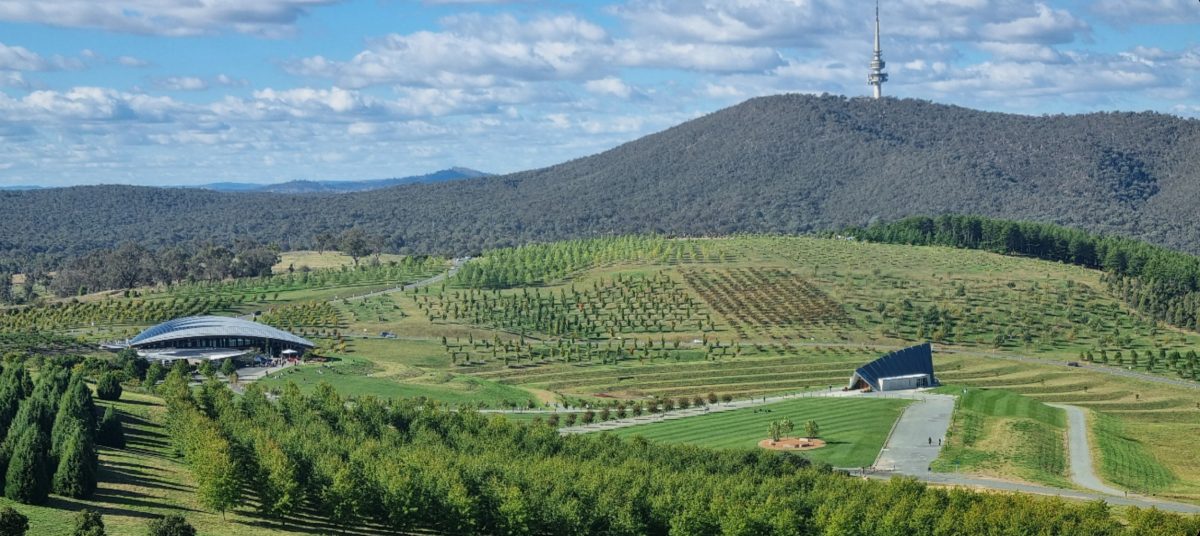
The National Arboretum is only an inkling of what the Griffins had planned. Photo: Stephen Gray.
By 1918, Griffin had altered his plan somewhat with hardier groundcovers and changed a few of the hills’ names to reflect that. So Mount Pleasant became ‘Purple Hill’, Mount Ainslie ‘Rosy Hill’, and Black Mountain ‘Golden Hill’.
According to Canberra historian Mark Butz, the scheme was started, but never finished.
“Surviving elements include some callistemons planted by horticulturalist Charles Weston in 1917 on Red Hill, plantings of wattle and eucalypts on Mount Pleasant, and several species of silver-foliaged eucalypts planted on Mugga Mugga.”
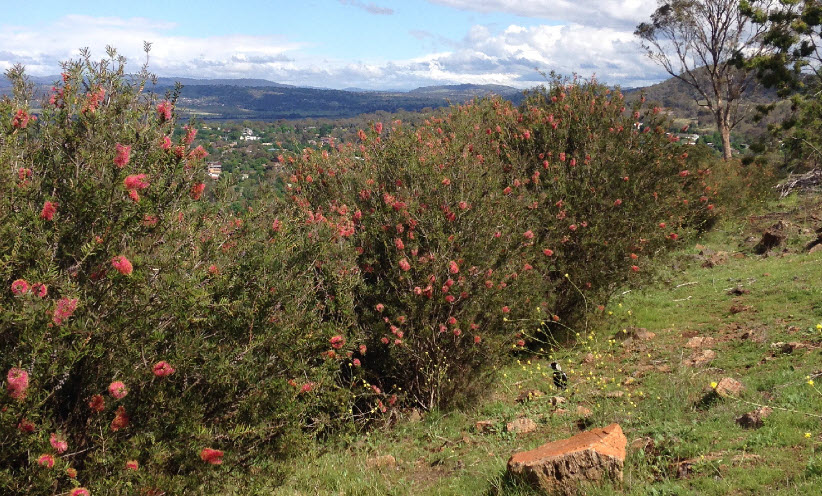
Some of the surviving wattle plants on Red Hill. Photo: ACT Government.
Red Hill drew the closest, with seeds sourced from Sydney and 4508 red-flowering shrubs planted across its summit ridge – some still surviving today.
Butz says records don’t offer a single explanation for what happened.
A severe drought in the late 1910s killed many of the first plantings on Red Hill, and horticulturalists, including Weston, realised Canberra was too dry a climate for many imported species to survive.
And then, in 1920, the Griffins resigned from the city’s planning team and their plan was left entirely in the hands of successors.
Over time, nature took over any strict planting scheme and any plans for a colour-coded city faded into the bush capital we know today.
Meanwhile, the Griffin Plan was formally gazetted in November 1925, which means any changes now require a vote by Federal Parliament.
Other parts of it have fallen away over the years, including a central train station at Russell or a city hall atop Capitol Hill. There have also been additions, such as the realignment of Knowles Place in the city and the formation of Molonglo Valley as a town centre.
But the ACT Government maintains the framework remains intact.
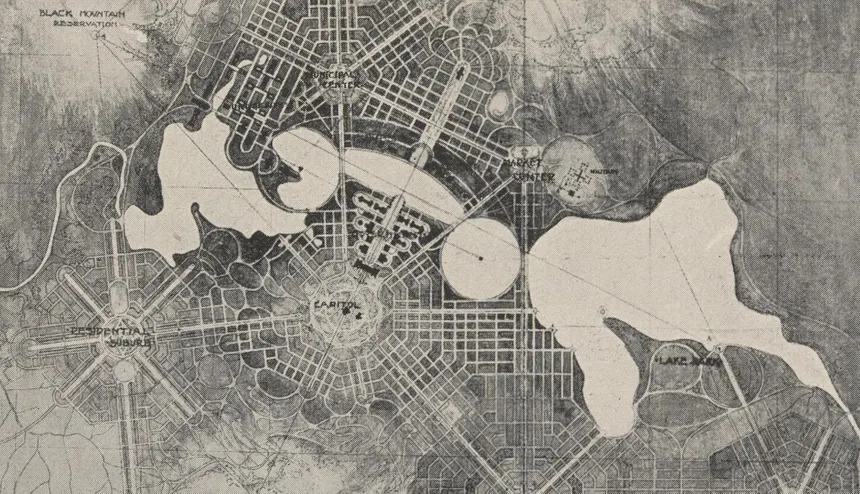
The Griffin Plan. Photo: National Library of Australia.
“The plan set in motion the design of Australia’s first fully planned city and capital as we know it today,” it said in a statement marking the centenary.
“With Canberra set to reach a population of 500,000 people in the next few years, our current infrastructure investments in central Canberra continue to support the Griffin vision,” ACT Chief Minister Andrew Barr added.
He cited the north-south light-rail spine – running directly along a major Griffin axis – as one example.
“The spirit of the plan will continue as we prioritise other initiatives that support our growing city – just as the Griffins intended.”
Can we have Purple Hill back, please?