
8 January 2026

What the ACT needs to do to keep inevitable LA-style fire threat at bay

| By Ian Bushnell
Join the conversation
47
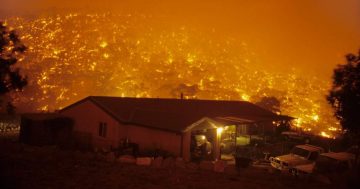
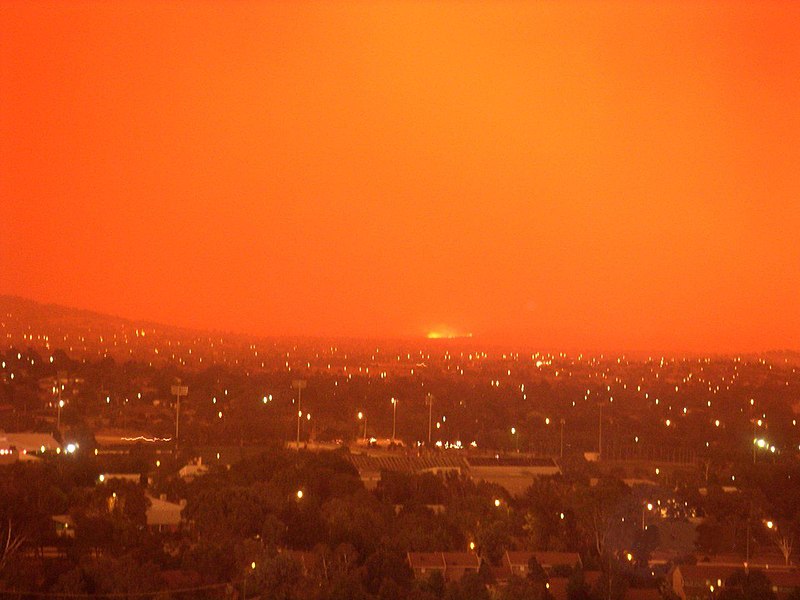
2003 Canberra bushfires 2003

January 2003 … it’s only a matter of time before Canberra faces a similar fire threat. Photo: File.

The status of the ACT Emergency Services Agency needs to be reviewed and money poured into firefighting resources and managing Canberra’s urban fringe to prevent catastrophic bushfires again breaking into the suburbs, a former ACT ESA chief says.

The warning from Major General Peter Dunn (retired) comes on the release of a new report that views a growing Canberra as a prime candidate for a Los Angeles-style fire to explode across its urban fringe and surpass the 2003 bushfire disaster that killed four people and destroyed nearly 500 homes.

The report from the Climate Council and Emergency Leaders for Climate Action, When Cities Burn: Could the LA Fires happen here?, says a combination of global warming, unpredictable weather conditions and expanding city limits was shortening the odds that a similar disaster in the suburbs could happen again in Canberra and other major Australian cities.

READ ALSO Why design changes mean this heatwave’s expected to hit homes harder

Its analysis shows that the outskirts of Canberra, Sydney, Melbourne, Adelaide, Perth and Hobart share characteristics that made the January 2025 LA fires so destructive.

“Just like in LA, more people than ever are living in harm’s way on the fast-growing urban fringes of Australian cities,” the report says.

It says Canberra is particularly vulnerable to this scenario, being ringed by nature reserves and having grown markedly since the 2003 disaster, with suburbs and homes backing directly on to forest and grassland.

The report notes that there are now 332,760 people living in outer suburban areas, up 46 per cent since 2001.

It points to the ACT’s northern and western edges, from which the 2003 firestorm raged into the western suburbs, where there has been greenfield suburban development over the past two decades.
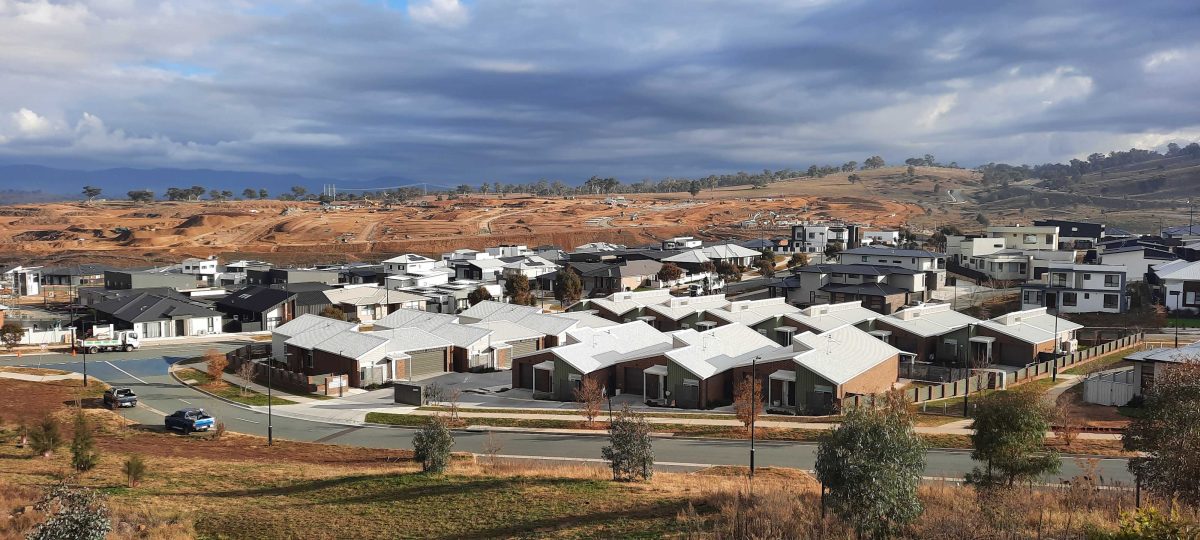
New housing in Whitlam on the western edge of the ACT. Photo: Ian Bushnell.

Major General Dunn said the report was not saying that cities should not grow or people not live close to the bush, but they needed to be aware of the risk and be prepared, while governments needed to reinforce emergency services and land agencies managing the interface, as well as cut more deeply into emissions from the burning of fossil fuels.

He said the ACT had not followed through on recommendations from the 2003 bushfire inquiries for the ESA to be an independent agency directly answerable to a minister, instead of being part of the Justice and Community Safety Directorate.

“I think the message in this report is perhaps the ACT government needs to review that decision,” said Major General Dunn, who headed up the ACT Emergency Services Authority created after the 2003 fires.

It would mean less bureaucracy, with the ESA advising ministers firsthand on what needed to be done and give the community a single agency to go to, he said.

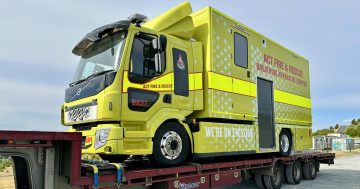
Major General Dunn welcomed the new ESA facility in Molonglo but said the ACT should also be seeking more funding from the Commonwealth to boost its firefighting capacity further, including volunteer services, because local government areas were hopelessly underfunded to do this.

“So the governments have to look at how fast they’re actually planning to increase the emergency services,” he said

“We have to have a very rapid response, we’ve got to have very good surveillance and people have got to be very aware of the dangers that these fires produce.”
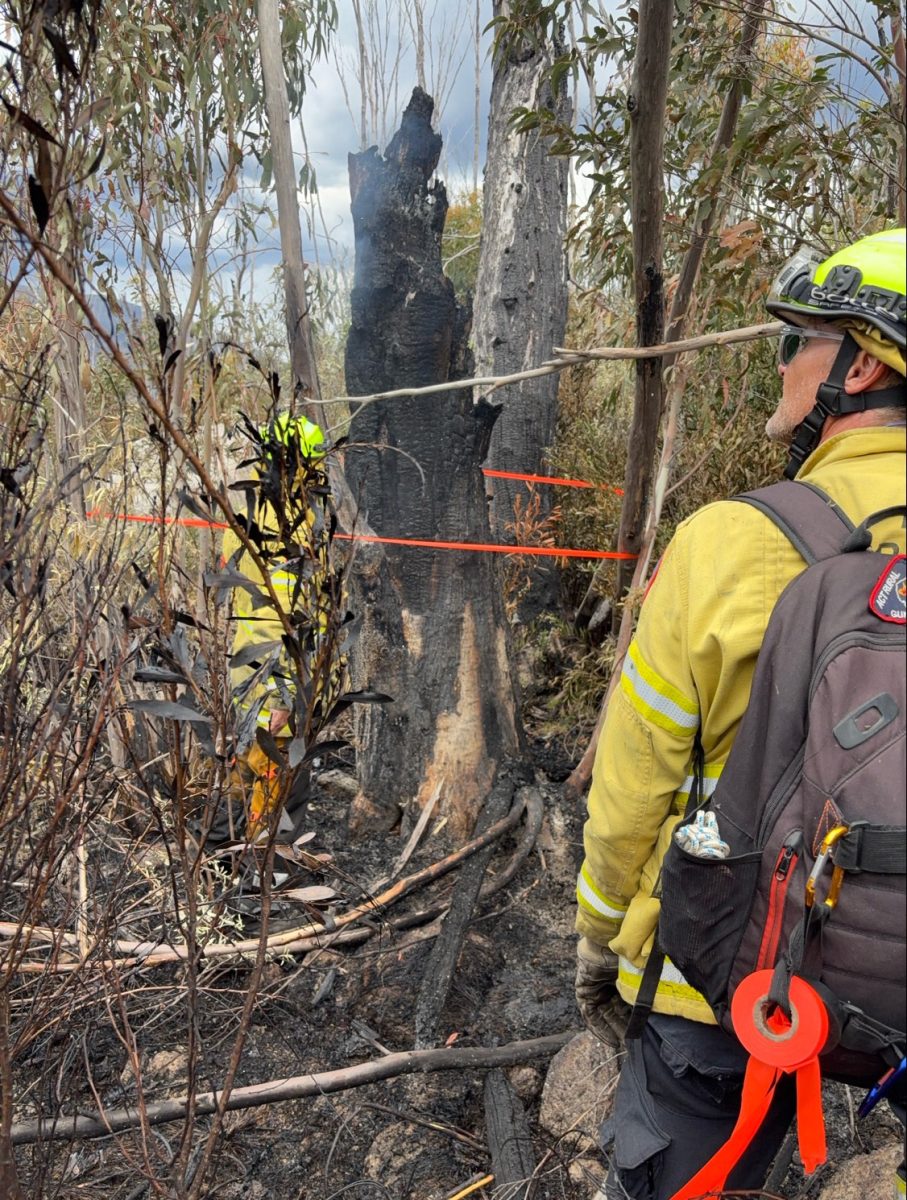
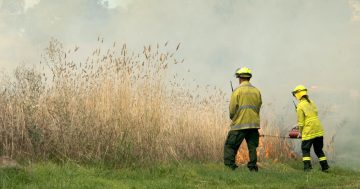
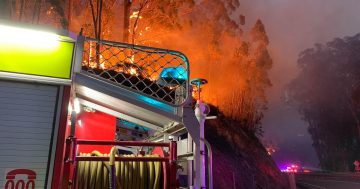
ACT RFS crews on a fire ground

An ACT RFS crew on the ground in Namadgi National Park. Photo: Supplied/ESA.

Major General Dunn said land management agencies needed to be funded appropriately to look after the urban-bush interface, including controlled burning.

“For First Nations people the rule of thumb is clear around the camp and don’t burn the canopy,” he said.

“We’ve got to clear around the camp. The camp in this case is the north and west of Canberra.”

The report also says communities themselves needed to be better prepared for fire and that homes be retrofitted to bushfire standards.

But it warns that increasingly unpredictable conditions, longer and more intense fire seasons and the propensity for contemporary fires to develop their own storms and cyclonic winds make it impossible for even the most skilled and best equipped firefighting crews to contain them.

Canberra almost 22 years ago endured the southern hemisphere’s first fire tornado, overwhelming emergency services.

Despite benevolent conditions since the 2019 Black Summer fires, the ACT can be regularly prone to LA-like conditions – drought, strong winds, large tracts of bushland adjacent to homes and steep slopes that accelerate fires, the report says.

The report says that increasing the capacity of emergency service and land management capacity at this bush/grassfire interface should be a priority.

This should include looking at options such as paid seasonal deployments, creation of more non-operational volunteer roles or the repurposing of retiring native logging and forestry capacity and machinery to assist with the creation of biodiversity and amenity-rich fuel breaks to protect residential areas.

It urges federal, state and territory governments to invest heavily in disaster preparation and community resilience, including hazard reduction, local disaster planning, education, retrofitting homes to bushfire standards and establishing evacuation centres, while ensuring that emergency services are properly resourced.

“We must do all we can to prepare communities for increasing fire and other disaster risks,” the report says.

“It is well known that disaster risk reduction and community preparation initiatives can generate significant savings and returns on each dollar invested.

“Retrofitting homes to meet current standards, community education, community self-help programs and a focus on prescribed burning to reduce fuel loads coupled with increased support for Indigenous-led cultural burning can all help to reduce risks to life and property.”

READ ALSO People urged to stay indoors, prepare now, with extreme heatwave conditions on the way

The report says there is also an increasing cost to the community of the worsening fire risk.

Insurance losses amount to more than $1.2 billion in the 2003 disaster. Since 2020 insurance premiums have increased by 78 per cent to 138 per cent for homes in bushfire-prone Local Government Areas within Sydney, Melbourne and Perth. The cost of the 2019-20 Black Summer bushfires to the economy was estimated at $10 billion.

“It is a matter of when – not if – we’ll experience another fire on this scale, or worse, as dangerous fire weather conditions driven by climate pollution make this a near certainty,” the report says.


Free Daily Digest

Want the best Canberra news delivered daily? We package the most-read Canberra stories and send them to your inbox. Sign-up now for trusted local news that will never be behind a paywall.
Loading
By submitting your email address you are agreeing to Region Group's terms and conditions and privacy policy.

Join the conversation

47
All Comments
  • All Comments
  • Website Comments
LatestOldest

Wherever there is a substantial amount of fuel, the risk of fire is high during an Australian summer.

Just look at Victoria now. Half of the State is alight, or under threat.

I do wonder about our preparedness. Canberra is surrounded by National Parks and our suburbs push up against bushland. The ACT Government is determined to increase of tree canopy, and fallen trees and grasslands are left insitu, to provide habitat for little critters.

I would love to see the ACT Government reconsider it’s environmental plans. Trees are great, but why do they have to be eucalypts, that readily burn, and continually drop bark and leaves?
It gets to a point where for many people, as we age, find cleaning gum leaves out of their gutters difficult, and with that comes an increased risk of fire, plus potential damage caused in times of heavy rain.

The good wife and I grew up in regional NSW on farms, and we’ve seen our share of bushfires. All of dad’s paddocks had wide “fire-breaks” to reduce the risk of a grass fire spreading across the farm, and or to a neighbour’s.

Our dad’s would be continually removing fallen trees, and the annual “bonfire”, was as much about burning off fallen litter, as it was about setting off “fireworks”.

Our dad’s were proactive regarding fire prevention and were both members of their volunteer fire brigades.

I’m not so sure that our city based politicians and leaders are as fire-ready, as those whose lives depended upon it?

Holt Citizen6:26 pm 09 Jan 26

Well written.

Holt Citizen9:17 am 09 Jan 26

I live on the West Belconnen fringe opposite grasslands and six months ago the ACT Government planted three eucalypt trees, that will eventually reach over 20 metres, on my and my neighbours nature strip. All are within 5 metres of each other and within 6 meters of an already fully grown eucalypt. This was apparently to create urban shade. What shade value do eucalyptus have? Nothing can be grown near them and their eventual fire excelerant risk is obvious as they will tower over houses. Surely the government need to review their crazy ‘eucalyptus in Belconnen suburbs’ policy.
Also, the new West Belconnen green waste is to be situated down Stockdill Drive in the Molonglo Valley where dry, hot winds are frequent. We saw the devastating effects of fire ripping up this valley in 2003. While apparently emergency services aren’t concerned about this location, I can tell you many West Belconnen residents are.
Do we need a disaster, then an investigation into disaster, then more government excuses and justifications before obviously complacent bad policy is changed?

This is very concerning and conflicting for me. It sreads like “fear mongering” but at the same time I agree. It’s bound to happen again, Australia is a hot and dry that’s just how it is (exacerbated by over population and damage to the environment). However there’s ways that we can prevent the bushfires from being as catastrophic as 2019. I was hoping this article would have a list of fire prevention tips, I think that’s what people really need to know.

Demanding action on climate change is not going to make the fire danger go away

Eucalypts are also pretty good fire attractants. Here in Macarthur on the main path down through the suburb, many of the eucalypts are old and genuine fire hazards. Complaints about dead branches have resulted in no action from City Services. Perhaps getting the School of Forestry revived at ANU might help getting the local government fools to understand fire, preparing for fire in an environment where fire is necessary for some species to germinate and to have appropriate burnoffs based on knowledge and not having inner city greenies who know nothing decide on the fate of we outer city residents.

Capital Retro11:29 am 08 Jan 26

“Canberra almost 22 years ago endured the southern hemisphere’s first fire tornado, overwhelming emergency services.”

Not correct. The CSIRO Forestry Davison had recorded fire tornadoes may years ago.

The Canberra one was the first recorded on video.

Maybe stop arsonists ?

Bill Gilbert12:30 pm 08 Jan 26

Good move, along with stopping accidents, carelessness, and all lightning strikes.

But why stop there? Just stop all crime.

Thank you for your attention to this matter.

That’s a pleasure Bill. Sadly though the LA fires were initiated by one person, not through an accident, carelessness or a lightning strike:

LOS ANGELES – A former Pacific Palisades resident now living in Florida has been arrested on a federal criminal complaint charging him with maliciously starting what eventually became the Palisades Fire of January 2025, one of the most destructive wildfires in Los Angeles history, the Justice Department announced today.

https://www.justice.gov/usao-cdca/pr/florida-man-arrested-federal-criminal-complaint-alleging-he-maliciously-started-what

The cause of the majority of bush fires, including the 2019-20 ones, was according to many sources, arson.

https://en.wikipedia.org/wiki/2019%E2%80%9320_Australian_bushfire_season

Bill Gilbert3:44 pm 08 Jan 26

Penfold, are you a dim bulb?

How do you propose to stop all arsonists?? Why have you not applied your brilliant solution to all crime?

Neither the Canberra firestorm in 2003 nor the major Black Saturday fires in Victoria 2009 were found to have been started by arson, so how many of 160+ lives and many more properties would have been saved by “stopping” arsonists? Zero in Canberra and in Victoria’s case, 12 of 173. Satisfied with that?

Could be dim Bill, but not as dim as those who make silly comments without doing any research:

https://www.abc.net.au/news/2012-04-27/black-saturday-arsonist-sentenced-to-28holdholdhold29/3976564

It’s a simple fact that if arson is stopped the majority of fires won’t start. Of course it’s easier said than done but the article asked how “LA type fires could be stopped”. The LA fires were deliberately lit so there’s your answer. It’s not rocket science Bill.

What’s happened to Sean? I’m not use to reading your comments good or bad without Sean’s Trumpish like dismissive comments.

Im glad to see Penfool you support stopping the Army and its arsonists from doing absolutely braindead stupid things that cause bushfires, like have happened on multiple occasions.

The article you referenced literally says otherwise…

https://en.wikipedia.org/wiki/2019%E2%80%9320_Australian_bushfire_season

“The major cause of ignition of fires during the 2019–20 fire crisis in NSW and Victoria is reported to be lightning strikes.[341] According to the ABC, arson has been of little impact – accounting for around 1% of NSW blazes and 0.3% of Victorian blazes by 18 January 2020”

And before you say, oh the lefty ABC or some other argument, I’m purely pointing out that you said the 2019-20 bushfires were caused, mostly, by arsonists. Then referenced an article that said that wasn’t the case.

May be you are the arse?

Elf – who knows, but for while there it appeared the quality of discussion had improved as a result. But then JS9 and jamiescot appeared and we headed south again.

Jamie some great ABC cherry picking there, seems you missed this comment in the link:

“The NSW Rural Fire Service referred numerous individuals to the NSW Police; 24 people were charged with arson, allegedly starting bushfires.”

Additionally with one person charged with causing 10 deaths as the above link demonstrated, the ABC comment “0.3% of Victorian blazes by 18 January 2020” probably sadly referred to fires they could see from Spencer Street.

As for JS9, it seems the Army is to blame. Yes, believe it or not, he / she wrote that.

Jamie,
There’s no point in providing actual evidence to Pengold, he just ignores anything that doesn’t fit his groupthink narrative.

Even though it’s clearly been shown that natural causes were the ignition source for the vast majority of bushfires in Australia, you’ll just get Pengold repeating the same discredited points over and over again because he has no interest in reality.

Bill Gilbert5:45 pm 09 Jan 26

He is dim all right. I differentiated between the 12 deaths from arson-based fires from the 160+ from other cause fires, yet he could not read it or answer it.

I asked how he would “stop arsonists” and he quoted arrests after the fact. The best fact is he quoted the ABC to prove himself wrong on arson! Not a word on the question of “How?”

chewy14 is right. I understand the Penfold problem. It is an Australia-leading and world-competitive ratio of prejudice over thought.

I might have better places to be.

Bill it sounds like you’re struggling to differentiate between the instance of arson and the act of arson. Strangely enough if you stop the act you’ll stop the instance. The act – since it needs explaining – is the how. Like i said, rocket science it is not. Feel free to find a better place for your congumbled cognition.

Exhibit A ^

😂😂😂👩‍🦯👩‍🦯👩‍🦯

Daily Digest

Want the best Canberra news delivered daily? Every day we package the most popular Region Canberra stories and send them straight to your inbox. Sign-up now for trusted local news that will never be behind a paywall.

By submitting your email address you are agreeing to Region Group's terms and conditions and privacy policy.