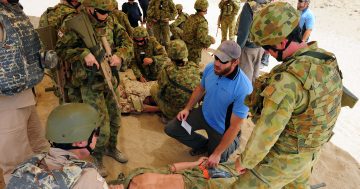

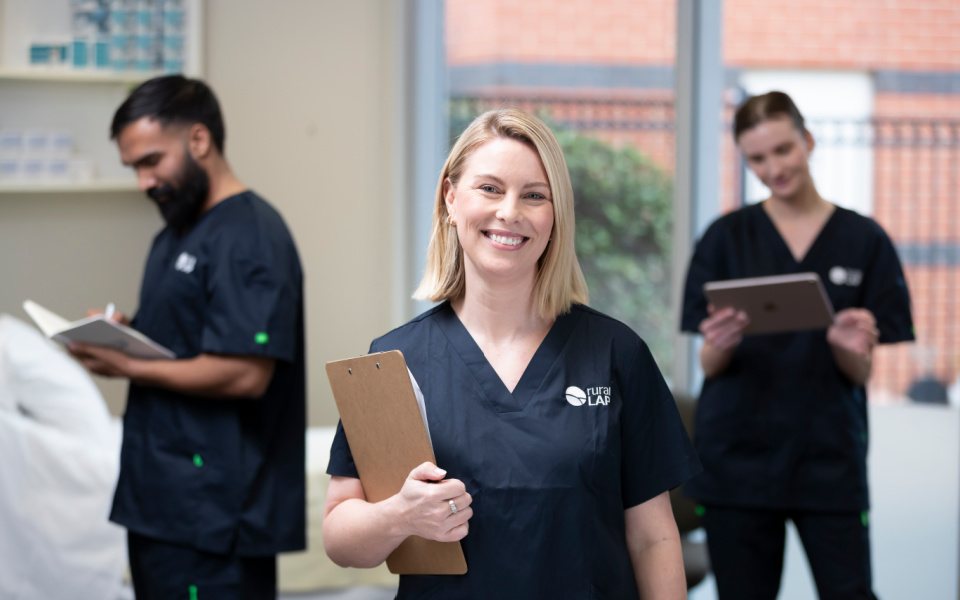
Aspen Medical deploys clinicians from across Australia through national locum programs to support rural and remote health services during staff leave and vacancies. Photo: Aspen Medical.
For some communities, seeing a health professional can require hours of travel and multiple forms of transport. In these settings, maintaining even basic health services depends on whether workforce gaps can be filled quickly and safely.
Aspen Medical plays a crucial role in supporting healthcare services in communities facing critical workforce shortages.
That role is delivered through two Australian Government locum programs designed to keep healthcare services operating in rural and remote locations where workforce shortages are persistent and access to care remains fragile.
“Every Australian should be able to see a health professional when they need to,” Aspen Medical director locum programs Jessica Andrew says. “Our job is to make that possible, especially in communities where recruitment and retention remain long-standing challenges.”
Aspen Medical is the government’s delivery partner for the Northern Territory Remote Locum Program (NTRLP) and the Rural Locum Assistance Program (Rural LAP).
Through these programs, the company recruits and deploys credentialed doctors, nurses, midwives, aged care workers and allied health professionals to maintain service continuity in some of the country’s most difficult to staff locations.
The communities supported through the programs often face long-term challenges in attracting clinicians and are vulnerable to service disruption when staffing gaps occur.
By coordinating locum coverage, Aspen Medical supports clinics, hospitals and aged care services to remain operational and reduces the risk of patients losing access to essential care.
Under both programs, Aspen Medical manages locum placements across all states and territories. These range from urgent cover in single-clinician clinics and aged care services to planned rotations in regional hospitals. In recent years, thousands of placements have been delivered to support health services under sustained workforce pressure.
The model is designed to stabilise services while easing pressure on existing clinical teams. Temporary coverage allows permanent staff to take leave, manage workloads and reduce fatigue, while maintaining safe and reliable care for patients.
“We work closely with health services and clinicians to ensure every placement is a good fit,” Andrew says. “That includes clinical capability, cultural awareness and practical logistics. It’s a full-service model designed to make things easy for the health service and effective for the patient.”

Jessica Andrew, director of locum programs at Aspen Medical, says the company’s national locum programs are designed to keep healthcare services operating in communities facing ongoing workforce shortages. Photo: Aspen Medical.
A national team works with health authorities, Aboriginal Medical Services, local councils and other stakeholders to manage program delivery. Each placement is supported by a risk and quality framework aligned with patient care standards and clinician safety requirements.
The company says the programs operate as coordinated, government-backed services rather than traditional agency staffing. The approach is designed to provide predictable coverage and support service continuity in complex healthcare environments.
Locum support is not just for remote areas. Many regional hospitals and clinics like those in Moruya, Bega, Cooma, Delegate and Bombala are supported by Aspen Medical.
“Locum supports ensures rural and remote staff can take leave or undertake training opportunities. Our locums play a pivotal role in ensuring continuity of care for the community and in some cases assist in keeping the wards and services running during times of staff shortages. Locum support’s crucial in these remote and very remote communities,” Andrew says.
In one example, Aspen Medical worked with a regional health service in Far North Queensland to develop a rotational placement model that ensured continuous allied health coverage across three towns.
The model allowed the service to maintain continuity of care while managing limited workforce resources. It also helped reduce staff turnover and improved access to care for children and families.
“These aren’t one-off solutions. They are part of a broader commitment to strengthening rural health,” Andrew says. “We are here to partner, not just place people.”
Aspen Medical also brings experience from outside the civilian health system. The company has delivered healthcare services to a Defence population of more than 80,000 personnel across more than 50 Australian Defence Force bases, including primary healthcare, dental and allied health services.
The company says the operational demands of Defence healthcare, including workforce readiness, rapid deployment and clinical governance, closely align with those required in remote civilian healthcare delivery.
Aspen Medical says its delivery of the Northern Territory Remote Locum Program and the Rural Locum Assistance Program reflects two decades of experience supporting government health services. The company says the programs provide a proven model for maintaining access to care in communities that would otherwise struggle to keep services operating.
For more information visit Northern Territory Remote Locum Program, Rural Locum Assistance Program or Aspen Medical.