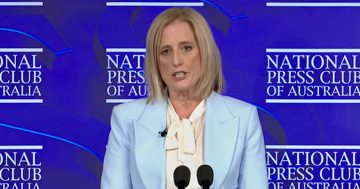


Minister for Women Katy Gallagher says there is more work to do, but she is happy women’s representation on government boards is growing. Photo: Michelle Kroll.
Women’s representation on Australian Government boards continues to grow, with the latest report showing an improvement for the fourth consecutive year.
The just-published Gender Balance on Australian Government Boards Annual Report 2024–25 tracks the government’s performance against four key targets, and shows progress on them all.
On boards across the public sector, women’s representation is on the up.
The first target is for women to hold 50 per cent of all Australian Government board positions, which has been met for the fourth consecutive year, with 54.3 per cent of overall board positions now being held by women.
For the first time in 2024–25, this figure includes all appointed positions (including ex officio), rather than just government-appointed positions under the previous methodology.
If reporting on government-appointed board positions only, 55.7 per cent of government-appointed positions were held by women, an increase of 1.3 per cent.
The second target is for women to hold at least 40 per cent of Australian Government board positions at the individual board level.
At the current rate of change, it will take three years to meet the target. As of now, 83.8 per cent of individual boards across all portfolios have met this target.
Of the 357 boards across government portfolios, 299 have at least 40 per cent representation of women, a 5.4 per cent increase from 78.4 per cent in 2023–24.
Two new targets for boards at the portfolio level were introduced in 2024 as part of Working for Women: A Strategy for Gender Equality.
Improvements have been seen in both those areas.
Target three is for women to hold 50 per cent of Australian Government board positions at the portfolio level.
At the current rate of change, it will take five years to meet the target, with 70.6 per cent of portfolios (12 out of 17) already meeting it.
This is an increase of one portfolio since the baseline 2023–24 reporting period.
Of the portfolios that didn’t meet the target, all were four percentage points or less from the 50 per cent target.
The fourth target is for women to hold 50 per cent of chair and deputy chair positions on Australian Government boards at the portfolio level.
Currently, 52.9 per cent of portfolios have met this target, and at that rate, it will take six years to reach it.
A total of 9 of 17 portfolios met the target, an increase of two additional portfolios from the baseline figure for the 2023–24 reporting period.
Minister for Women Katy Gallagher said over the past 15 years, since reporting began in 2009, women’s representation has increased by more than 20 per cent.
“Having more women in key decision-making roles is essential to the broader gender equality ambitions under Working for Women: A Strategy for Gender Equality,” Senator Gallagher said.
“For the fourth consecutive year, we have met the target for women to hold 50 per cent of positions on all Australian Government boards, but there’s still more work to do.
“We need more women, including First Nations women and women from diverse backgrounds, at the table across all Australian Government portfolios to ensure systems, policies, services, technology and infrastructure meet the needs of Australian women.
“We will continue to lead by example to progress gender equality through ambition, effort and accountability.”
The Working for Women strategy outlines the Federal Government’s vision for gender equality, in which it describes “an Australia where people are safe, treated with respect, have choices, and have access to resources and equal outcomes no matter their gender”.
The strategy, released on 7 March 2024, sets out a path to make progress towards this vision over the next 10 years.
Specifically, the government is working to increase the diversity of candidates, with departments and agencies identifying existing diversity and skills gaps on boards and, where appropriate, publicly advertising roles to identify a broad pool of candidates.