
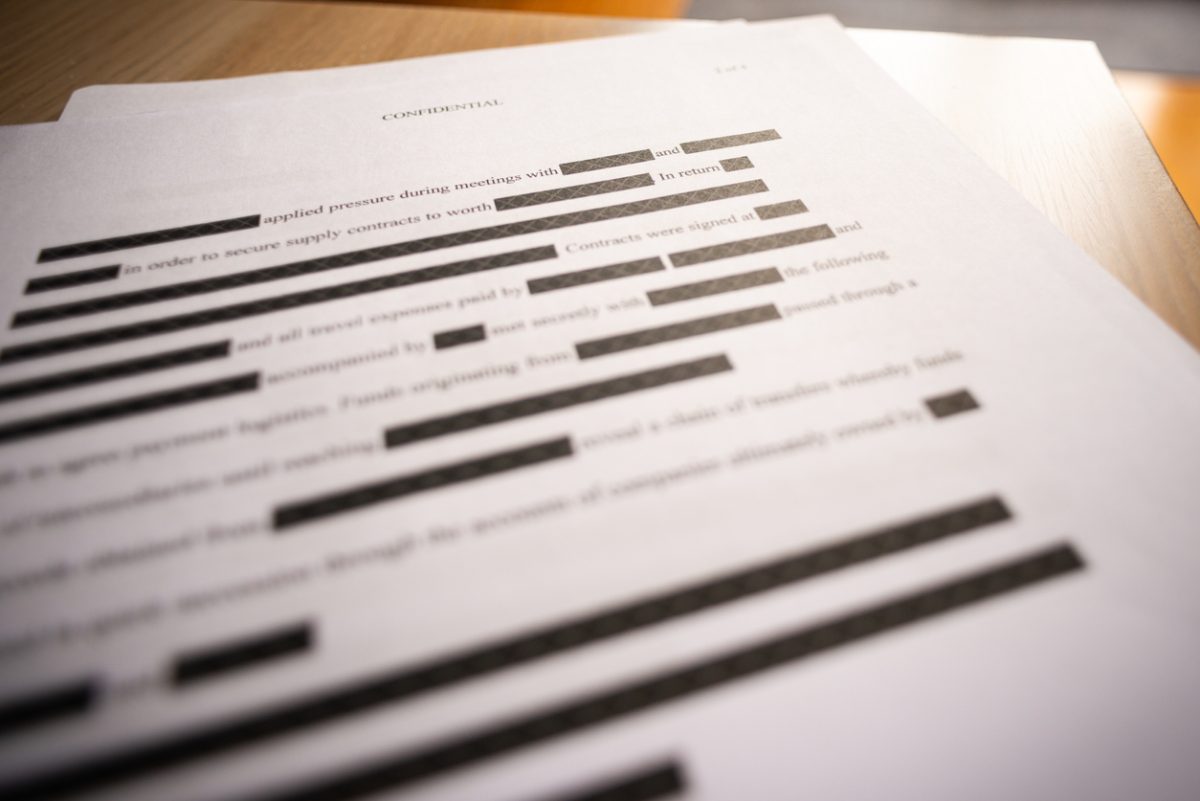
Numerous dissenting reports from a Senate inquiry disagree with Labor’s majority report, which recommends that the government’s Freedom of Information changes be accepted. Photo: File.
A Labor-dominated Senate inquiry has recommended passing the Federal Government’s controversial bill seeking to change freedom of information laws, but non-government Senators on the committee have blasted the decision.
The Freedom of Information Amendment Bill 2025 makes it harder for the government’s actions and communications to be scrutinised by charging for FOI requests – expected to be about $50 a pop – and placing greater restrictions on applications.
Labor is using the excuse of the system being “broken” because it is inundated with “frivolous” FOI requests.
Attorney-General Michelle Rowland introduced the legislation to the House of Representatives early in August, but Labor doesn’t have the numbers to pass it in the Senate.
Early in September, the Senate referred the bill to its Legal and Constitutional Affairs Legislation Committee for inquiry with a 3 December reporting deadline.
That deadline was Wednesday this week, and the committee did indeed deliver its majority report, which has one recommendation – that the Senate pass the bill.
But Coalition, Greens and crossbench Senators engaged in the inquiry insist Labor was not reading the room and so have presented separate dissenting reports.
The committee’s deputy chair, Liberal Senator Leah Blyth said the bill “undermines public trust” and is “unwarranted and undemocratic”, while ACT independent Senator David Pocock said the government was blatantly ignoring objective evidence.
“The bill expands Cabinet secrecy, weakens the pro-disclosure objects clause, neuters the public-interest test, bans anonymous freedom of information requests used by whistleblowers and journalists, and imposes new financial barriers,” Senator Pocock said in his dissenting report.
“It does so without evidence, without mandate, and in direct contradiction to Australia’s recent integrity failures, most notably Robodebt.
“Of the 70 submissions to this inquiry, the only outright support for the bill comes from submissions from government departments and agencies.
“The overwhelming majority of the submissions and evidence pointed to significant issues with the bill.”
Greens Senator David Shoebridge said the committee’s majority report outcome was a “case study in how hubris and an addiction to secrecy” guide Labor’s politics.
Describing it as a “bad bill with no friends”, Senator Shoebridge called for it to be abandoned completely.
In his dissenting report, he said Labor’s majority report was not what the bill deserves.
“The evidence we heard in this inquiry was overwhelmingly against this bill,” he said.
“The recommendation to pass the bill is only printed here because the government controls this committee and has chosen to ignore the evidence.
“Despite the near-universal agreement that the freedom of information system needs reform, not one person outside the government supports this bill.
“It’s time for them to abandon it completely and go back to the drawing board.”
Independent Senator Jacqui Lambie, who also sits on the committee, was blunt from the beginning in her dissenting report.
“I will not bury the lead,” she said.
“This bill is a disgraceful attack on ‘open and accountable government’ and should not be passed.”
In the Opposition’s dissenting report, Senator Blyth said the Coalition believes in the Australian people’s right to a fair and efficient freedom of information system, and will continue to advocate for transparency and accountability.
“The government’s proposed changes in this bill do not find favour with the Coalition,” she said.
“They will undermine trust in the system and weaken the ability to hold governments to account.
“Freedom of Information is not a privilege given by government. It is a right owed to every Australian citizen.”
But committee chair, Labor’s Jana Stewart, said in her majority report that the inquiry found the bill was seeking to improve the operation of the FOI framework.
“The committee recognises that the FOI system is under immense pressure and acknowledges that there are many views on how best to approach the inefficiencies and other issues that are plaguing the system,” Senator Stewart said.
“The committee also recognises that the emergence of new technologies and the changing operating environment mean that the FOI system is being challenged and is vulnerable to exploitation in ways that were difficult to conceive at the time the FOI Act was first enacted.
“The costs are growing substantially year on year – the cost to taxpayers of administering the FOI system, the cost to the public of public servants being routinely diverted from their core work to process FOI requests, and the cost to staff dedicated to working within the FOI system who face significant pressures as seen from the evidence received by the committee.”
The Attorney-General’s initial response is that the government carefully consider the report and consult with parliament to pass the bill.
But if the outrage expressed in the dissenting reports is anything to go by, the legislation is doomed in the Senate unless Labor agrees to serious amendments.