


A bird’s eye view of the Strathnairn Women’s Housing Initiative in Ginninderry. Photo: CHC Australia.
Single women, particularly those with children, struggle in Canberra’s expensive housing market, whether they’re renting or trying to buy a home of their own.
An innovative new housing project billed as the ACT’s first Build to Rent to Buy initiative aims to help some of those women and put them on a clear pathway to home ownership.
The Strathnairn Women’s Housing Initiative has opened applications from women on moderate incomes for 22 one-, two- and three-bedroom townhouses under construction in Ginninderry.
Community housing provider CHC Australia, with $4.5 million in backing from the ACT Government, is behind the pilot scheme which, if successful, could be replicated in future rounds of the Build to Rent to Buy program.
It will offer secure, affordable rental housing with a structured transition to ownership within 10 years for eligible single women — including those with children — who are struggling to buy in Canberra’s increasingly unaffordable market.
Under the concept, eligible participants pay an affordable rent set at just below 75 per cent of market value, creating the financial room to save a deposit.
The program offers up to 10 years of tenancy stability, with a flexible window to purchase the home between years six and 10.
When ready, tenants can use their accumulated savings as the deposit and, where needed, CHC can also apply a share of the property’s capital growth to help the tenant access financing to purchase the home.
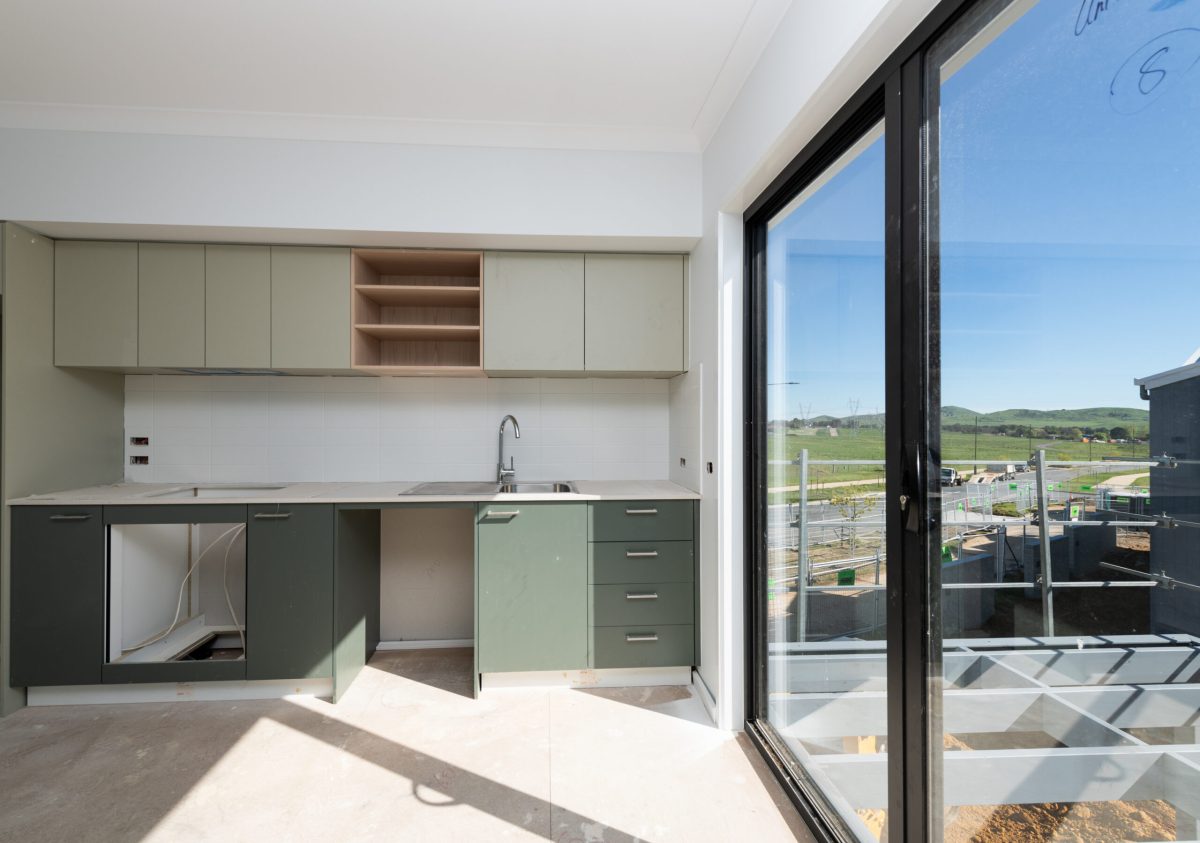
The homes have an EER of seven and are built to last.
CHC Australia CEO Nathan Dal Bon said that with cost-of-living pressures, many Canberrans – particularly financially vulnerable women – are struggling with day-to-day expenses, let alone building a deposit to break into the housing market.
“This pilot initiative seeks to disrupt that cycle, supporting participants to steadily build savings through reduced rent, while also giving them the opportunity to share in the property’s capital growth,” he said.
Mr Dal Bon said the initiative was not a solution for all aspiring home buyers or people in rental stress, but aimed to help a particular group that was increasingly left behind when it came to housing.
He said the feedback was that there was a rapidly growing cohort of women struggling to break into the housing market, either due to separation, a health event, or a single income not being enough to save a deposit.
The scheme also did not encourage women to take on more debt than they could afford and, unlike other first-home-owner schemes, did not add to demand and boost prices.
Mr Dal Bon said secure housing was crucial for people to stabilise their lives and plan for the future.
“If you’re in mental stress and if you’ve got kids, that puts a lot of pressure on the family and families often have to cut corners,” he said.
“Getting them out of rental stress has that immediate effect in terms of improving their position.”
But homeownership also meant moving away from renting in retirement on limited savings or the aged pension, where life was very difficult.
Mr Dal Bon said that if successful, the scheme could be scaled up and extended to other cohorts.
He said it was essential to CHC Australia that the seven-star homes were quality builds that would stand the test of time.
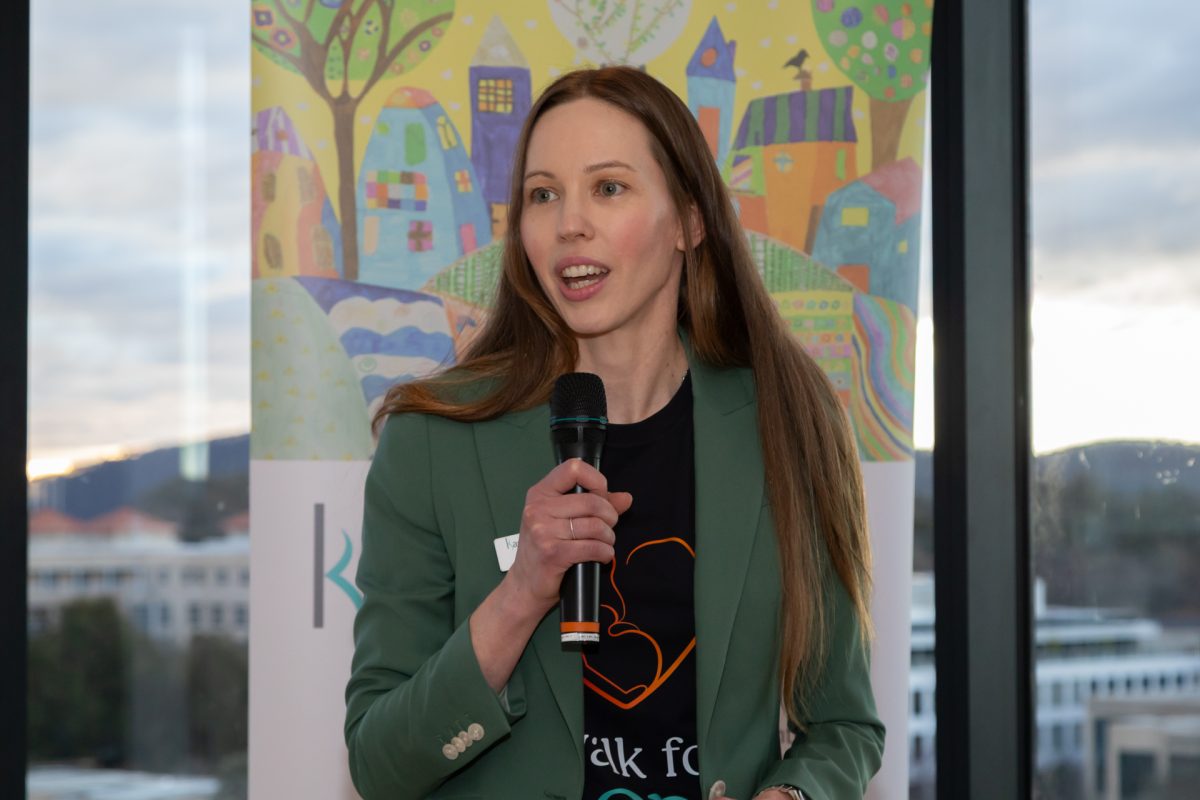
Karinya House CEO Lavinia Tyrrel: Most impoverished households in Australia were single-headed female households with children. Photo: Michelle Kroll.
Karinya House CEO Lavinia Tyrrel said her organisation offered support to mothers and children and this scheme was just the sort of opportunity they needed.
Ms Tyrrel said the most impoverished households in Australia were single-headed female households with children, with almost 40 per cent living below the poverty line.
“The housing crisis and rental unaffordability and domestic and family violence are particularly impacting the cohort we support and creating further barriers to even being able to access private rental,” she said.
YWCA Canberra’s Our Lives: Women in the ACT Report 2025 supports this, saying nearly half of respondents who had recently experienced homelessness are working full-time – up from 36 per cent in 2023, and 17 per cent of respondents reported experiencing violence in the past year, with young women aged 16-19 the most at risk.
Ms Tyrrel said that for many, the only real exit pathway from crisis accommodation was into public housing, but women “should be able to have the choice to exit into any type of housing that they think fits with their journey, be it private rental, public housing, or even building a pathway towards home ownership long-term.”
While the scheme could not help all women, it was part of an ongoing effort to reduce the barriers they faced, she said.
Ms Tyrrel said that long-term, safe, secure, affordable housing enabled women and their children to achieve a range of other goals, which, in turn, had community benefits.
The Stathnairn program is open to women aged 25 to 45 years and on low to moderate incomes, such as those in the ACT’s essential workforce, including emergency service workers, nurses, educators, early childhood, aged and disability care workers.
Participants can access early financial health checks and receive practical advice on saving and loan readiness, either through their own bank or with support from program partners NAB and ServiceOne.
Minimum and maximum income limits are set based on home size and the number of dependents to help keep the program accessible and the mortgage manageable.
Independent local contractor Renaissance Homes is building the homes, which are expected to be completed in the first quarter of 2026.
For more information and to complete an Expression of Interest, visit the Women’s Housing Initiative (WHI).