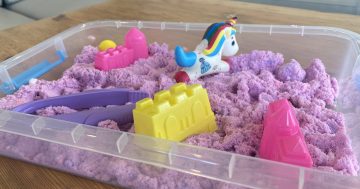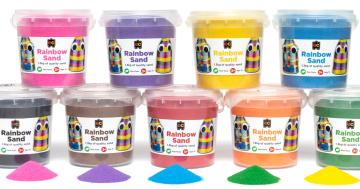

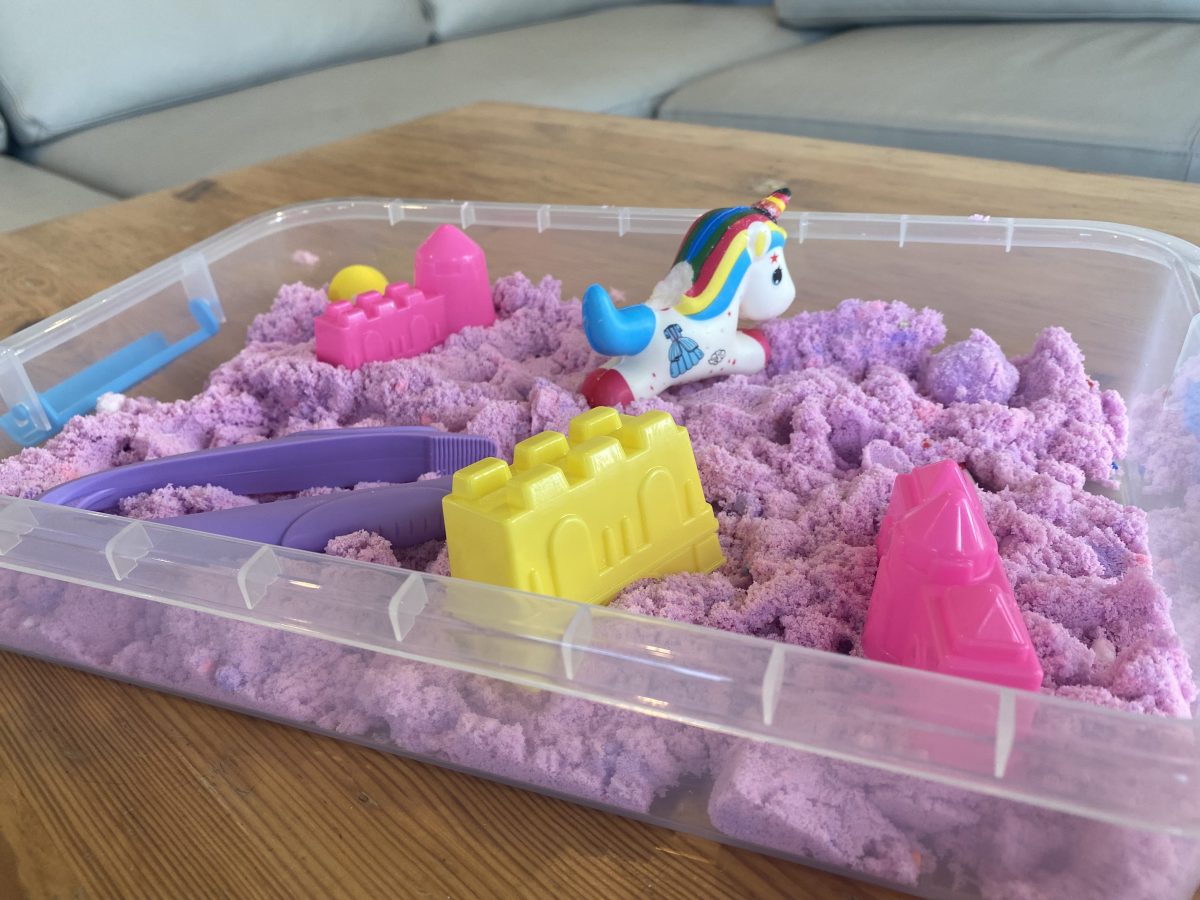
The ACCC has issued national recalls for multiple brands of coloured play sand since mid-November. Photo: Claire Fenwicke.
Asbestos has been found in play sand removed from ACT public schools as part of the government’s response to potential contamination.
In mid-November, the ACCC issued a national recall for coloured sand products sold at retailers such as Officeworks, Kmart and Target after tremolite asbestos was found during laboratory testing. (Several more items have since been added to this list.)
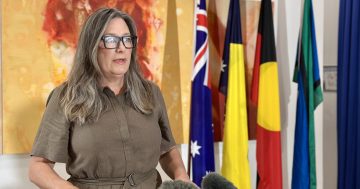
Education Minister Yvette Berry confirmed on Tuesday (2 November) that the ACT had started testing sand collected from Canberra’s public schools, and of the 10 samples already evaluated, four contained chrysotile asbestos.
“This testing confirms what experts told us from the outset – that these products do contain asbestos and should be properly handled in line with ACT regulations for suspected asbestos and asbestos removal,” she said.
“Hundreds of air monitoring tests have [also] been undertaken across our public schools. I can confirm … this monitoring has shown no positive results for airborne asbestos fibres.”
Chrysotile asbestos, also known as white asbestos, is the most widely used form of asbestos.
During the Education Directorate’s response to the potential contamination, coloured sand found in schools had to be isolated until licensed asbestos removalists could remove it.
The impact varied, with some schools operating as usual because no sand products were found, while others had sand that was either easy to isolate or in such small quantities that it could quickly be removed.
But other schools were unable to operate safely because of the amount of sand present or its location. This led to partial or full school closures.
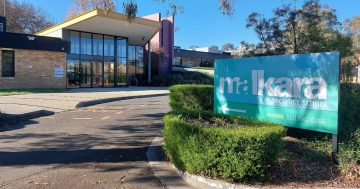
Ms Berry particularly acknowledged Malkara School and its community, which was “significantly impacted” by the situation.
The specialist school had been prioritised during the initial remediation works and reopened.
“It was subsequently discovered that coloured sand had been mixed in the outdoor sand pits and spread extensively across the outdoor spaces at Malkara,” Ms Berry said.
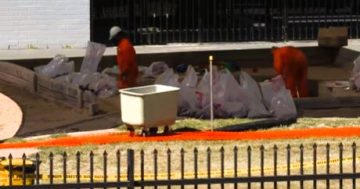
“This meant the school had to be closed for a second time to undertake extensive remediation works. These works included clearing out the school’s sand pit, digging out and replacing turfed areas, pressure cleaning all hard surfaces, and scraping the top layer of all soft fall spaces before the spaces could be cleared.
“Then the playground needed to be re-landscaped before students could return.”
All ACT public schools are operating once again, although some areas remain isolated and need remediation.
Ms Berry added that while every effort had been made to find and contain recalled and unidentified sand products, there was the possibility that more coloured sand would be found.
“If it is, appropriate work health and safety processes will be followed,” she said.
“I will say, though, that even if more sand products are located, I am confident our schools will continue to stay open for all students.”
ACT Greens education spokesperson Laura Nuttall welcomed the government’s “quick response” to the issue under its rigorous Work, Health and Safety laws, but said there was one concern that had been continually raised with her by constituents.
“The most recurring theme that I have heard, from parents and carers, is communication,” she said.
Ms Nuttall said many school communities felt “left in the dark” about decisions being made at a directorate level, especially regarding the order in which schools had fully and partially reopened.
“More information on the reasons behind [those decisions] at the time would have been greatly appreciated,” she said.
ACT Education Directorate director-general Jo Wood previously acknowledged communications could have been handled better.
“There was a number of different communications that had to be sent to the right school, [and] we had some limitations with the speed with which we could send those communications out,” she told an annual reports hearing.
“[We’re now] looking to be more streamlined in how we communicate … but also looking at how we can use [some of the school’s] usual mechanisms.”
Education Minister Yvette Berry further clarified at the hearing that such information was usually sent to schools in batches, but when they attempted to centralise the information release, the system “overloaded” and slowed down.
More information about craft sand products in Canberra’s public schools is available from the ACT Education Directorate.