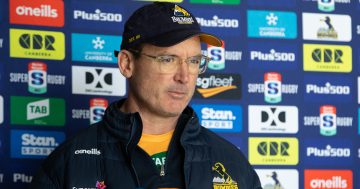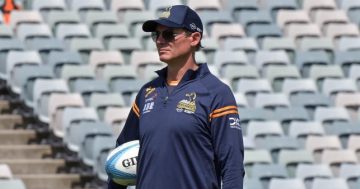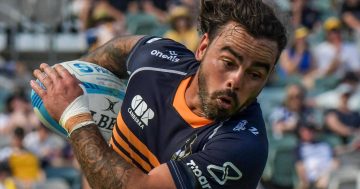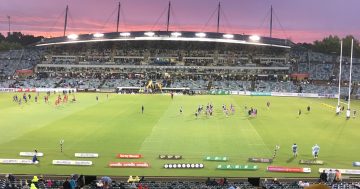

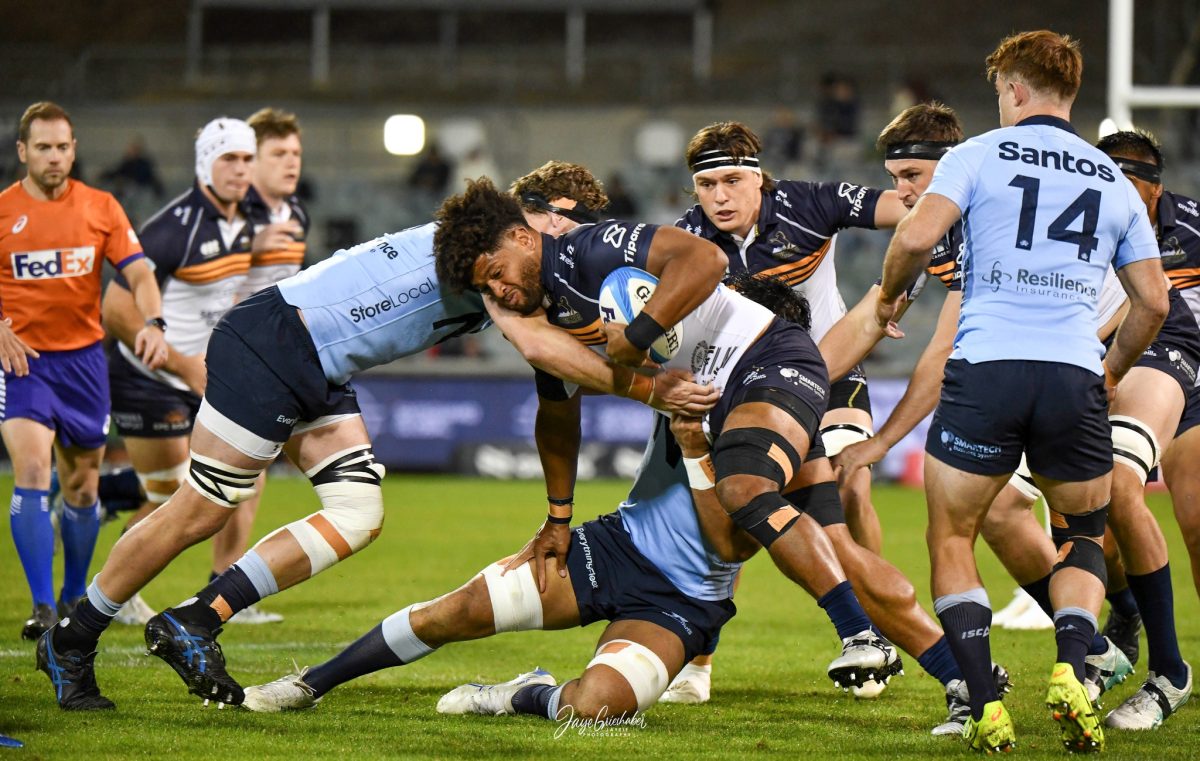
When the Brumbies play the Waratahs, history is not forgotten. Photo: Jaye Grieshaber.
The Brumbies’ entry into the world of Super 12 in 1996 wasn’t celebrated by everyone in Australian rugby. Far from it.
NSW Rugby had treated Canberra like the younger sibling on the school bus throughout history and had no intention of making the ACT’s involvement a comfortable experience.
Those perceptions were fuelled by the exclusion of strong Canberra teams such as Marist and St Edmund’s from the Waratah Shield.
But with the emergence of Super Rugby, the ACT and NSW were suddenly on a level field. Almost.
I say ‘almost’ because the Waratahs were viewed as a behemoth compared to the ACT in terms of resources, player strength and administration.
Administration of the Brumbies was conducted on the smell of an oily rag, bolstered by incredibly capable volunteers.
What NSW Rugby didn’t count on was the environment in Canberra, which fostered a ‘team first’ culture never seen before in Australian rugby.
In the first couple of years, the majority of the players came from outside Canberra: Robinson, McKenzie, Knox, Howard, Giffin, Langford, Noriega, Hardy, Holbeck and Magro. They joined existing talent such as Roff, Gregan, Larkham, Kafer, Didier and Caputo.
The imported players lived together in serviced apartments dubbed ‘Melrose Place’ in Kingston, less than 5 minutes from their training facility. In contrast, the Waratahs were scattered across Sydney and rarely associated beyond training together.
The camaraderie among the Brumbies was evident. It was not uncommon to see the Brumbies players socialising together in coffee shops around Kingston and Manuka.
It was a cohesive team with a strong senior leadership group.
Rod Macqueen was as much a CEO as coach in his ability to organise and delegate.
The remnants of that strong culture established in 1996 still exist today. It’s one reason why the franchise has been the most successful in Australian Super Rugby history, with two titles, a point not lost on many as Rugby Australia assumes control.
The so-called ‘player power’, which was stronger then than now, has encountered challenges along the way, including the sacking of two coaches – Andy Friend and David Nucifora – despite the team’s success.
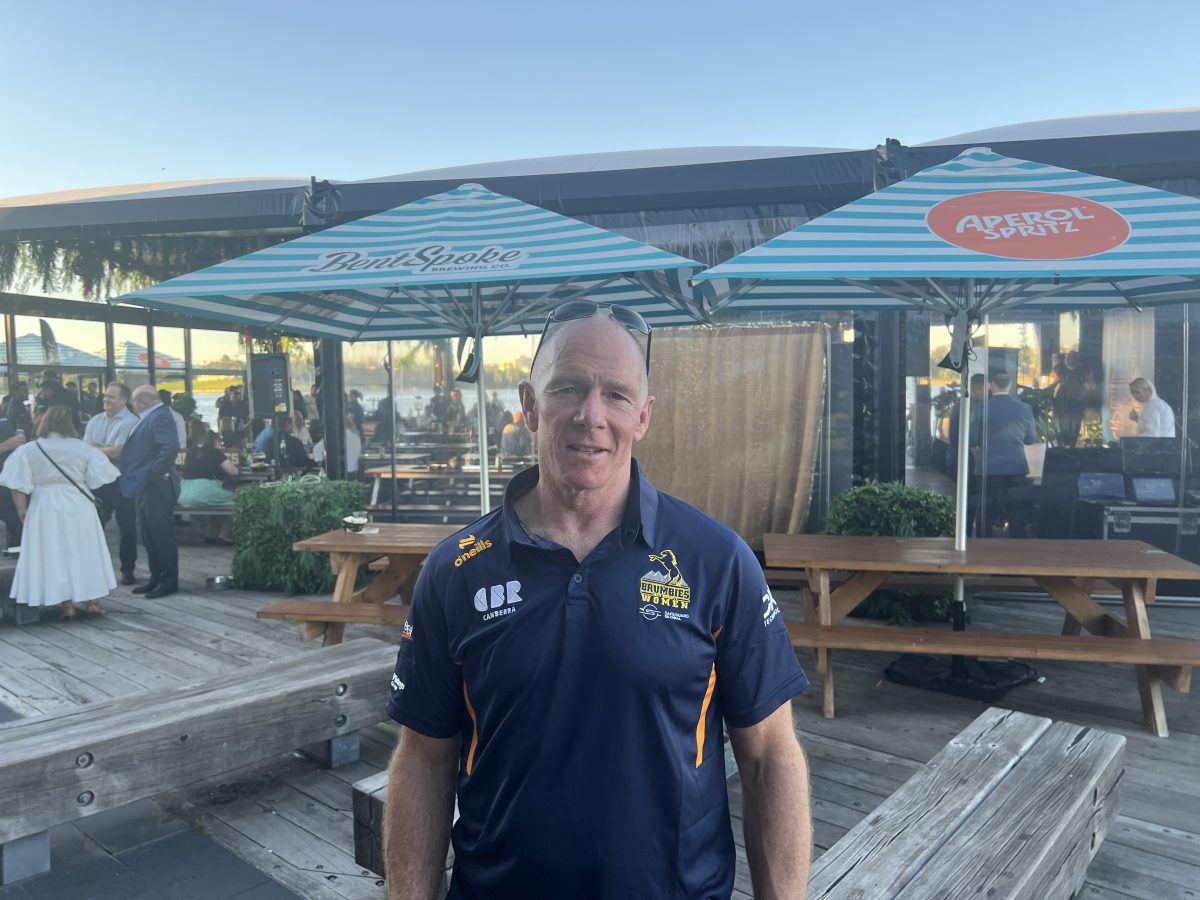
Andy Friend at the Brumbies 2024 season launch. Photo: Tim Gavel.
Nucifora’s contract wasn’t renewed after the 2004 season, a season in which the Brumbies won the Super 12 title in a breathtaking final against the Crusaders in front of 28,500 fans at Canberra Stadium.
The Brumbies were the hottest ticket in town at a time when the Raiders were struggling for support following the fallout from Super League.
Heading into the 2026 season, Super Rugby will no doubt be looking to return to those glory days after a couple of seasons in which the standard has been solid but engagement with the wider rugby community has been on the wane.
The Brumbies Super Rugby Pacific season kicks off against the Western Force in Perth on Saturday, 14 February. Their first home game is in round 3 at GIO on 28 February. Get your tickets from Ticketek.