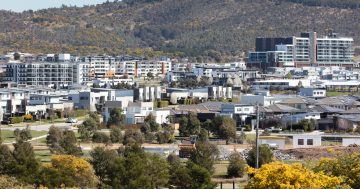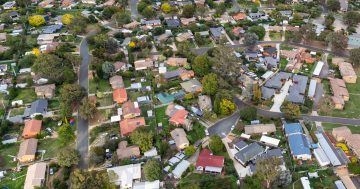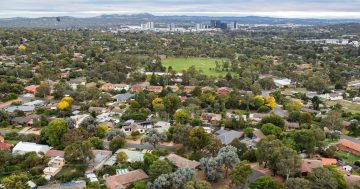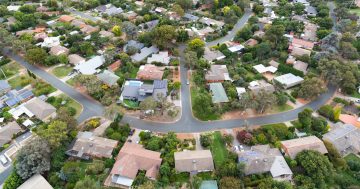

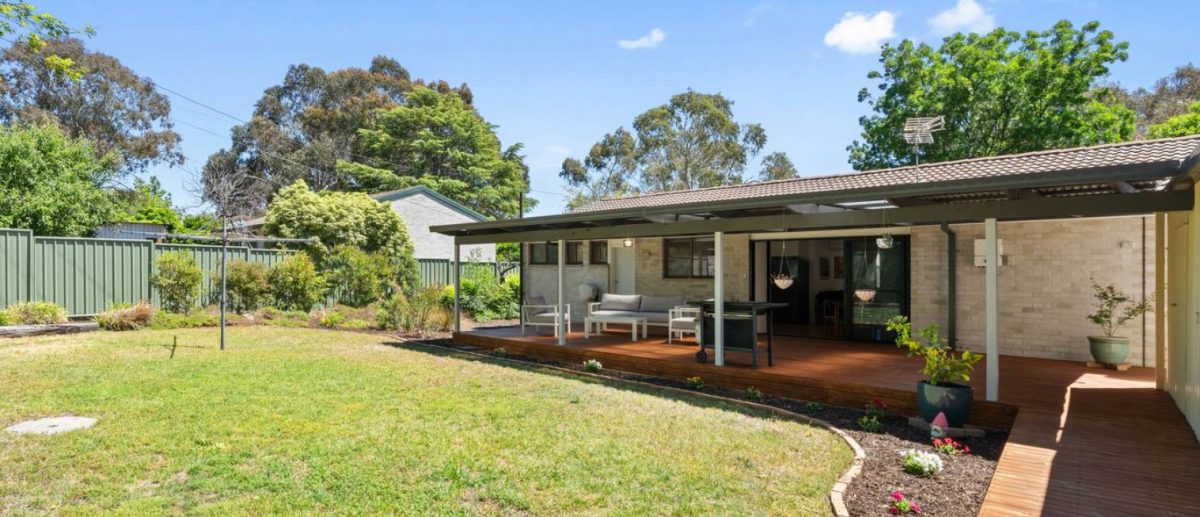
Affordable: This Kambah house on a 913 sqm block sold for $875,000. Photo: Zango.
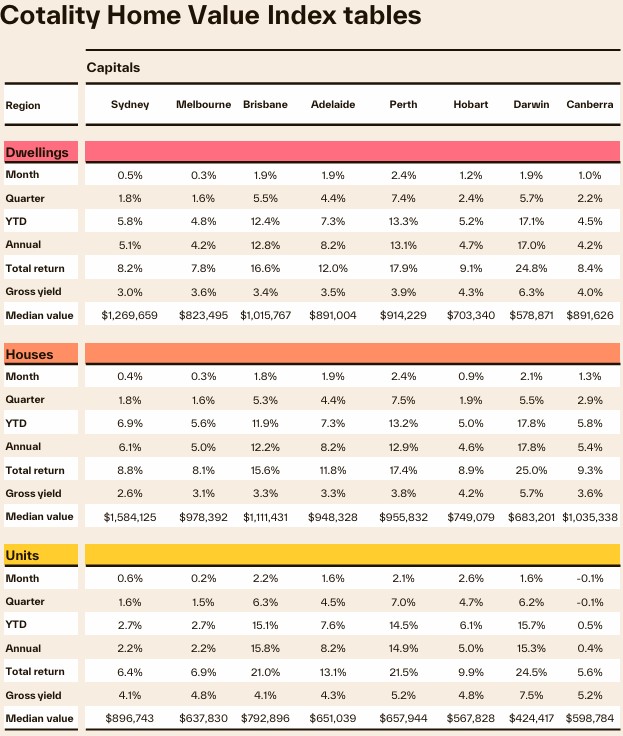
Canberra house prices took off in November, surging 1.3 per cent as supply levels remained low and the Commonwealth’s assistance for first home owners began to make its presence felt.
Cotality’s Tim Lawless said this meant house values were rising by about $13,500 a month or $3100 a week.
“That’s a pretty strong outcome for detached houses, and I think it really just highlights the scarcity of supply in that market,” he said.
Mr Lawless said house listings were about 15 per cent below average for this time of the year across the ACT.
In contrast, unit listings were about 19 per cent above average for this time of the year.
The Cotality Home Value Index for November showed an overall rise of 1 per cent, with the median value at $891,626.
The median for houses rose to $1,035,338.
Canberra’s two-speed market continued, with the more plentiful units and townhouses dipping ever so slightly by 0.1 per cent, to a median of $598,784.
House prices have grown this year by nearly 6 per cent, while units have barely moved at 0.5 per cent.
Mr Lawless said the more affordable outer suburban areas of Tuggeranong, Molonglo and Belconnen led the price growth.
The strongest market was Tuggeranong, one of Canberra’s most affordable areas, where values had risen by 5.8 per cent over the past 12 months and by 1.8 per cent over the month.
Molonglo followed with 5.7 per cent over the year, and 1.1 per cent over the month, and the big mover since a month ago was Belconnen, which rose 5.2 per cent over the year and 1.1 per cent in November.
Weston Creek has also been a strong performer at 5.1 per cent, followed by South Canberra (4.9% ), Gungahlin (3%), Woden (2.7%) and North Canberra (1.8%).
“It’s pretty clear these are some of the most affordable markets around the ACT, and that’s what’s driving that lower quartile of stronger performance,” Mr Lawless said.
He added that it was also driving the market generally.
Over the past 12 months, where the trend is clearer, the lower quartile for houses was up 7.4 per cent while the upper quartile was up 4.1 per cent.
“Like every other capital city, it does seem to be a skew towards the more affordable end of the marketplace, driving a more substantial growth outcome, which doesn’t really surprise me,” Mr Lawless said.
“That’s generally where you’ll find a bit of friction between first-time buyers and investors, as well as where affordability constraints start to bite.
“You’ll find mainstream demand is probably being deflected towards the lower price point as well, where they can demonstrate the ability to service their debt.”
Mr Lawless said the continued low supply of houses and the ACT’s relatively high incomes meant the market should maintain momentum in 2026, despite the headwinds of a possible interest rate rise and curbed lending practices.
“If you look at some of our affordability metrics, the dwelling value to income ratio across the ACT is 6.2,” he said.
“There’s only one other capital city that’s below that, which is Darwin at 4.3. So I don’t think affordability is really as pressing across the ACT as it is in other markets, which probably helps to keep a floor under the upwards pressure on prices to some extent.”
Mr Lawless said listing numbers remained quite low for houses and not enough new dwellings were being built, while population growth generally was still strong, at above-average rates.
Nationally, price growth in Sydney and Melbourne slowed, but the other capitals, particularly Perth, were strong performers.