

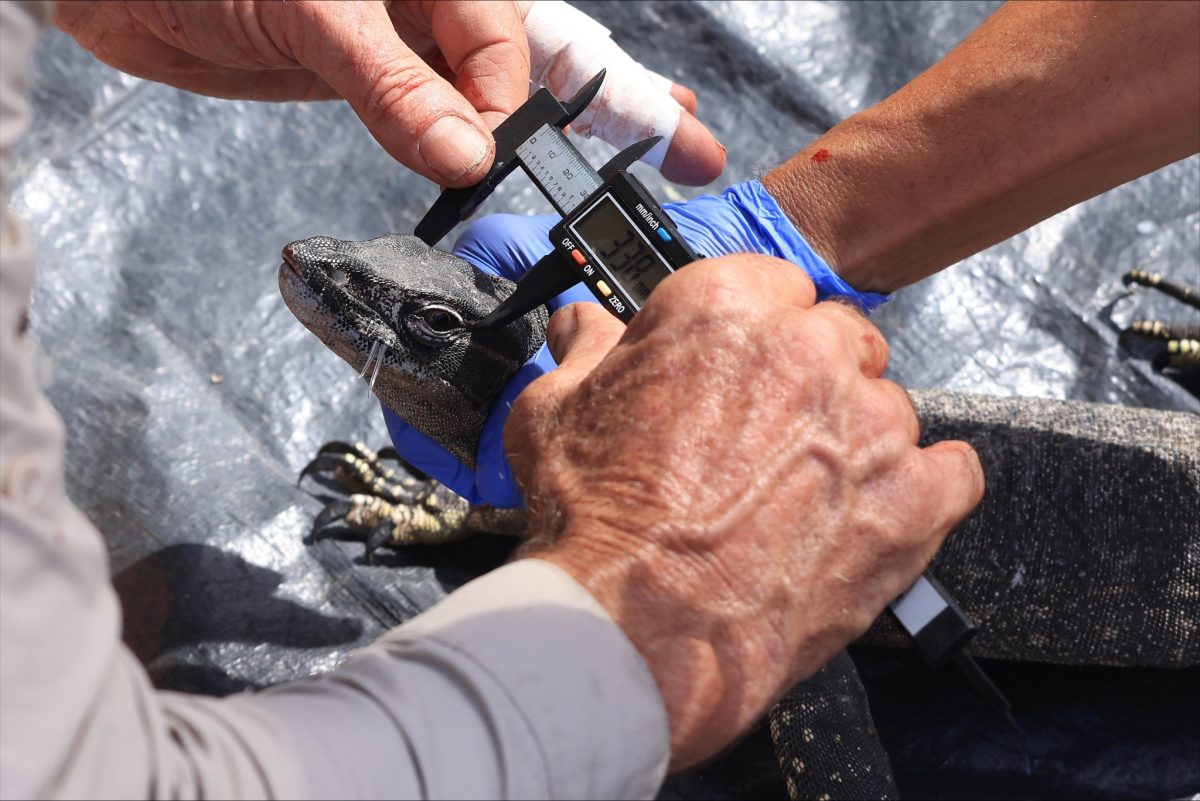
The National Parks Association is preparing to double down on efforts to save the ACT’s tiny Rosenberg’s Goanna population. Photo: NPA ACT, Facebook.
It wasn’t your usual “wanted” poster.
“Rum – Rosenberg’s goanna. Male, athletic build, yellowish belly, hazel eyes, facial scars, missing the tip of his tail,” it read.
The National Parks Association of the ACT (NPA ACT) circulated the notice across social media last week after Rum – one of only seven Rosenberg’s goannas left in the Ainslie-Majura area – slipped off the radar.
The independent conservation group has been running its Goanna Project since 2017, locating and tracking Rosenberg’s goannas in the Naas Valley at Namadgi National Park and around Mount Majura and Mount Ainslie to save the species from disappearing entirely.
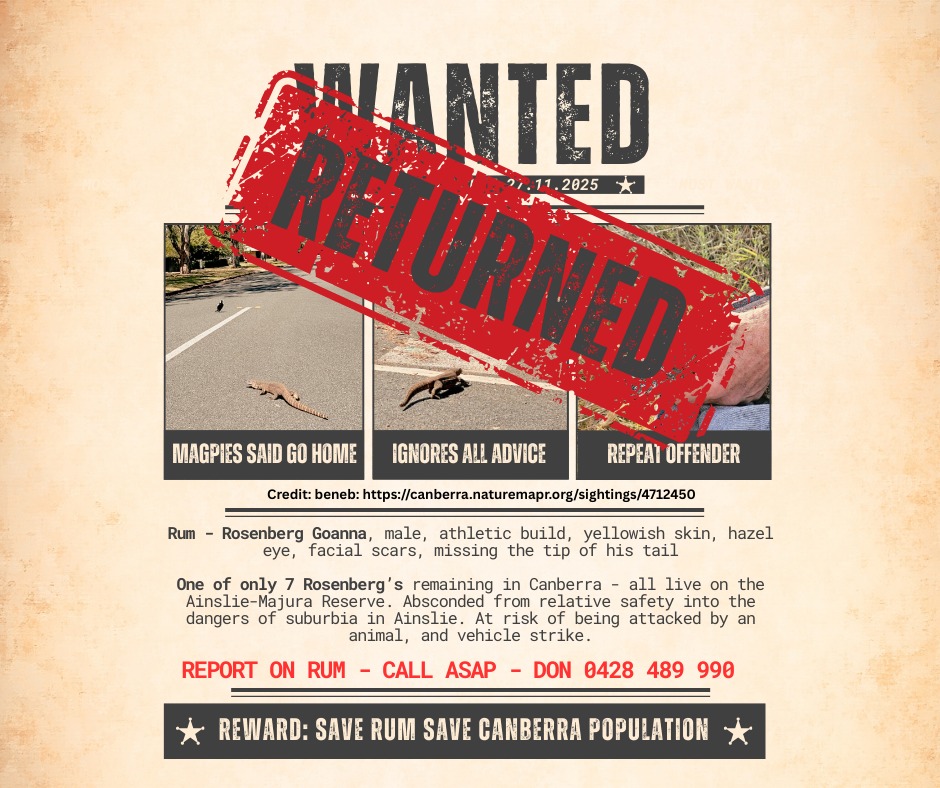
Rum turned up in an Ainslie backyard over the weekend. Photo: NPA ACT, Facebook.
But the animals don’t make it easy, according to project lead Dr Don Fletcher.
“We had a GPS on Rum for a while, but he managed to shed it after two to three weeks,” Fletcher says.
“Goannas are difficult because they shed in patches throughout the summer … so it’s very hard to know when the bit of skin you glue the tracker onto is going to shed.”
Thankfully, Rum turned up over the weekend – roaming a backyard on Tyson Street in Ainslie.
“The males we’ve tracked move all over the western side of Mount Majura … from the Federal Highway down to Fairbairn Avenue, and Rum also goes over to the Campbell Park offices,” Fletcher says.
“They tend to be more on the side of the suburbs, unfortunately … because they’re north-facing, and being reptiles, they like the sun and warmth.”
Rum has now been carefully captured, placed in a “goanna bag” and released on Mount Ainslie. But the work is far from done.
With brand-new tracking equipment funded by the ACT Government – and a California-based specialist flying in this week to teach volunteers how to use it – the NPA is preparing to step up efforts to safeguard the tiny remaining population. And it wants Canberra’s help.
Rosenberg’s goannas once ranged widely across the ACT until the 1960s and ’70s before suburbia overtook them.
“They’re not really good at moving across roads, so they’ll be run over. Urban areas are a pretty firm barrier for them. Foxes and domestic dogs also kill them,” Fletcher says.
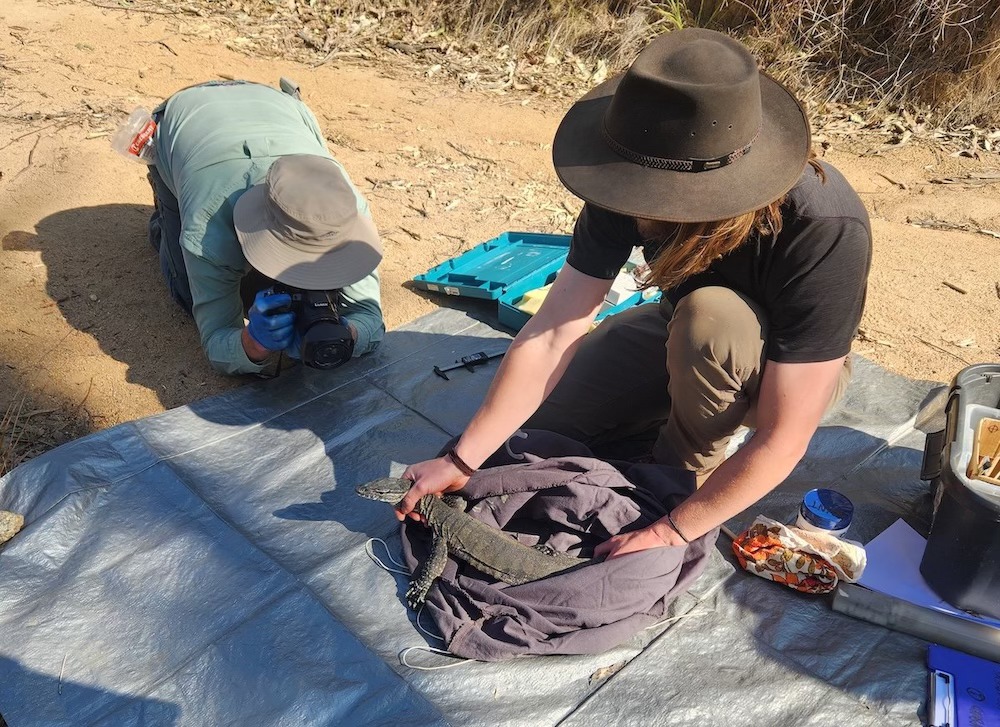
Volunteers from the National Parks Association of the ACT preparing a goanna for release. Photo: NPA ACT, Facebook.
The species, found only in southeast Australia, is now listed as vulnerable in NSW and Victoria. In suburbia, researchers believe only six or seven individuals remain in the Majura-Ainslie area, and repeated surveys haven’t uncovered any newcomers.
“They’re all gone, except for this one population still hanging on,” Fletcher says.
“We think they’re all probably fairly old … and while there is breeding — females lay in termite mounds – we’re not seeing those new animals making it into the adult population.
“They each have a unique face… and we just keep seeing the same ones again and again.”
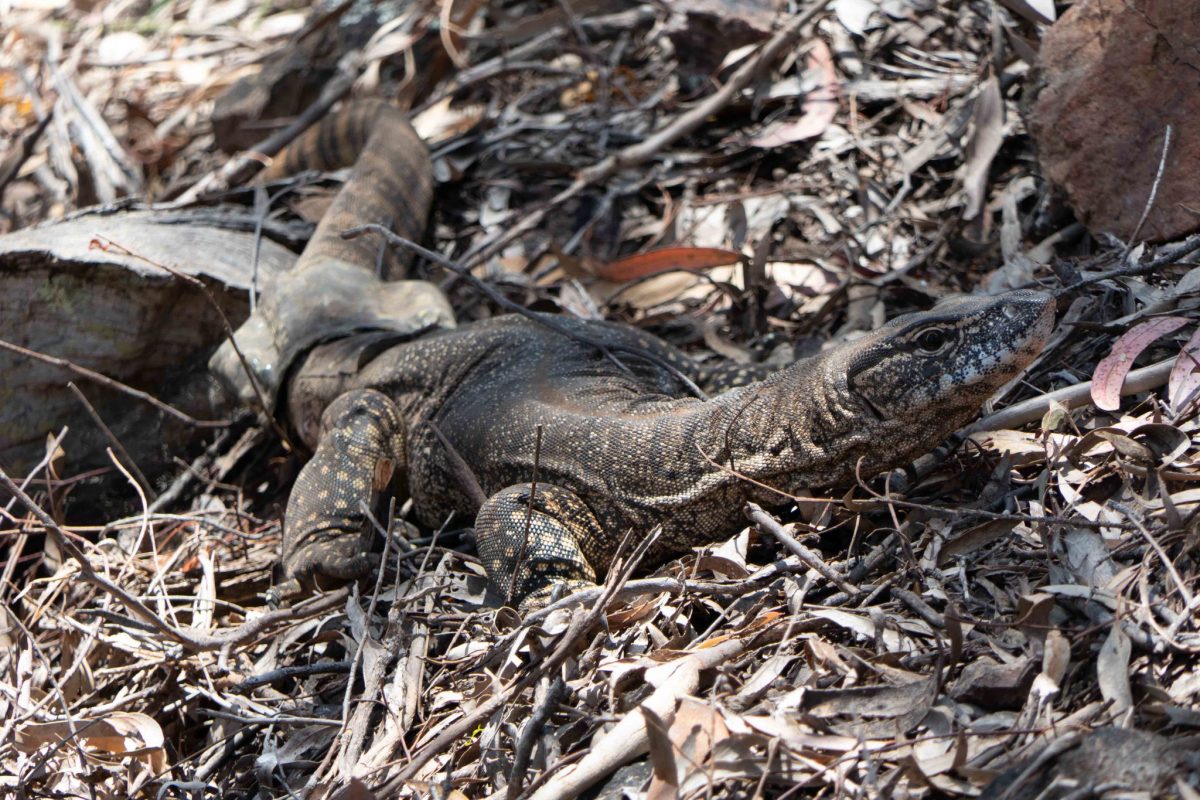
Each of the ACT’s goannas has a name. Photo: NPA ACT, Facebook.
Since 2015, all the monitored goannas have names beginning with R – Rex, Rosie, Rox, Rambo, Robin, Rum – a tradition started by one of the volunteers.
Rum himself has had a rough run. In 2023, volunteers found him “moribund and sluggish”. He’d been attacked and left with deep lacerations to his neck and a missing tail tip. Stromlo Vet Centre stitched him up and put him on antibiotics before releasing him.
“We had to keep tracking him to give him his top-up of antibiotics every three days,” Fletcher says.
“But that got difficult because goannas are actually quite intelligent – they recognise people’s faces – so he’d always dash away down a rabbit warren when he saw us coming.”
The following year, Rum caused a stir again, wandering through yards along Limestone Avenue.
“The males will try to bite and get away when they’re frightened … they’ve got very impressive teeth,” Fletcher says.
“And the stories are true – goannas do have venomous saliva – but because they don’t have hypodermic fangs like a snake, they have to chew a bit on the wound, and everyone I know who’s been bitten – it’s had no effect.”
Knowledge, Fletcher says, is the key to reducing fear and boosting protection.
“If people know we’ve got these things, they’ll be more interested in caring for them,” he says.
“But for most Canberrans, they’re things that live somewhere far away … slightly scary. But they’re actually now the largest remaining native predator in a lot of areas.”
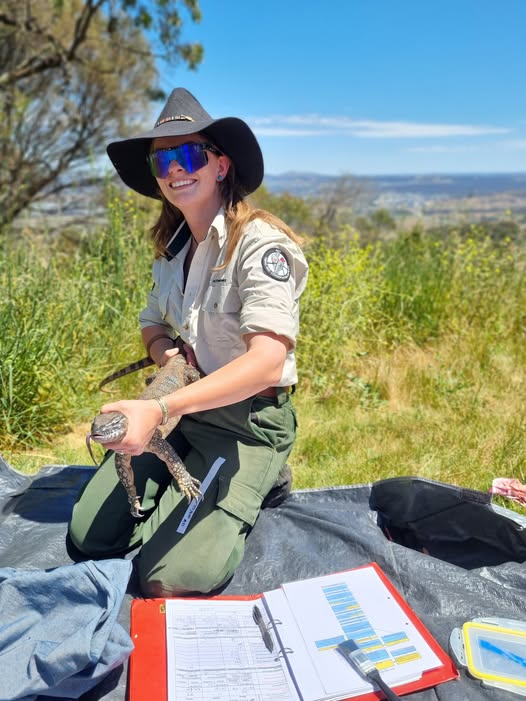
The ACT Government has funded the new equipment for the NPA. Photo: NPA ACT, Facebook.
That’s why the ACT Government has funded thousands of dollars’ worth of new GPS trackers from California-based company Telemetry Solutions. Its CEO, Quintin Kermeen, is in Canberra this week to show the team how to use the technology.
Majura and Ainslie’s “unbelievable radio interference” – likely from the Defence Training Area and airport – has caused two $3300 tracking units to be lost, where this new equipment can be programmed to avoid interference, delivering real-time location updates to volunteers at home.
“The ACT Government has bought all the new equipment … I picked it up yesterday and now we’re meeting the maker of it,” Fletcher says.
But before they can fit the devices, they need to locate the goannas – and that’s where locals come in.
“It would be great over the summer if people could notify us when they see a goanna, so we can hopefully zoom up there and grab it.”
Sightings can be reported through NPA ACT’s website or by emailing Don at don.fletcher999@gmail.com.