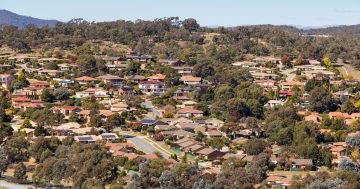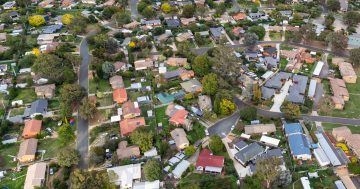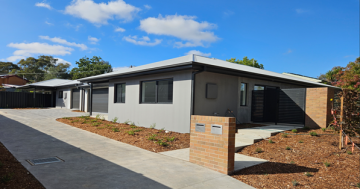

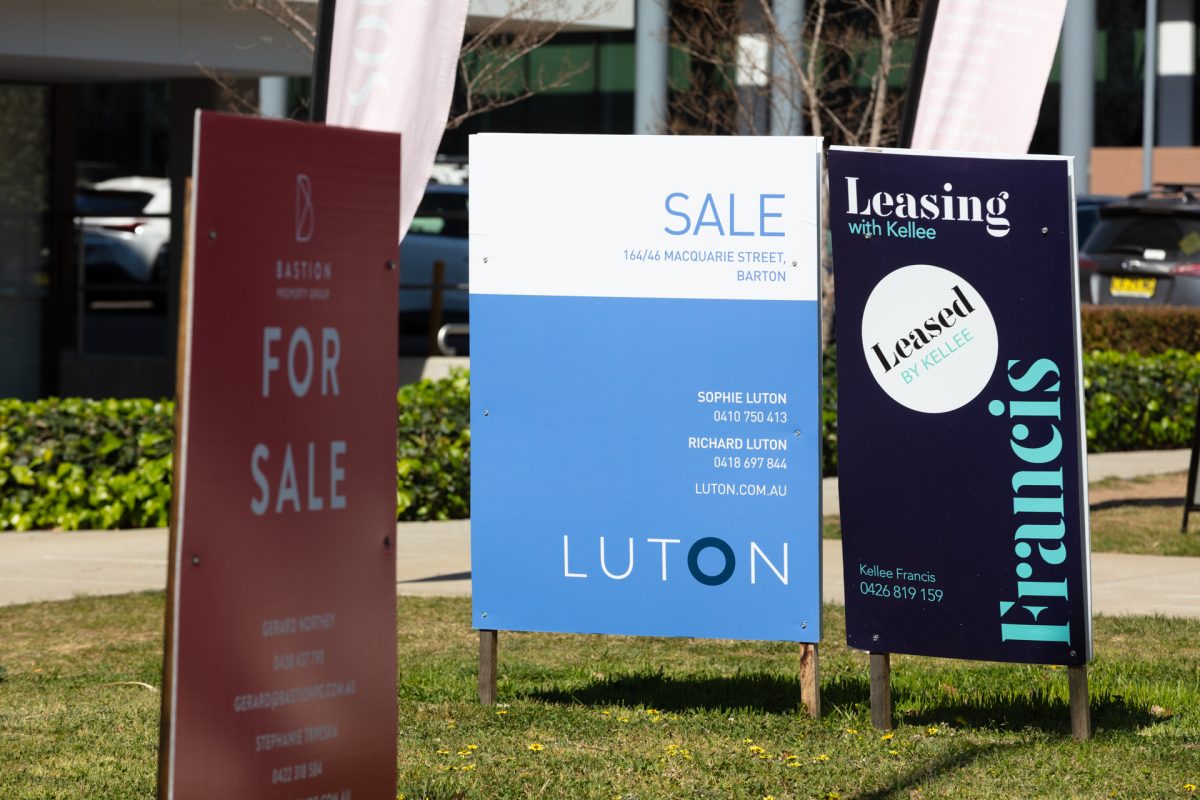
Canberra’s stable rental market has been good news for tenants. Photo: Michelle Kroll.
Canberra’s rental market tightened in 2025 but the national capital is so far avoiding the brutal conditions afflicting other capitals.
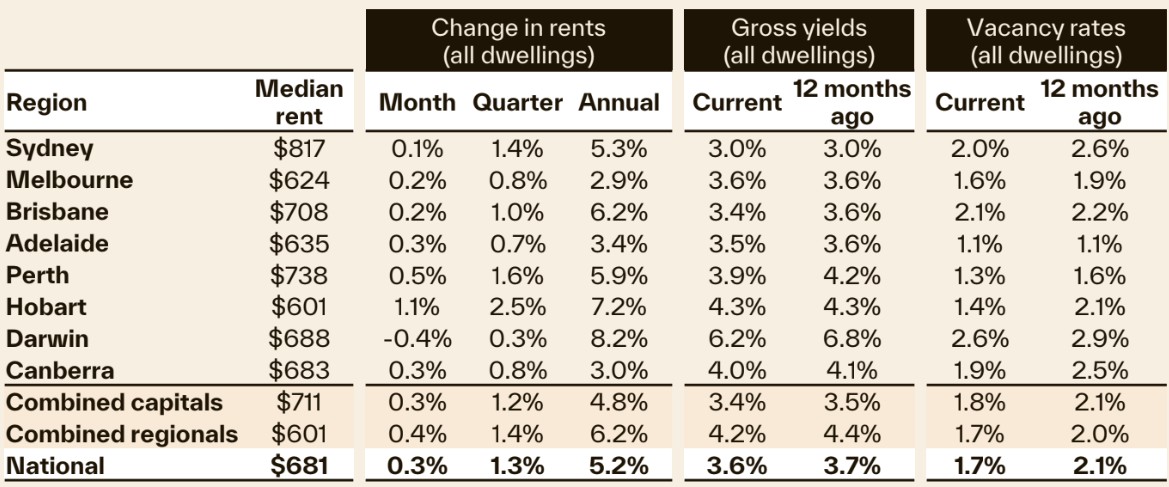
According to the latest Quarterly Rental Review from Cotality, the vacancy rate has shrunk to below 2 per cent in the past year, but the median rent level has only risen 3 per cent to $683 a week.
This is just $2 behind the national median, but in recent years Canberra has slid from having among the highest rents in the country to the third lowest after rents exploded in the other capitals.
In December, Canberra rents barely moved at 0.3 per cent, and for the quarter rose just 0.8 per cent. This is despite vacancies being squeezed to an uncomfortable 1.9 per cent, down from 2.5 per cent at the same time in 2024.
House rents were up 2.8 per cent in 2025, while units rose 3.6 per cent.
The nation finished the year with a 5.2 per cent annual increase in rents, after a 1.3 per cent rise in the last quarter. The vacancy rate tightened from 2.1 to a super-tight 1.7 per cent, well below the pre-COVID decade average of 3.3 per cent, as rental listings dropped 11 per cent year-on-year and 17 per cent below the five-year average.
Annual rent increases in Sydney, Brisbane, Perth, Hobart and Darwin all surpassed Canberra’s, as vacancy rates tightened.
While rent increases in Melbourne and Adelaide were contained in 2025, the five-year data shows just how better off Canberra has been.
The national median rent of $681 per week is up $204 per week over five years, marking a cumulative increase of 42.9 per cent since December 2020.
Canberra has experienced the lowest increases in house (16.8%) and unit (19.2%) rents in the country over the past five years.
 Nationally, the figures were 41.2 and 41.7 per cent respectively. Perth led the way with an incredible 58.7 and 66.2 per cent, Adelaide spiked 46 and 48 per cent and Brisbane 44.7 and 53 per cent.
Tenants also did it tough in the two big capitals of Melbourne (31.3% and 40%) and Sydney (38.4% and 50.2%).
Even Hobart surged 28.9 per cent for both houses and units, while Darwin rents grew by 35.5 per cent and 43.5 per cent.
House and unit split the most expensive and cheapest Canberra suburbs in which to rent, with the median in Campbell at the top on $980 a week and Lyons at the bottom on $486.
These two suburbs are also the most expensive and cheapest places to rent a house — $980 and $582.
For units, Garran is the most expensive suburb with a median of $727, while the cheapest is Lyons at $496.
The five most expensive suburbs to rent are Campbell ($980), the new suburbs of Denman Prospect ($968) and Whitlam ($912), Farrer ($909) and Garran ($907).
The five most affordable suburbs are Lyons ($496), Downer ($526), Chifley ($533), Mawson ($540) and Gungahlin ($547).
While Canberra’s rents are still high and the vacancy rate can’t be called healthy, the apartment boom and growth in student accommodation in recent years have done much to stabilise the market, preventing the pain being experienced in the other capitals.
Canberra’s high incomes also ameliorate the situation, but rental stock at the lower end of the market remains in short supply.
Cotality research director Tim Lawless said the national December quarter result was “bad news” for both renters and inflation.
Mr Lawless said in the five years before 2020, rents nationally rose by just 7.5 per cent or $33 a week.
Based on affordability metrics to September, households were now dedicating a record-high 33.4 per cent of their pre-tax income to pay rent.
“The reacceleration in rental values is also bad news for inflation and the cash rate outlook as rental costs hold a significant weight in the CPI calculation,” he said.