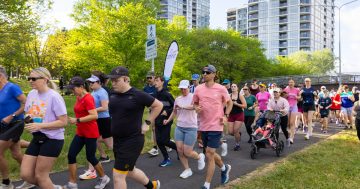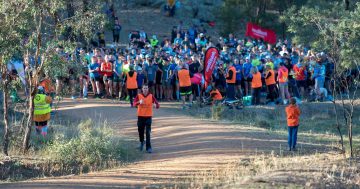

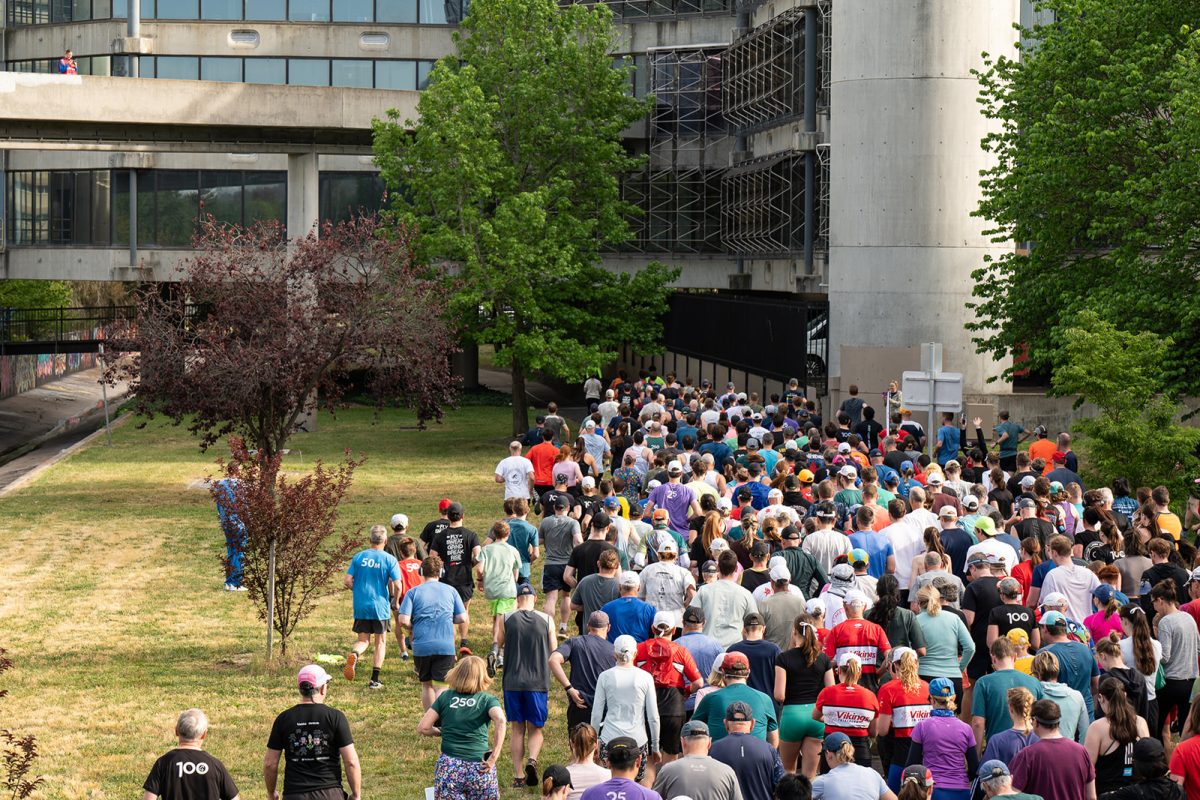
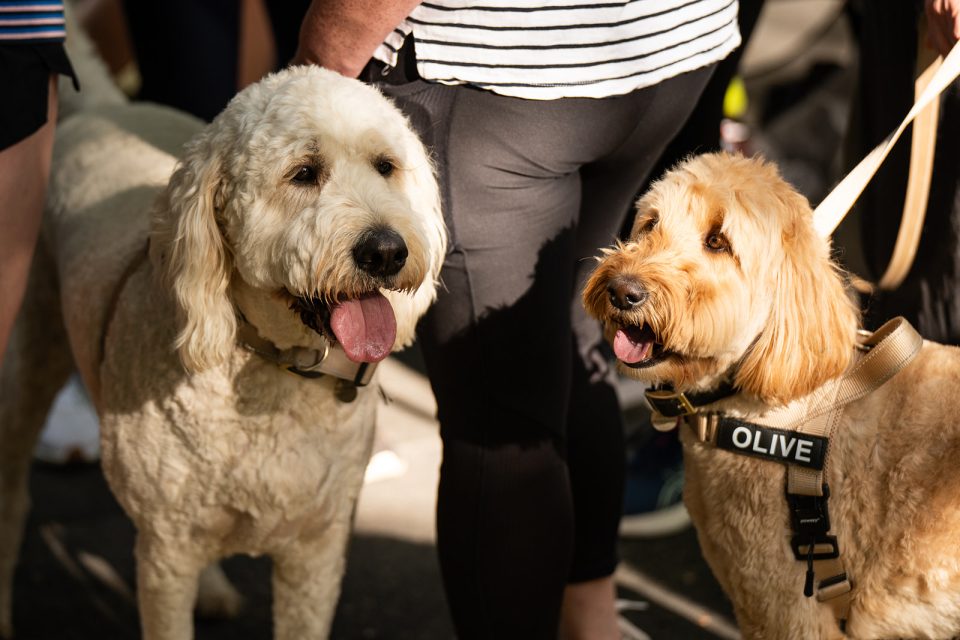
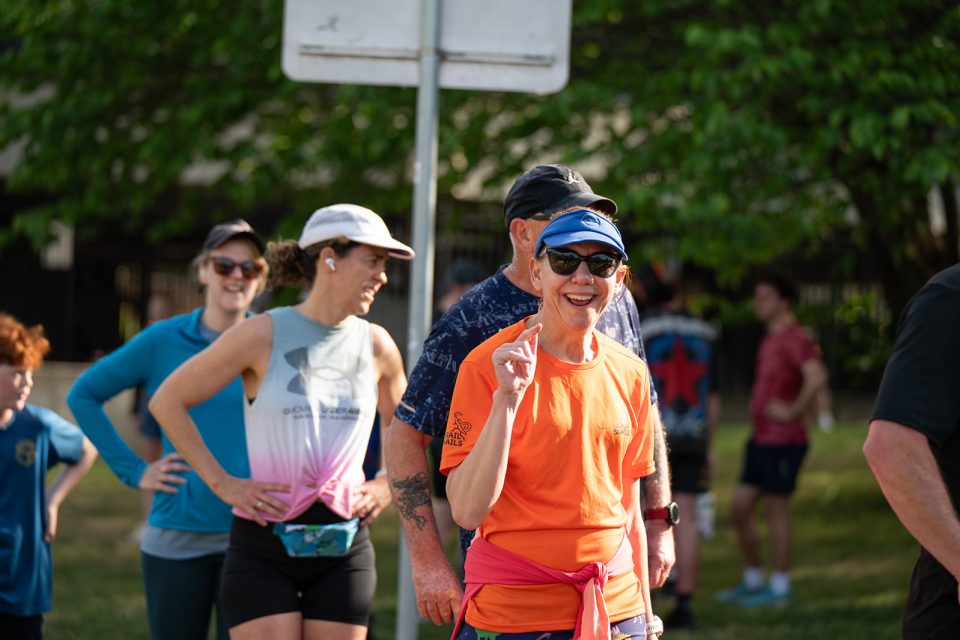
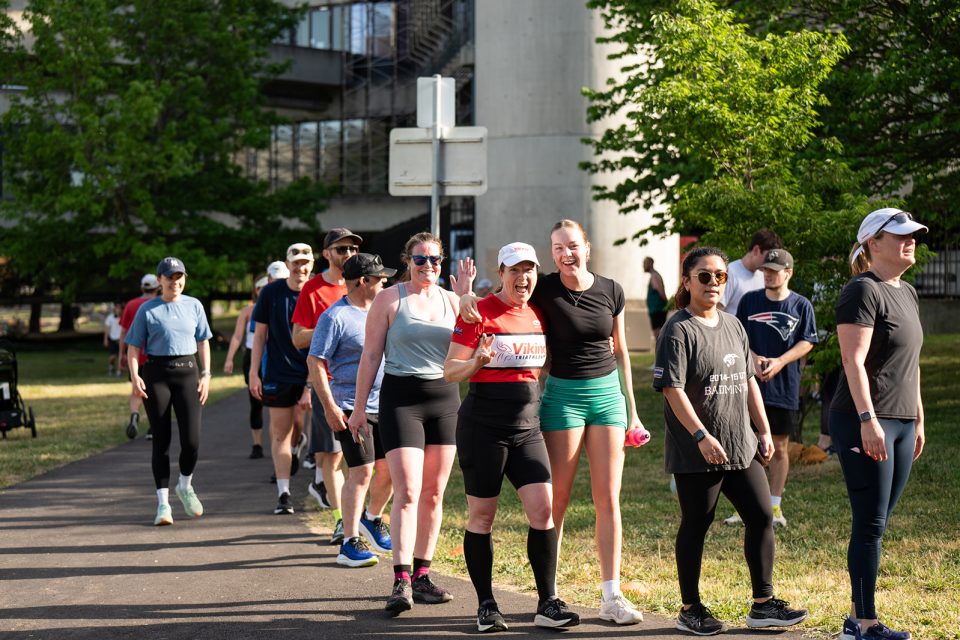
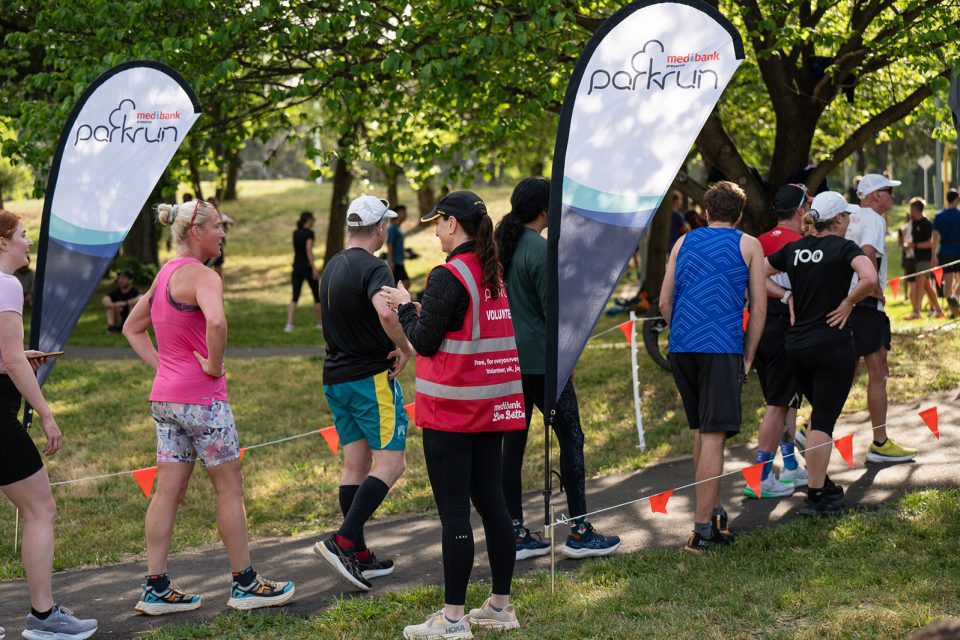
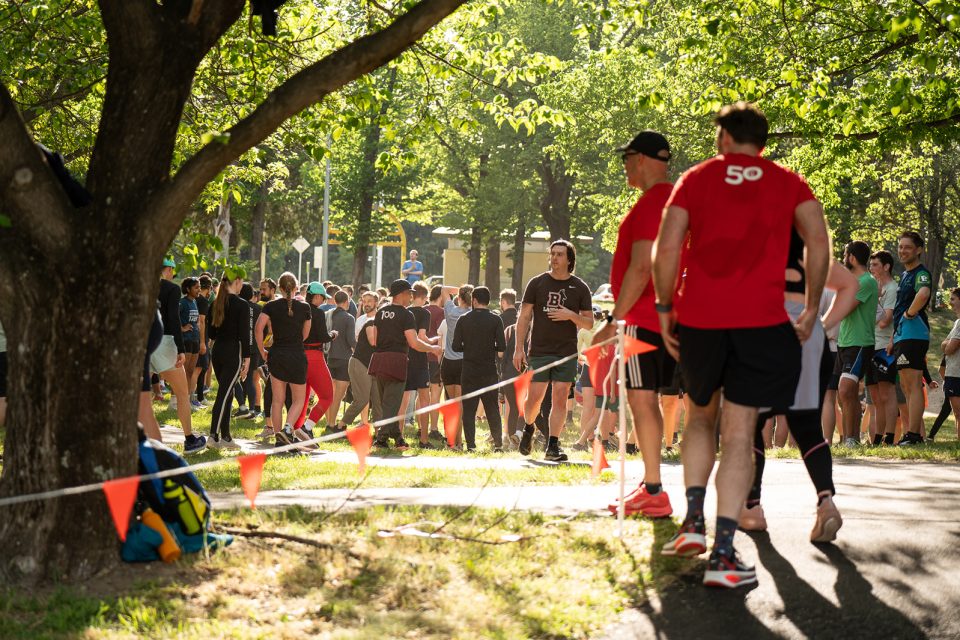
More than 700 people turned out for the new Woden Town parkrun. Photo: Sarah Torrington.
It began, improbably, with a bike accident.
In early 2022 a fall from my bicycle left me in hospital. I regained consciousness three days later with a fractured cheek, ribs and wrist and a diagnosis of moderate traumatic brain injury.
It took time to get back on the bike, but over the following months I returned to running and with it, regained my vitality and confidence.
Later that year while on holiday in New Zealand, my son and I joined the Queenstown parkrun. It was just something to do that morning, but it changed everything. I caught the parkrun bug.
Over the next two and a bit years, I participated in more than 100 parkruns, including all nine in Canberra.
I loved the sense of routine and community, the simple act of getting up early on a Saturday, running into old friends, making new ones and starting the weekend in motion.
As I ticked off each event, one thought kept returning: Canberra was missing a parkrun right in the middle of the city.
If you live in Tuggeranong, Belconnen or Gungahlin there are plenty of options. Even the inner suburbs could choose between the trails of Mt Ainslie and lakeside Burley Griffin. But the geographic centre of Canberra – the Woden Valley – sat blank on the parkrun map.
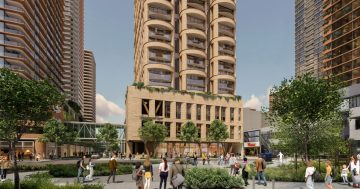
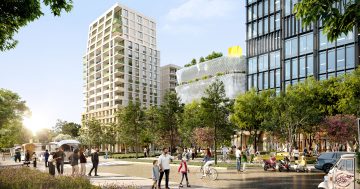
Meanwhile, Woden was changing and fast. Apartment towers were rising, population density was climbing and the town centre was forecast to house more than 5000 residents within a few years.
The physical infrastructure was there but Woden lacked a shared heartbeat, something to connect new residents and long-time locals, something that said, “this is our community”.
A Saturday morning parkrun could be that missing piece, a small but powerful way to stitch old Woden and new Woden together.
By February 2025, I was mapping potential routes. One stood out – the path along Yarralumla Creek, scenic, traffic-free and already loved by runners.
I put together a short presentation to explain the concept – population growth, community benefits and why this location and course was right. That document became our north star. It helped us answer every question – why here, why now, how will it work? – and gave us a clear story to share with volunteers, businesses and local representatives alike.
I contacted Parkrun Australia to outline our case. Four days later, they appointed experienced volunteer Toby Bellwood to help guide us through the process of starting a new event.
Toby was an energetic problem solver and his knowledge was invaluable. He started with one clear piece of advice – build your team early.
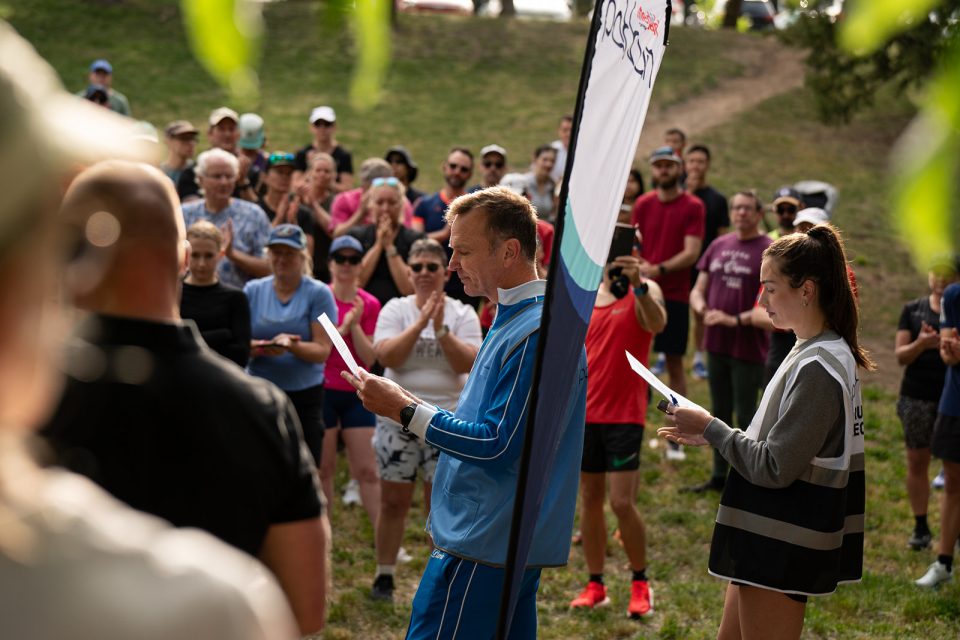
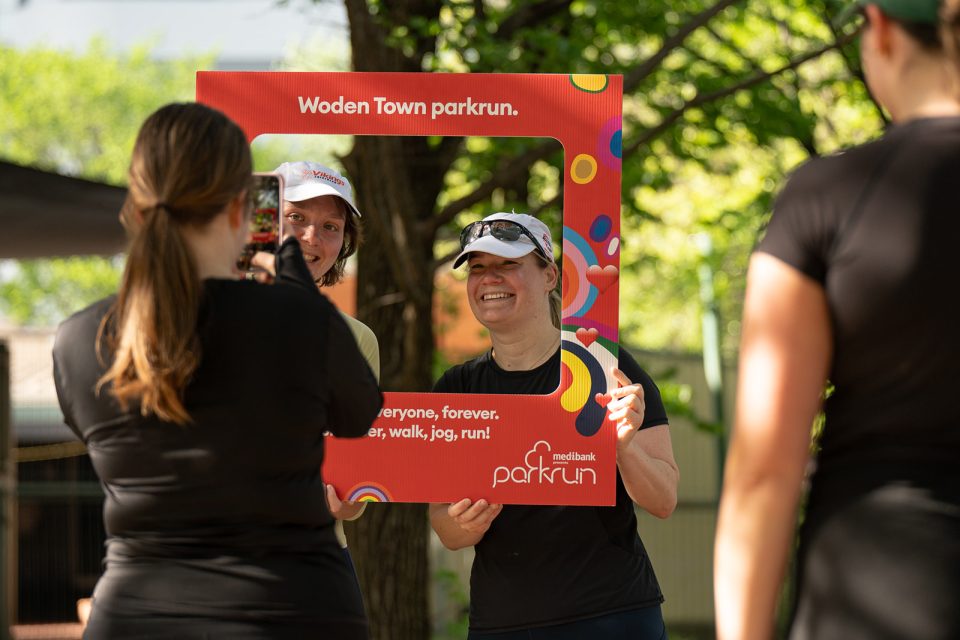
From the outset I knew who I wanted as co-pilot – Lili Mooney. A talented distance runner and community advocate with Canberra’s Running for Resilience movement, Lili is well known in Canberra’s running scene as a can-do person.
Together we began recruiting a core team of locals and within weeks, we had volunteers ready to take on leadership roles, as well as timekeepers, marshals and barcode scanners.
We refined the out-and-back route beside Yarralumla Creek, 2.5 km north into the adjoining suburb of Curtin, then back the same way. It ticked every box – central, safe and scenic.
The heritage-listed Callam Offices provided ample parking and an unforgettable start line, while proximity to the new Woden Transport Interchange and the town centre promised easy access for future participants.
Every new Australian parkrun must raise several thousand dollars to cover costs, not just for setup but for the life of the event. We treated fundraising as storytelling – explaining why Woden needed this, not just what it cost.
Those meetings were about more than sponsorship, they were early lessons in community pride. Each partner became part of our story, part of #wodenpride — the idea that Woden had plenty to celebrate and it was time to put our parkrun firmly on the map.
We ran two trials in September. Watching the first small wave of runners disappear under the Callam Offices felt surreal. Those quiet Sundays gave us confidence. We knew we were ready.
Our first official event on 18 October was intentionally small. The morning sun hit the concrete ribs of the Callam Offices, turning them silver. As we delivered the briefing, I realised how symbolic that structure had become — a once-maligned relic now framing something new and hopeful. One hundred and two participants turned up that day. Yet to us it felt huge.
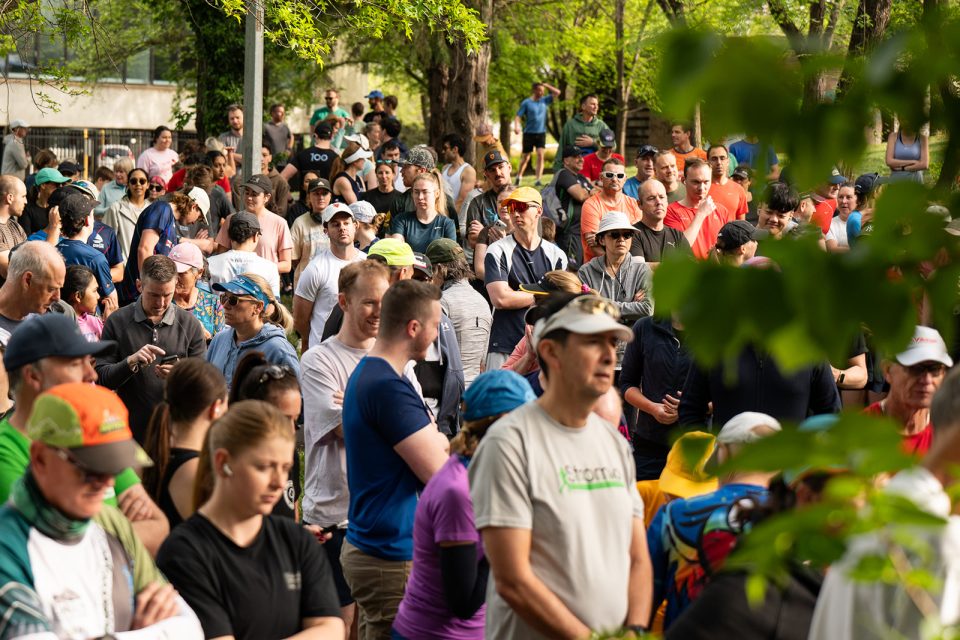
The second week was our official launch and we spread the word more widely. Watching our social media channels we knew the parkrun grapevine was running hot and that Saturday, more than 700 people turned up.
For a suburb long accused of lacking community life, Woden suddenly pulsed with it. People lingered afterwards, chatting, laughing, promising to return. It was more than a run, it was a statement of belonging.
Woden Town parkrun is still finding its rhythm, but the signs are all there. The smiles, the chatter, the slow build of routine. It already feels inevitable, as if this gathering by the creek was always meant to happen here.
From an idea to an event that now draws hundreds every week, this is proof of what a community can do when it believes in movement, storytelling and pride of place.
Woden Town is no longer Canberra’s “missing’ parkrun”. It’s a symbol of what happens when you start small, dream local and keep showing up.
Andrew Dempster is a Curtin resident and an event director of the Woden Town parkrun.