
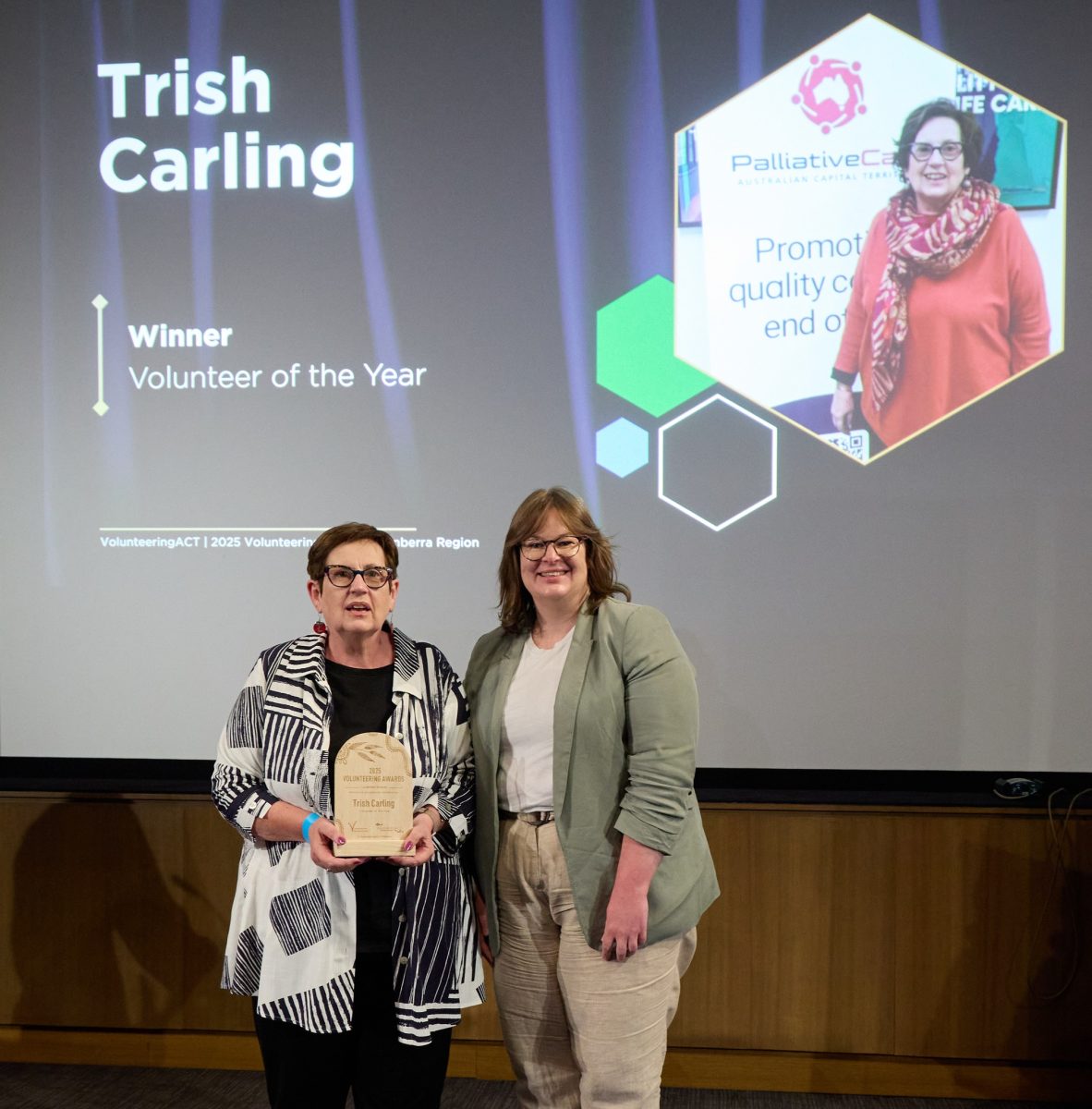
ACT Volunteer of the Year 2025 Trish Carling with ACT Minister for Disability, Carers and Community Services Suzanne Orr. Photo: VolunteeringACT.
When Trish Carling heard her name announced at the 2025 Volunteering Awards, she was already relaxing in her seat.
Her category – Senior Volunteer of the Year – had come and gone. Her friend and housemate beside her leaned over and whispered that she looked “like an absolute stunned mullet”.
“And I was,” she says.
“There were so many amazing volunteers at that awards night that it was the last thing I expected.”
But for those who know her, the recognition was overdue. Trish has spent nearly three decades volunteering in one of the most intimate corners of Canberra’s health system: palliative care at Clare Holland House.
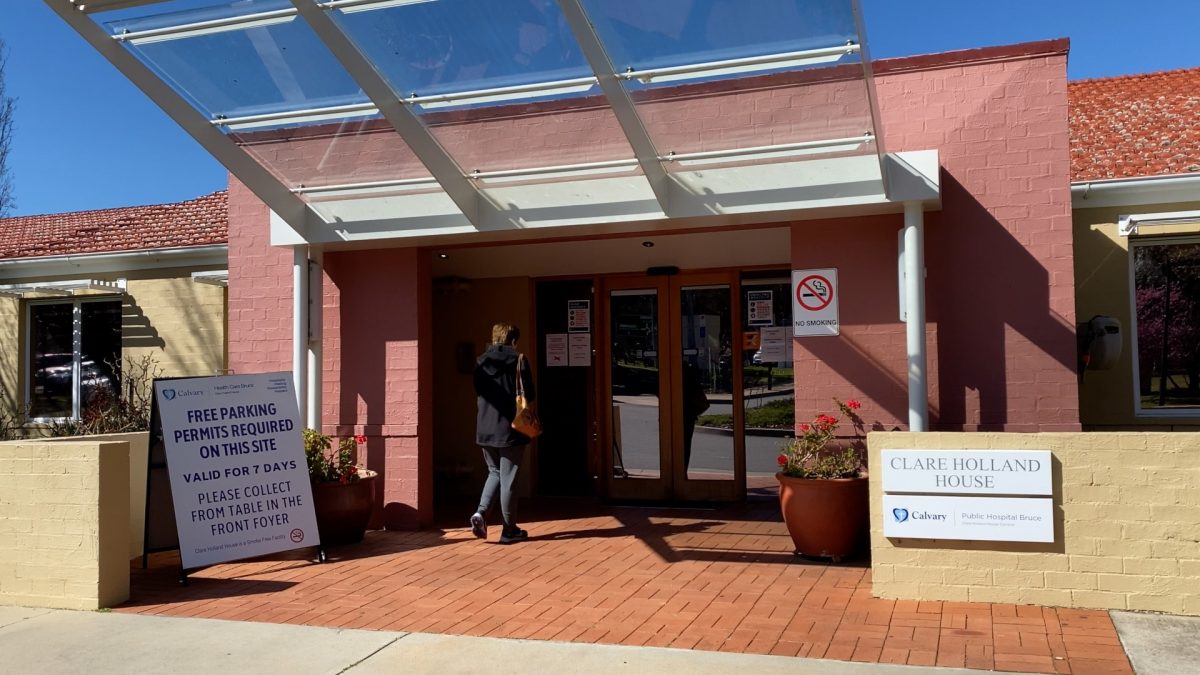
Clare Holland House is located on Lake Burley Griffin. Photo: Region.
Trish first walked into the hospice in 1996, while still working in the Department of the Senate.
She had just come through a devastating period – losing four family members in the space of a few months. Two died of cancer, one in an accident, and one by suicide.
“I don’t know, I just was thinking at the time, I’ve got this very large extended family and everybody supports one another, and that’s a lovely thing. But what happens to people who don’t have anyone?” she says.
Then she spotted an ad in The Chronicle: volunteers wanted for palliative care.
She signed up immediately, trained, and began a Tuesday night shift that later moved to Sunday mornings – a routine she has kept for almost 30 years.
There are usually about 130 volunteers on the hospice roster, with two people per shift. Trish says her Sundays are a mix of the practical and the deeply human.
Anything from “working with the kitchen to provide hot toast” to “sitting with someone when they’re dying”.
It can mean helping a patient eat. Making a cup of tea just the right colour. Massaging hands and feet. Chatting about someone’s garden, kids, or former job – but despite what you might think, rarely about their illness.
“People say, ‘oh, is it sad?’ And I say, no, actually it’s quite joyful,” she says. “Often they will ask you about yourself. People can be in the worst position ever and they’ll ask how you are.”
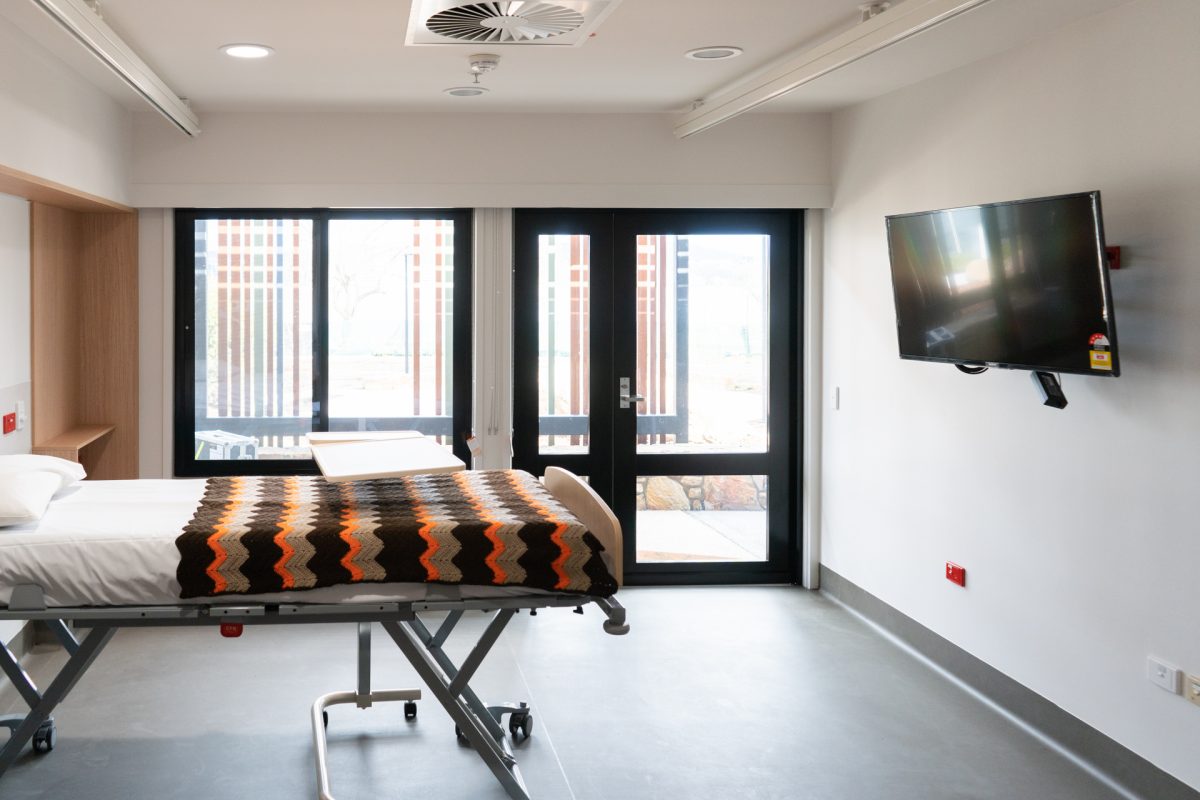
A Clare Holland House hospice room. Photo: Dominic Giannini.
At a time like this – when “it doesn’t matter who you are or how much you own” and “you’re dealing with the person as they are” – Trish says its the smallest acts that matter most.
“The tiniest thing can make a difference,” she says.
“Getting somebody’s toast order right, like if they want mountains of butter and a tiny bit of Vegemite.
“If somebody is having toast with honey, I’ll grab a face washer and stick it under the boiling water so they have a hot face washer to wipe their face and hands. You’d be amazed that such a tiny thing can make somebody so happy first thing in the morning.”
For her, the work is grounding. While working in Senate committees – where “some characters … are less than easy to get on with” – she relied on her hospice perspective.
“I could just go, is this important? No, in the scheme of things, this will be forgotten in five minutes. So it used to keep my stress levels down, believe it or not!”
Since 2022, Trish has also volunteered at Canberra’s Motor Neuron Disease (MND) clinic, greeting patients and carers and helping support group discussions led by doctors, therapists and allied health staff.
Earlier, from 2015 to 2017, she served on the Palliative Care ACT Voluntary Advisory Committee, helping advocate for volunteer needs in the sector.
“I don’t do anything hard,” she insists.
“I feel as if I should be accepting the award on behalf of all the people who work in palliative care and MND support … the nurses, the kitchen staff, the volunteers.”
Over the years, Trish has spent time with people who had no family at all. She remembers one man at the old hospice who lived at Ainslie Village.
“He said to me one morning, ‘It’s a real shame that I have to die to get here, to heaven, ‘cos you people are wonderful’.”
She even used her experience to help younger relatives feel comfortable talking about death.
“The more we talk about it, the more comfortable we are,” she says. “People don’t think about palliative care until it’s right in front of them.”
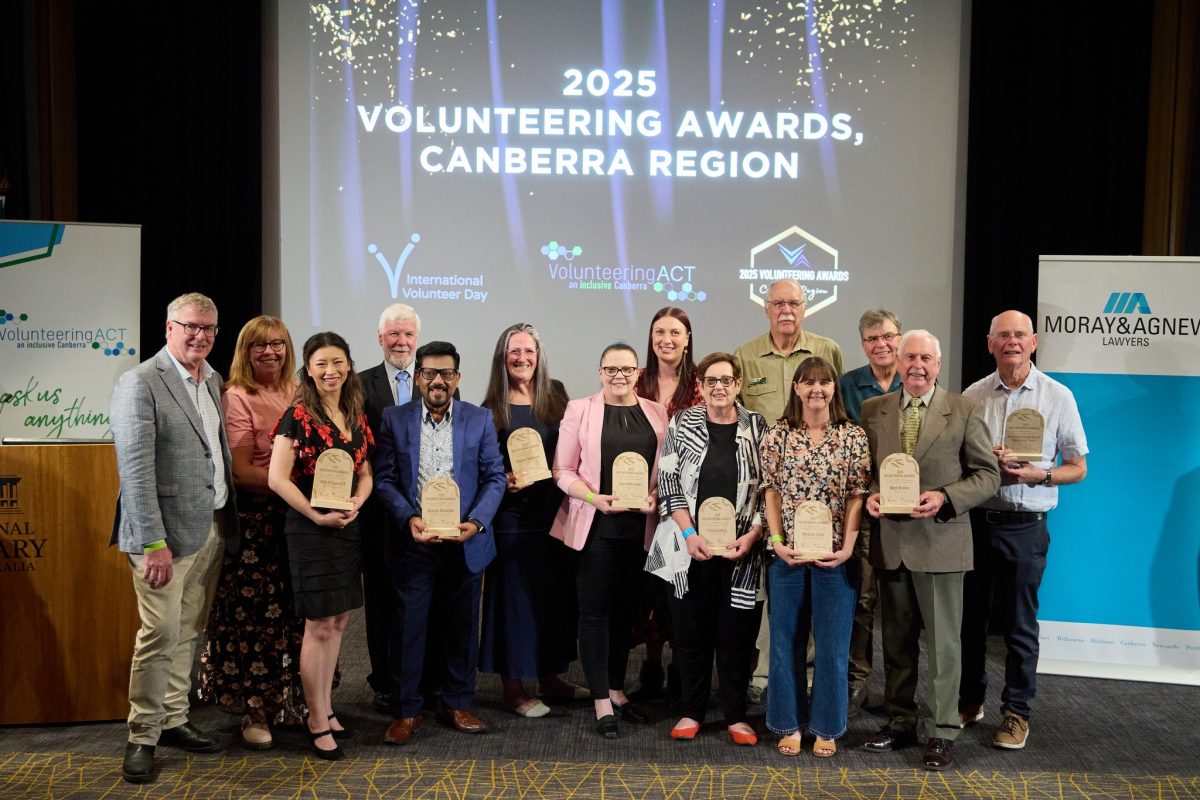
All of the 2025 Volunteering Awards recipients. Photo: VolunteeringACT.
This year’s awards, held at the National Library of Australia, drew 104 nominations across seven categories – the most ever received.
VolunteeringACT CEO Jean Giese says the night celebrated “the extraordinary achievements of volunteers in the Canberra region” and the essential services they support.
Trish’s advice to would-be volunteers?
“I get more out of volunteering than I put in,” she says.
Even if after nearly 30 years on duty, Canberra thinks otherwise.