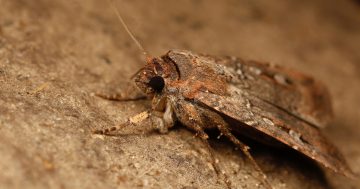

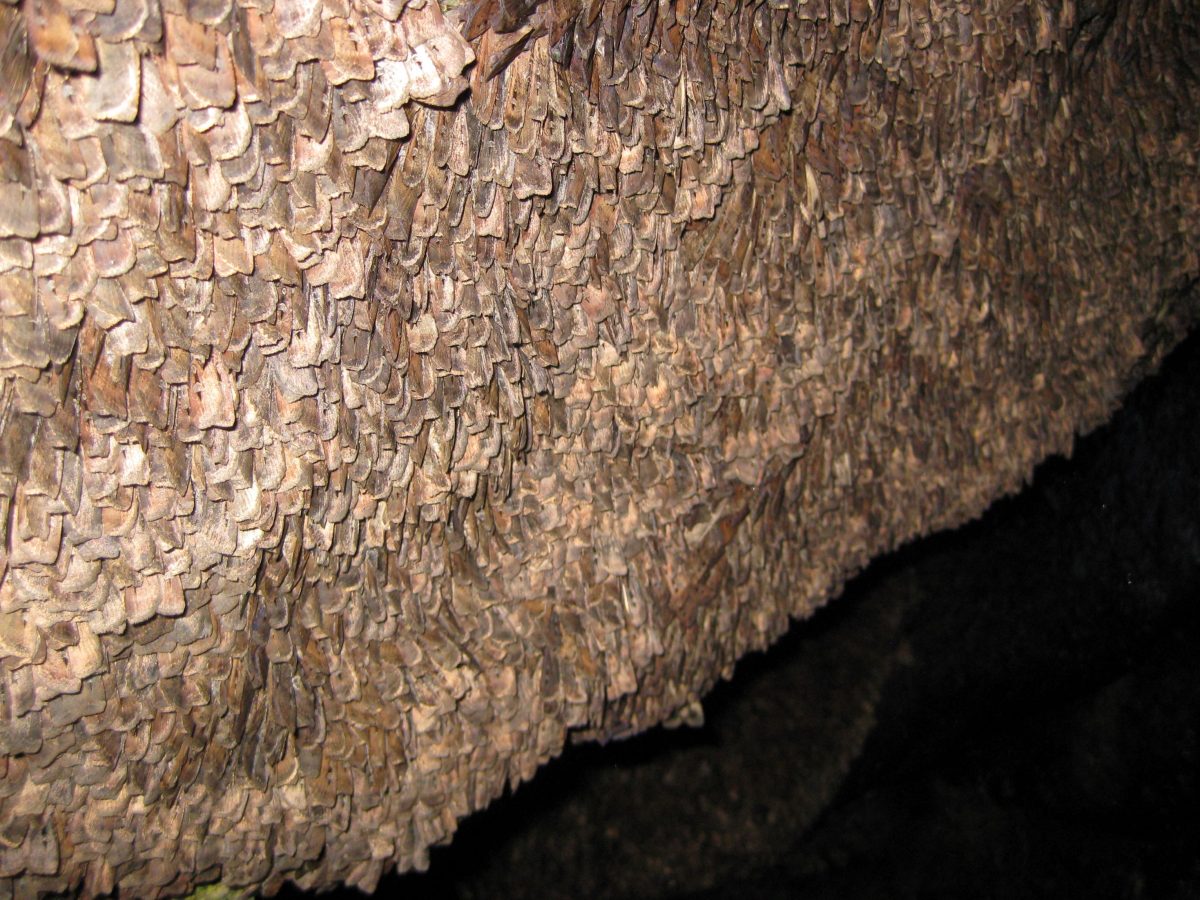
A wall of bogong moths escaping the heat and “aestivating” in a cave in the Australian Alps. Photo: Eric Warrant.
An endangered species long associated with Canberra invasions is showing its strongest signs of recovery in nearly a decade, with researchers saying bogong moth numbers have now returned to – and in some areas exceeded – pre-drought levels.
That’s what Eric Warrant, zoology professor at Lund University in Sweden and visiting fellow at ANU, has found in his work studying bogong moths.
“This year, for the first time, we’re reaching numbers which are pre-drought level numbers and in fact, even exceeding immediate pre-drought level numbers,” he said.
“It’s looking really good. But it’s taken eight years since the first decline in the population that we noted for the numbers to build up again. That’s a long time.”
Every spring, billions of bogong moths (agrotis infusa) emerge from breeding grounds across southeast Australia and fly up to 1000 km to caves and rocky outcrops in the Snowy Mountains.
The moths lie dormant in the cool, dark shelters throughout summer and in autumn make the return journey to breed and die.
But hundreds find a temporary home in Canberra.
“Even though we don’t know the exact causes of it, my pet feeling, at least, is that they’ve been accidentally blown off course by strong eastward-flowing winds right at the end of the migration,” Prof Warrant said.
“They get attracted to the lights of Canberra and they end up using Canberra as their temporary camp instead of the lower elevation areas of the mountains.
“Canberra’s buildings and Parliament House are just as good as any crack and crevice in the foothills of the Snowy Mountains.”
Prof Warrant’s earliest encounters with the moths took place when he arrived in Canberra to complete his PhD, helping to collect them from caves in the Brindabella Mountains for experiments.
“We also saw them, of course, occasionally in Canberra.
“As everybody in Canberra knows, every few years, they descend on Canberra in the spring – by accident, more or less – and infest buildings.”
Prof Warrant was also part of the international research team which found the moths are the first known invertebrates to use the stars to guide them on their annual migration.
Their numbers would drop drastically in recent years, even being declared endangered in 2021 amid decades of decline and drought in the 2010s.
Researchers recorded a 99.5 per cent drop in the number of bogong months in the Alps during the 2017/18 summer months, he said.
Prof Warrant said a major theory was a lack of food.
“It’s hard to really see any other cause, because the drop in the population was so sudden and so dramatic.
“We’d been seeing a slow decline over many, many years since the 1980s, but this sudden drop could only really be ascribed to the lack of rain. They probably dried out and starved.”
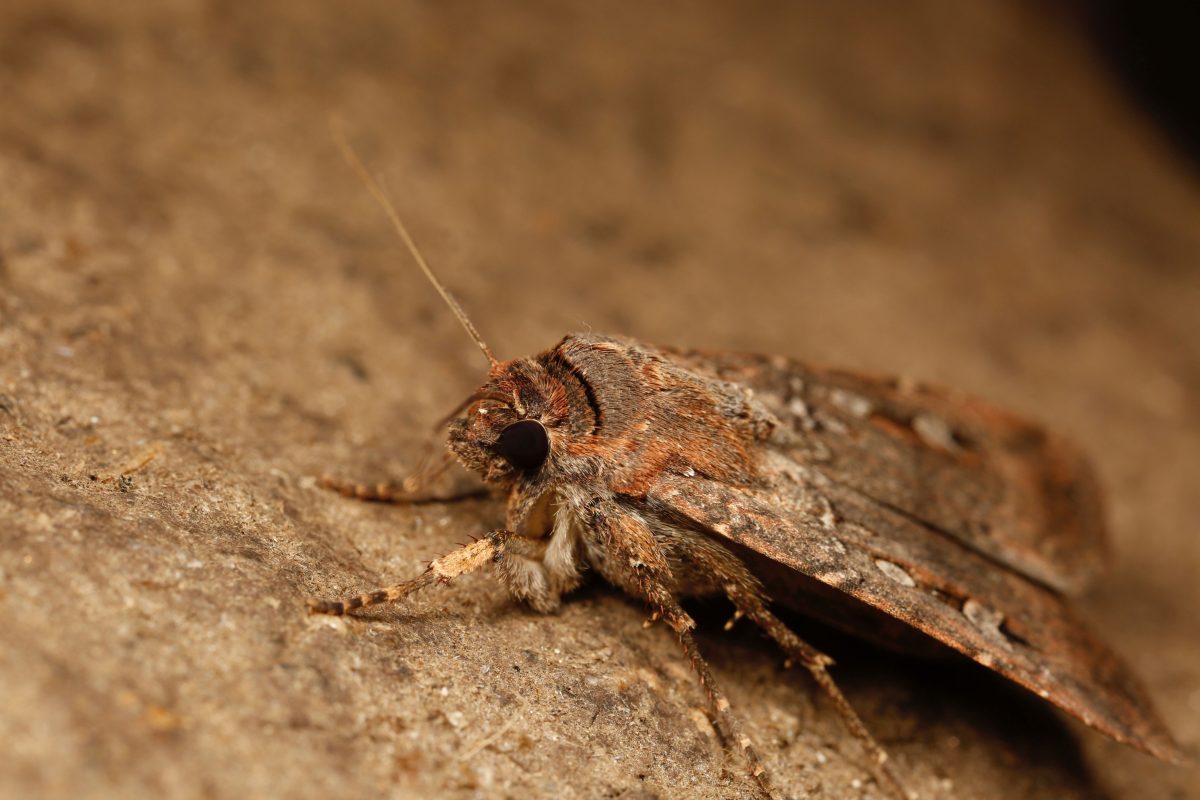
There really were more bogong moths around this year, says Prof Warrant. Photo credit: Ajay Narendra, Macquarie University.
But it’s not all bad news – the numbers are proving the moths are bouncing back.
Even with their break in Canberra, Prof Warren said findings show the moths were stabilising and completing the journey to the Snowy Mountains.
“Even in those years when they invade Parliament House, we’ve seen no noticeable drop in the numbers in the mountains.
“They use Parliament House as a temporary camp and they keep on going. The caves there are full of moths, and we’ve never seen so many moths for years.”
Prof Warren also said that while they’re not meant to have ACT stopovers during their migration, there’s a way humans can make it easier for them.
“Moths are fantastic pollinators of flowers and plants,” he said.
“You can help bogong moths recover by providing food in your garden – and Canberrans are very good at having flowering plants in their gardens already.”
But he acknowledges the “biggest worry” for the bogong moth is a return to drought conditions.
“The likelihood of having one of these droughts again is not negligible,” he said.
“If we do have another one of these droughts of that severity, it’s certainly going to knock the bogong moth’s population around again.
“The question is, if we continue to have these droughts and they continue to increase in severity and frequency, then that could spell very bad news indeed for their population into the future.”