

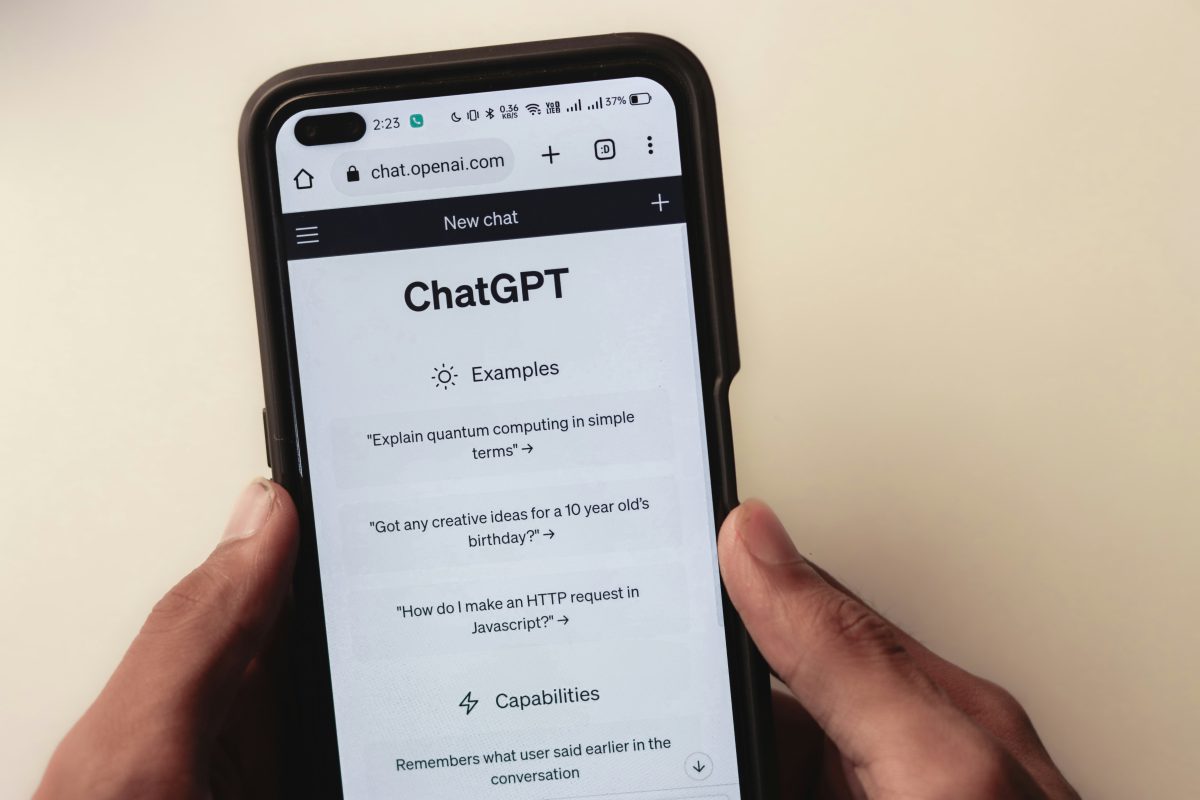
Sick of trawling through AI slop? Read a book. Photo: Sanket Mishra.
Pialligo in the ACT and Wollongong suburb Woonona are among Australia’s top-10 hidden gems for travellers according to “research” detailed in a recent PR release.
The release claims a car insurance company “analysed hundreds of regional towns and coastal locations using a hidden-gem scoring system to reveal the Australian spots still flying under the radar”.
Apparently the areas were ranked based on the number of YouTube videos, Instagram posts, and TikToks the suburb has on social media.
I’m not an IT expert, but I suspect AI slop.
It’s everywhere, and I would like to burn it all to the ground.
I’ve been re-reading Lord of The Rings because I am a cool person with cool hobbies, and AI content is giving Grima Wormtongue.
The tone is instantly recognisable – cheerful, sympathetic and plausible.
But the second you take a closer look, it begins to break down. Repetitive style. Short, easily digestible sentences. Buzzwords.
See, I did that all by myself without using 10 gajillion litres of water.
The grammar obsessed among us grind our teeth at the onslaught of passive voice and other technical errors.
Those who care at all about truth and accuracy are likely to be infuriated when they scratch the surface of the information being presented to them.
For example, a quick Instagram search of #woonona returned more than 42,000 results, compared to the 2000 touted in the press release.
I’m not sure what that would do to its spot on the definitely very real “hidden-gem scoring system”, but I do know what it does to my blood pressure.
AI is a tool, absolutely. More worryingly, though, the people who use it most seem to forget the purpose of the tool over and over again.
Large language models like ChatGPT are designed to mimic human conversation.
Their criteria for success is not whether they provide accurate information; it’s whether they provide accurate-sounding information.
If you use them to collect and analyse data, you then need to independently check that data and their results yourself, which seems like a fantastic way of doing the same job twice.
There are AI models that can be used to do incredible things – one out of Wollongong is helping scientists to better understand the Antarctic environment right now.
Those aren’t the models being used by PR companies, or real estate agents, or social media influencers to churn out content though, and even if they were, a tool is only as good as the human wielding it.
If you’re not capable of independently doing the task you’re asking AI to do, and if you don’t have a detailed understanding of how the AI model you’re using operates, you shouldn’t be using it.
That is, if you give a crap about meaning or accuracy.
If you just want to spew more content into the never-ending void that is social media, go nuts I guess.
I’ll be curled up on the sofa, watching the extended versions of LOTR, praying no-one assigns a hidden gem score to my backyard.