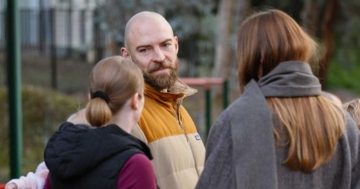


Child-on-child harm is a growing and complex issue that the Education Minister says does need to be considered in the sector. Photo: Thomas Lucraft.
The ACT Government has no plans at this stage to introduce more law changes for the early childhood education sector, but it’s been acknowledged a growing and “complex” gap needs to be addressed.
More than 2000 pages of documents relating to incidents in Canberra’s child daycares and centres have now been released under a Legislative Assembly standing order utilised by independent Kurrajong MLA Thomas Emerson.
The scope of the documents was later reduced by the ACT Government, and the information was tabled on Christmas Eve.
It details several horrific incidents of inappropriate force, threats and abuse, such as when a long-day care service worker threatened to stab a child in the back, an early childhood educator forcibly throwing a child face-first onto soft fall, failures to provide first aid to a seriously injured child, and several instances of inappropriate discipline.
It also shows legislative gaps that make it difficult for the ACT’s regulatory authority, Children’s Education and Care Assurance (CECA), to step in.
The documents detail an increase in the number of child-on-child incidents, either involving physical harm or sexualised behaviour (that goes outside what would be considered developmentally appropriate).
Education and Early Childhood Minister Yvette Berry acknowledged this was a growing issue that needed to be addressed.
“That is a gap that we need to overcome, and that’s happening across the country, not just here in the ACT, that’s becoming more prevalent in services or being identified in services as an issue,” Ms Berry said.
“It’s a complex issue. The expertise on how to manage and overcome that kind of behaviour … there isn’t enough expertise in that space, so that’s going to be a really challenging one to overcome.”
One incident of children engaging in inappropriately sexual behaviour resulted in no action from CECA as the parents would not make a formal statement, meaning the regulator could not compel the provider to make changes to improve issues such as inadequate supervision.
CECA cannot make findings that would then compel a provider to make changes unless it has formalised statements from those involved in an incident.
Current laws also mean the regulator’s response can only address provider oversight rather than direct intervention with the child(ren) involved.
Ms Berry said this did not so much fall into the regulator space but in how support was offered to families and children experiencing such behaviours, and the educators witnessing it.
But she would keep speaking with stakeholders to determine what changes, if any, could be made to address this growing issue.
“Regulated powers is one part of it, but there is a whole Pandora’s box that’s been opened now, with a range of different issues that we need to overcome as a nation,” Ms Berry said.
“At the end of the day, [we] want to make sure everybody’s safe, but we have another complex area — outside of perhaps what we thought was happening in early childhood centres — that we’re going to have to work on together to overcome.
“If I feel like there are gaps or it’s not happening quick enough here in the ACT, then we certainly could consider changes … in legislation here.”
Overall, she was pleased the safety of children in the early education space was receiving the national attention it deserved.
“Now, finally, there is a spotlight on the sector [since ABC’s Four Corners story in October 2025] with reforms going ahead nationally, and here in the ACT, that will make an enormous difference to the way early childhood education and care services operate,” Ms Berry said.
“These issues around ratios, around recognition of early childhood education, around the privatisation and corporatisation of early childhood education and care services, it’s not a new situation … it’s been something that’s been happening over decades.
“What we’ve seen across the country is predators who have been preying on a system that has weaknesses through … the country taking its eye off the sector, the country decided that we needed to have early childhood education settings that were also for-profit settings to allow for people to return to work, primarily.
“Now we have a system where it’s marketised and it’s putting our children at risk.”