
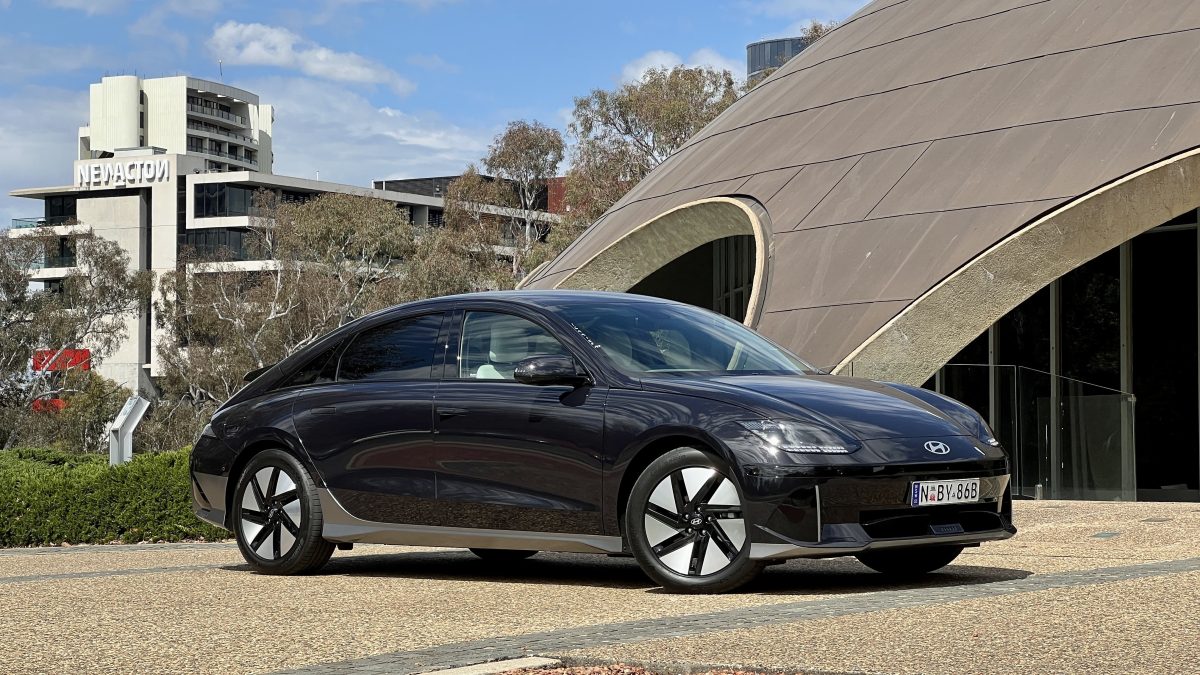
The Federal Government has moved to help EV owners with cheaper finance. Photo: File.
The Clean Energy Finance Corporation (CEFC) has committed up to $60 million to help reduce the upfront cost of electric vehicle ownership.
The CEFC has partnered with Hyundai Capital Australia (HCAU) to offer discounted finance on eligible Hyundai and Kia electric vehicles.
The investment with Hyundai’s finance arm aims to make the transition towards cleaner transport and reducing emissions more affordable for more households, small businesses and corporate fleets.
Eligible customers could save a minimum of 0.5 per cent and up to 1 per cent on their finance rate.
On a $70,000 loan, a 1 per cent discount over five years could save more than $1900 in interest costs.
The discounted finance will be available for new, fully electric vehicles priced below the luxury car tax threshold, supporting households and small businesses to switch to cleaner transport.
Climate Change and Energy Minister Chris Bowen said the initiative was about offering consumers more choice for their next vehicle.
“This CEFC investment will help lower the cost barrier for households and small businesses, making EV ownership more accessible,” Mr Bowen said.
“Transport is one of our biggest sources of emissions, and electric vehicles are a key way we cut pollution while saving people money.”
In 2025, a record 156,000 EVs were added to Australia’s roads, with December 2025 seeing more sales records for EVs, reaching a record monthly share of 16.7 per cent.
CEFC executive director for debt markets Richard Lovell said the investment also supported the future integration of EVs into the electricity grid.
Vehicle-to-grid (V2G)-enabled EV models can act as mobile batteries, with the ability to charge or discharge to the grid, offering more ways to save and support clean energy.
“Hyundai Motor Group is bringing a growing range of innovative EVs with advanced technology to the Australian market, and can help more households and small businesses get behind the wheel of an EV sooner,” Mr Lovell said.
“By cutting finance costs, we’re not only making these vehicles more accessible, we’re also supporting Hyundai’s leadership in technologies like vehicle-to-grid, which can turn EVs into mobile batteries and strengthen our energy system.
“This investment is working to drive down emissions while giving Australians smarter, more thoughtfully designed transport options.”
The Climate Change Authority estimates that realising the lower end of the 62 to 70 per cent emissions reduction pathway requires more than 20 times the number of battery electric passenger vehicles on the road than there currently are.
That’s more than five million EVs that would otherwise have been petrol and diesel vehicles.
To achieve that target, about half of all light vehicles sold between now and 2035 would need to be electric.
Hyundai Capital Australia CEO Donglim Shin said while electric vehicles were an important part of Australia’s mobility future, cost could be a barrier for many customers.
“Working with the CEFC allows us to offer discounted finance on eligible Hyundai Motor Group EVs, making electric vehicle ownership more achievable for Australian customers,” he said.
The Federal Government is also reviewing its EV tax incentive policy.
The current policy exempts EV drivers from paying fringe benefits tax, through novated lease agreements, which can save EV users tens of thousands of dollars over a number of years.
A novated lease is a three-way agreement between an employee, employer and financier that allows lessees to pay for a car and its running costs, such as fuel, insurance and maintenance, using a mix of pre-tax and post-tax salary.
It offers tax savings and potentially GST-free purchases, and is ideal for EVs due to FBT exemptions.
The Productivity Commission has recommended scrapping the policy because of its drain of billions of dollars on the federal budget.