
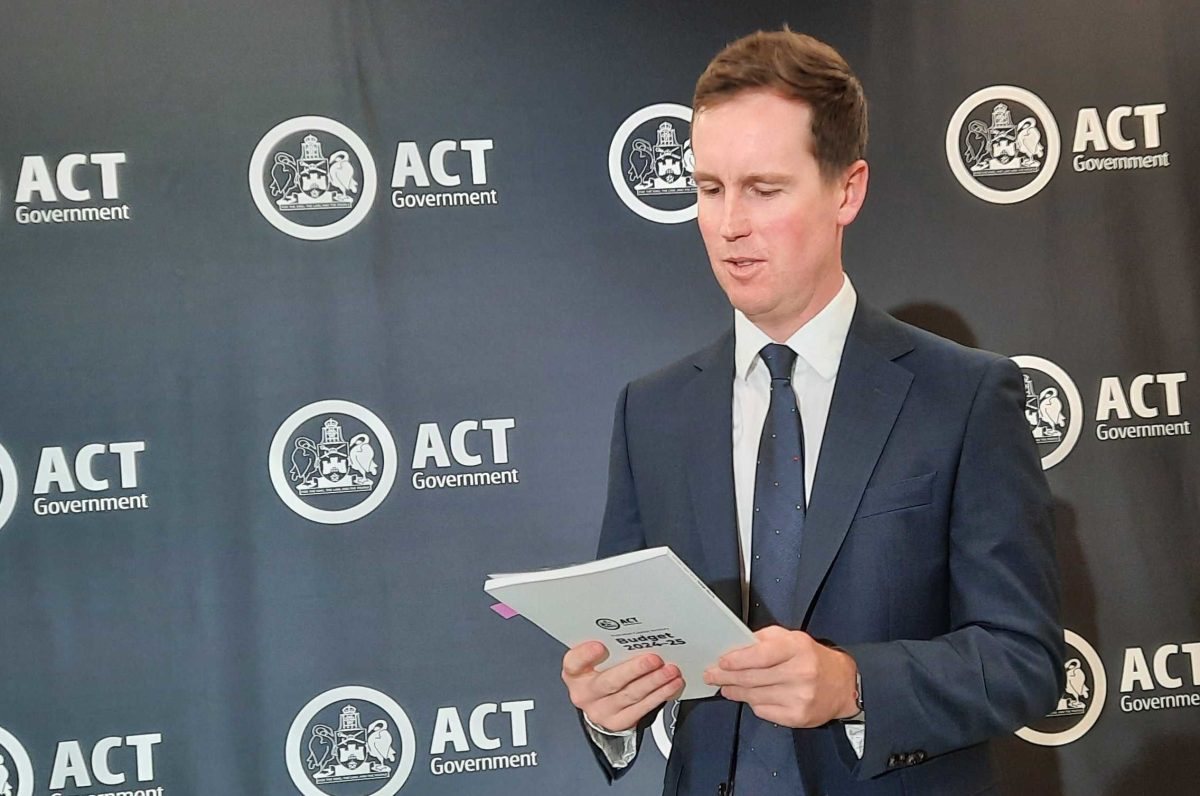
Will any of these suggestions appear in the mid-year budget review (to be presented by Treasurer Chris Steel, pictured)? Photo: Ian Bushnell.
Recently I wrote about the wishful thinking that the Commonwealth will swoop in to rescue the ACT from its escalating debt.
The article got a lot of attention and comments, and several people asked a genuinely good question: if we can’t expect a bailout, then how do we actually fix this?
That, after all, is the real question. It is easy to highlight faults, but harder to find solutions.
So, here is a clear, credible four-year plan for putting the ACT’s budget back on a sustainable footing without slashing essential services, without fantasy assumptions and without relying on someone else to “save” us.
The first year of this fiscal rescue is about stopping the acceleration of debt.
The ACT’s debt problem didn’t happen overnight; it grew through a combination of rising recurrent costs and huge infrastructure programs, all funded by borrowing.
Once we slow down the growth of debt, we can then see where we stand. We need to cap recurrent spending growth at population growth plus inflation and review the capital works program – not cancel projects but delay non-essential ones by two to three years.
Then we must find further savings by improving efficiencies in procurement processes and by removing government inefficiencies and duplicated services (and there are plenty) without touching frontline services.
If debt is still rising by year’s end, it will be rising less quickly, which is a vital first step.
Then we come to year 2 when we fix the structural drivers.
The biggest pressures on the budget aren’t temporary; they’re structural and come from ongoing program growth and public-sector wages that automatically outpace revenue.
Instead of across-the-board wage increases based on precedent, the ACT should move to enterprise agreements tied to productivity and genuine skills shortages.
Programs that tend to grow year after year should be reviewed and redesigned with clear targets, sunset clauses and better eligibility criteria.
On the revenue side, slowly broadening the land tax base rather than relying on volatile transaction taxes stabilises revenue without shocking households.
By the end of year two, the operating deficit should be smaller and debt growth should be approaching zero in real terms.
Then in year 3, we can return to an operating surplus. This is the turning point as we stop borrowing for day-to-day operations.
This is the moment the budget regains credibility with rating agencies and investors. At the same time, the focus needs to shift toward productivity-led growth. The ACT cannot tax its way out of this challenge as our tax base is too narrow.
Growth needs to come from sectors where Canberra already has strengths: defence and national security industries, higher education and research partnerships, and policies that support commercial activity.
An operating surplus also allows us to start paying down or refinancing debt more cheaply, lowering interest costs and reducing pressure on future budgets.
Then we bring home the bacon in year 4 by locking in sustainability because a one-off surplus is not enough. To avoid the boom-and-bust cycles of the past, the ACT needs a formal fiscal framework.
This could include a legislated debt-to-economic output target; a cap on interest costs as a share of revenue; and mandatory public reporting on progress towards those targets each year.
But let’s be clear: the technical path above will only work if we tear down the political and institutional barriers that currently block reform.
What are the barriers that stand out?
In a small market like Canberra, where government is the dominant client, concentrated union influence – especially in construction – has become a de facto price-setting power. This inflates project costs, slows delivery and adds billions to debt without improving outcomes.
The fixes must be practical, not ideological: separate fair wages from monopoly leverage; publish independent benchmarks for project costs against interstate equivalents (but not Victoria, which has the same problem); and broaden the pool of contractors to increase competition.
More competition is the best way to reduce cost pressures, not the bulldozing of unions.
But the slow old elephant in the room is government inertia. Breaking inertia requires external deadlines through legislated fiscal targets, clear ministerial ownership of debt management and independent fiscal advice that is public – very public.
In other words, the two things that are palpably lacking are transparency and accountability.
We need disciplined budgets, targeted reform, responsibility owned by the decision-makers and markets that function with real competition.
Every year of delay makes future choices harder. We can choose to act, or we can hope someone else will act for us.
But hope is not a worthy plan.