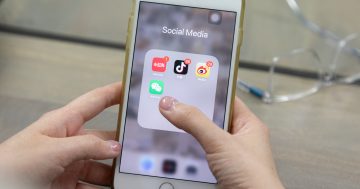


Children can thrive without social media. Photo: Michelle Kroll.
There has been a lot of hysteria about Australia’s world-leading social media ban for under 16s, which thankfully the Albanese Government has ignored.
It may have been in the parlance of Sir Humphrey a courageous decision, given the power of big tech and the hold the platforms have on social media users, but it is the right one and restores hope that government is not totally in thrall to corporate interests.
Information technology is a marvel of the modern age but its algorithms, uncurated content and dopamine-laden hits are addictive poison to the undeveloped brains of children with little discrimination or critical thinking capacity to cope with the perpetual torrent of dross they are exposed to.
For the tech companies, social media is yet another way to commodify children, cultivate future customers and capture their data.
Even the so-called benefits of communication and information fail to stand up when the alternatives of dumb phones, actual face-to-face contact and legitimate news sources are so clearly available.
There have been ridiculous arguments that the political education of children will be harmed without access to social media, as if that swamp is where children should be obtaining such formative views.
Nor should they, or anyone for that matter, be relying on an “echo chamber” feed. For all the talk about encouraging agency and independent thinking, opponents of the ban are happy to consign kids to the manipulations of social media.
The ban has not been devised on a whim but after clear evidence that children are being harmed, at the worst contributing to suicides but also diverting them from engaging in real life.
One teenager complained she didn’t know what she was going to do, as she spent eight hours a day on social media. That’s as good an argument for the ban as any.
Sceptics will say the ban won’t work. Tech savvy kids will find workarounds and the tech companies themselves will allow loopholes.
But as eSafety Commissioner Julie Inman Grant says, it is early days and the tech companies will be subject to constant review to make sure they are compliant, otherwise those big fines are waiting for them.
The persistent will probably find a way but most kids are more likely to take it in their stride or simply get bored trying. And there is a whole other world out there for them to explore with their real friends.
Others say it would be better teach kids how to navigate social media safely. But that has clearly failed. Now the opportunity is there to prepare them properly if they wish to connect when they turn 16.
The ban is also part of growing revolt against the unqualified adoption of technology at tender ages that includes the banning of mobile phones at schools.
From 2027, Victorian public schools will limit screen time in classes. Children in prep to Year 2 will have minimal access to screens, while Year 3 to 6 students will spend no more than 90 minutes a day on screens.
From next year, St Ignatius’ College in Adelaide is banning technology for junior students and heavily restricting it up to Year 9, as its principal questions the dominance of screens in classrooms.
Evidence is emerging that screen reliance is undermining basic skills, harming memory development and is more of a distraction than a learning tool.
The Steiner school movement has always been low tech, recognising the problems posed by devices that operate with iron logic, leave little room for the imagination, provide access to unlimited information and can be as beguiling as television.
For many young people the introduction of tablets in the early years of primary school is where the social media contagion started.
For too long, schools have been sold the idea of technology being a vital part of a modern education, mainly of course by tech companies. But the coining of terms like digital natives by academics has also framed the arguments for ditching “archaic” teaching methods.
Fortunately, new research into how the brain develops and learns is countering this.
It is hoped that the ban will be a cue for parents to feel comfortable with reviewing how technology should be used, its age appropriateness and what real-world activities would be more meaningful.
For many parents and their children, the ban will simply be a relief.
The tech companies will wish it to fail but this is a timely reminder that they have to operate in a regulated environment.
The ban has caught the imagination of the world and it is watching Australia, so let’s make it work.
Children deserve to be protected and to be given back their freedom.