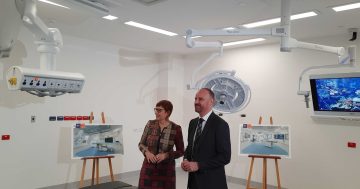


Culture and conditions for junior doctors have improved in Canberra’s hospitals. Photo: James Coleman.
The number of ANU medical graduates deciding to be interns in Canberra’s public hospitals is bouncing back but the national capital still needs to be more competitive in attracting and retaining junior doctors, the Australian Medical Association says.
AMA ACT branch president Dr Kerrie Aust has welcomed news that most of the 94 interns who have recently joined Canberra Health Services are from Canberra, but she also called for better pay and conditions for junior doctors.
AMA ACT and Australian Salaried Medical Officers Federation are having “productive” negotiations with the ACT Government on a new enterprise agreement.
Sixty-three per cent of this year’s interns are ANU graduates, while 26 per cent come from other Australian universities and 11 per cent are international medical graduates.
In 2024 and 2025, only 53 per cent and 50 pert cent respectively of CHS interns came from the ANU, leaving the service dependent on international medical graduates to fill remaining positions.
A decade ago, more than three quarters of CHS interns came from the ANU.
Dr Aust said the AMA understood the health budget was under pressure but maintaining an adequate workforce brought its own savings as well contributing to staff wellbeing and the quality of care.
“Sufficient junior doctors to meet our rostering demands does actually reduce the amount that we spend on unplanned overtime, which has a positive effect both in terms of our budget and then also in terms of our workforce wellbeing,” she said.
“Everyone’s willing to step in when a patient’s unwell and stay longer to make sure that things are safe before they go home, but what we don’t want to see is having an insufficient workforce where junior doctors need to be constantly stepping into those unrostered overtime and in particular not having appropriate downtime, including the right number of weekends and being able to access their rostered days off and their annual leave.”
A recent survey of ANU medical graduates showed that pay ranked below workplace culture and reputation.

AMA ACT president Dr Kerrie Aust: “We cannot afford to lose doctors because of issues with culture, bullying or workplace conditions.” Photo: Ochre Health.
Dr Aust said CHS had made great strides in improving its culture but could still do more, as well as enhancing its reputation by offering greater training opportunities.
“The support for junior doctors in Canberra is outstanding compared to other jurisdictions,” she said.
This included having a full-time psychologist for junior doctors and the Department of Pre-vocational Education and Training, where they could seek advice on anything from ethical dilemmas to rostering.
“We’ve seen significant improvements in the feedback from junior doctors based on their interactions and if they’re really worried about a junior doctor, they will get in touch with organisations like Doctors for Doctors in the ACT and make sure that they’ve got support outside of the hospital system,” she said.
Dr Aust urged CHS to roll out the model of care for junior doctors to senior staff because the evidence showed that investing in doctor wellbeing meant more would want to stay.
“We’re such a small jurisdiction, we cannot afford to lose doctors because of issues with culture, bullying or workplace conditions,” she said.
Canberra’s hospitals have taken a hammering from the media for many years, including about conditions for junior doctors, but Dr Aust said it was important to be open and honest about the challenges.
She said being comfortable with having those conversation meant a better environment for the patients, because workplace bullying and poor culture impacted patient safety.
“I’m really pleased when junior doctors raise issues, I’m really pleased when senior doctors raise issues, because it means, one, they have the confidence to say when there’s a problem, because they have more faith in the fact that it’ll be fixed, and secondly, it means that we’re not hiding issues of patient safety because that’s when things get dangerous,” Dr Aust said.
“We have to continue to have open conversations about where we need to do better, come up with creative solutions within our limited health budget so that we can provide the best quality care to patients in Canberra.”
Dr Aust said widening the range of training available was also key, so doctors could see a clear pathway to becoming fully qualified specialists.
She said senior doctors were also keen to see their juniors stay on so they could succession plan.
Graduates listed familiarity with the clinical system and environment as the top reason for staying on, highlighting the value of exposure to CHS throughout their medical training.
“This underlines the importance of strengthening the close connection between CHS and the ANU medical program,” Dr Aust said.
But the survey showed more prosaic non-professional factors such as lifestyle and liveability and having family/friends nearby also played a significant role in graduates’ decisions.
Dr Aust said this meant that ensuring students and junior doctors become part of the Canberra community would also help keep them here.