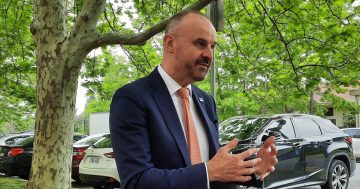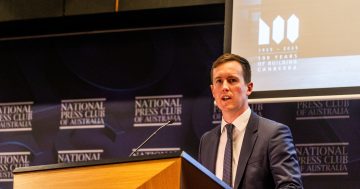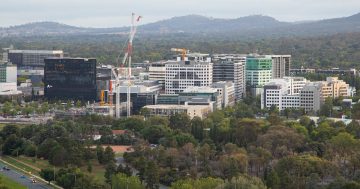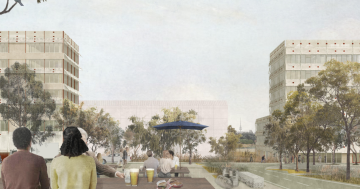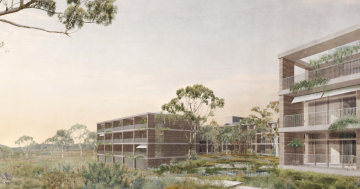

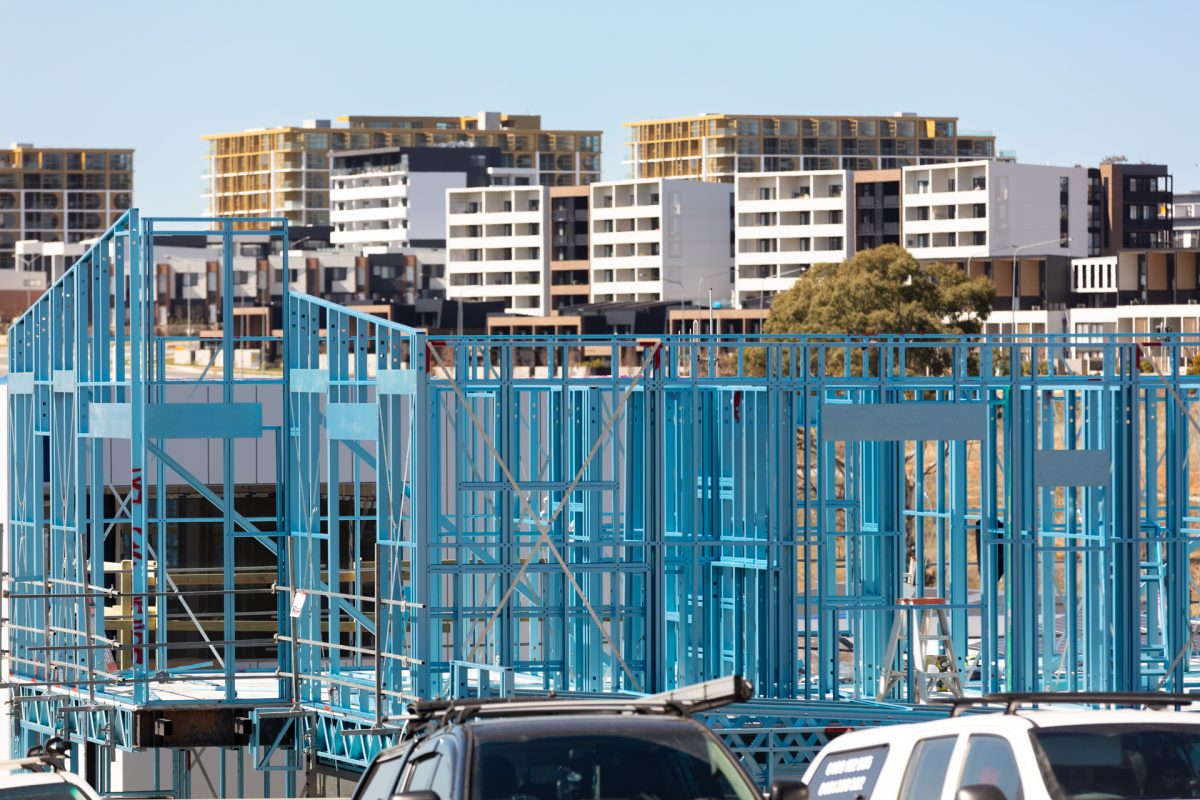
Property Council ACT and Capital Region’s Ashlee Berry says further examination of the missing middle policy will only further strain Canberra’s ability to reach its housing targets. Photo: Michelle Kroll.
When it comes to housing, we’re at a point where the ACT and the wider region can’t afford to drift any further.
Demand is rising, approvals are slow, and industry confidence is slipping.
The message is simple: either we move decisively now, or we fall even further behind.
People working in this sector are all too familiar with the pattern. You line up the work, make the investment, do the planning, and then the brakes go on. Another reform process, another review, another round of waiting.
Projects sit idle at the early stages despite everything being ready to go. That stop-start pattern now seems ingrained in the way the ACT approaches housing policy, and it has been holding the whole region back.
There have been welcome signs of a shift. The Chief Minister’s acknowledgement that Lease Variation Charge (LVC) reform is needed is a positive step, and industry genuinely wants to see this followed through.
The current settings are unpredictable and detrimental to feasibility, rendering otherwise viable projects unviable. Without addressing LVC, it is difficult to see how some developments will obtain the certainty required to progress.
But the decision to send the ‘missing middle’ reforms into yet another round of scrutiny is a step in the opposite direction.
It signals more waiting when we can least afford it. A six-month delay on a reform designed to deliver more diverse, attainable homes on serviced land is not a minor issue.
It pushes momentum backwards at a time when Canberra urgently needs it to move forward, and at pace.
We already know that the ACT must lift approvals by hundreds each month to meet its own housing targets; further delay only widens that gap.
We can’t keep repeating the cycle of one step forward, two steps back. Every pause on policy widens the supply shortfall. Every review pushes delivery further down the road, and households, families and essential workers all end up paying the price.
There is real potential in the new leadership at the City and Environment Directorate. The early signals are sensible – faster decisions, better coordination, less time lost in the process.
But a single directorate alone can’t shift a system this complex. Planning, Treasury, Housing, Transport and Education – and utility providers – all need to pull in the same direction.
Without that collective effort, the machinery grinds to a halt.
We also need to take full account of the wider regional context. The Capital Region is one functional housing market, not two.
NSW’s impressive reform agenda – cutting approval times, tightening coordination, simplifying pathways – has already changed both the perception and the pace of planning across the border.
That shift will influence investment decisions, whether the ACT keeps up or not.
What the sector wants to hear is clear: a commitment to LVC reform, an assurance that the missing middle legislation will not drag on for months, and a plan for how approvals and infrastructure will move at the speed the region now needs.
We can deliver far more housing than we currently do. We have the skills, the builders, the land, and the demand is clear.
What’s missing is a predictable system that gives people the confidence to get projects moving.
If the ACT uses this moment to establish a real roadmap, the entire Capital Region will benefit. If we delay any further, the gap between what’s needed and what gets delivered will only grow, and the fix will only be slower and more expensive.
We’ve reached the point where decisions must land. It’s time to get moving.
Ashlee Berry is the executive director of the Property Council of Australia’s ACT and Capital Region branch. The Capital Region Housing Summit (Thursday, 20 November) will bring together 30 political leaders, housing advocates, community representatives and industry experts to focus on the future of homes in the Capital Region.