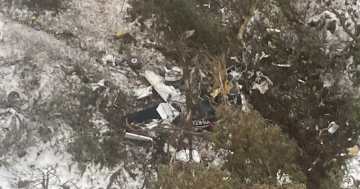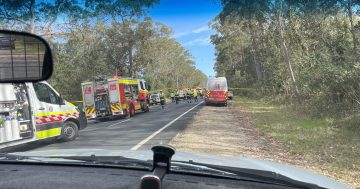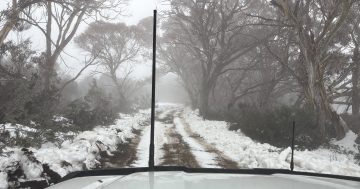

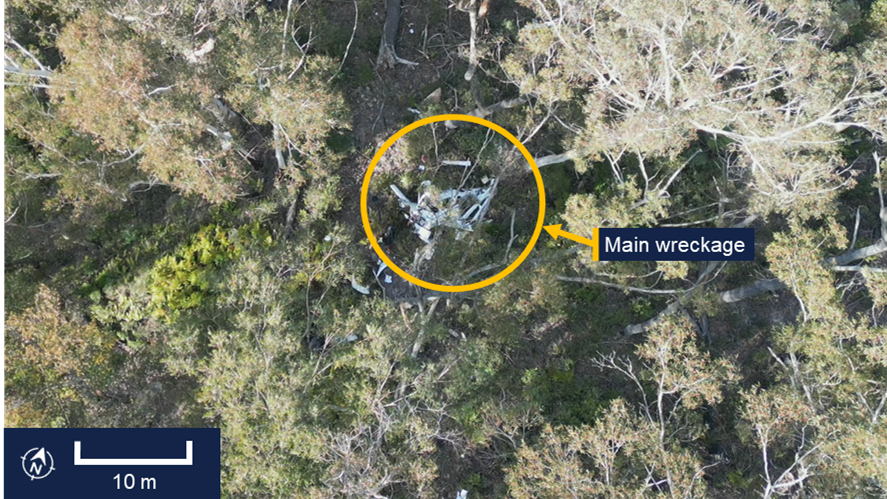
The pilot’s body was found after a two-day search in difficult, remote terrain last September. Image: Australian Transport and Safety Bureau.
A pilot likely became disoriented in poor weather, which led to fatal injuries in a crash, a report has found.
Emergency services were called to Budawang National Park on 18 September 2025, after an aircraft emergency location transmitter was activated.
The pilot was returning to Bankstown after having left earlier that day, and was the only person on board.
Emergency services were initially unable to access the crash site due to the terrain and weather conditions, and the search was called off.
The pilot’s body was found at about 2 pm the following day, after rescue efforts resumed.
In its final report, the Australian Transport and Safety Bureau (ATSB) found limited experience in cross-country flying, weather changes and faulty technical senses likely contributed to the crash.
“With limited prior experience in calibrating risk in deteriorating conditions, the pilot would have been less able to objectively weigh the cumulative hazards of continuing into adverse weather while managing the fluctuating indicated engine cylinder head temperature (or being distracted by the spurious warnings, depending on how the pilot understood them).
“This increased their susceptibility to get-there-itis, such that their established safety decision-making processes were outweighed by the perceived attainability of the destination.”
The crash happened after the pilot left a radio message indicating they were planning to land at Moruya Airport, but continued onward.
No further radio messages were made.
The ATSB investigation found the plane encountered poor weather such as clouds and fog after continuing further north.
This was likely driven by the “perceived presence of a clear area” in the cloud layer that was ahead, but the conditions resulted in the pilot losing visual awareness.
“Once in the valley, it is likely that the pilot did not know what direction to take away from the mountainous areas and cloud or, if they did, became trapped between the rising terrain and the low cloud base,” the report states.
“It is therefore likely that the pilot misjudged the extent and density of the cloud or the height of the cloud base.”
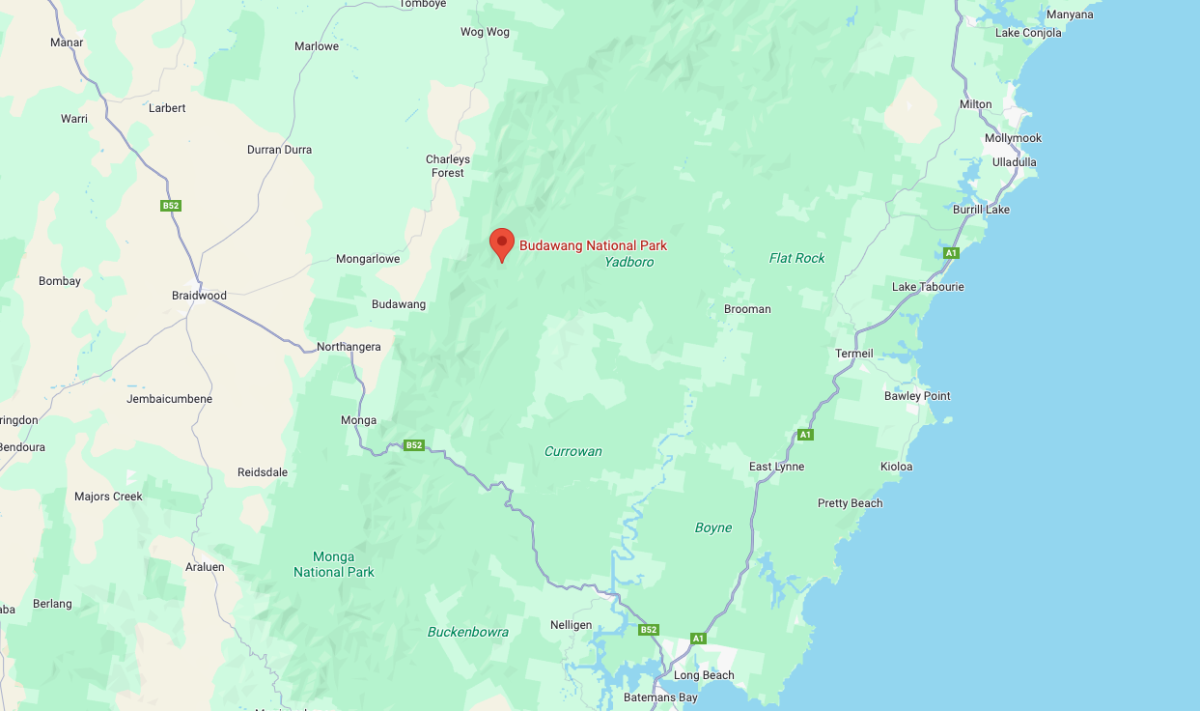
The crash in Budawang National Park was about 12 kilometres east of Braidwood, in southern NSW. Image: Google Maps Screenshot.
In its findings, the ATSB also found the pilot was likely distracted by faulty temperature sensors.
“The cylinder head warnings were likely spurious, but even if the pilot had understood this, the warnings would have been an ongoing source of distraction.”
The ATSB also found no evidence of in-flight structural failures.
The pilot also had limited experience with cross-country flying (this flight being their second of about four hours), according to the report.
The report also states the pilot previously postponed or cancelled other flights to Mount Kosciuszko in light of adverse weather.
In its report, the ATSB urged pilots to ensure they respond appropriately to changes in weather conditions.
“When operating under visual flight rules (VFR), pilots must always be prepared to make conservative decisions when weather conditions begin to deteriorate.
“If visibility is reducing or the cloud base is lowering, pilots should strongly consider landing at the nearest suitable location rather than continuing into worsening conditions.”
It also said pilots should resist “‘get-there-itis'” where they simply push ahead to their destination.
Original Article published by Claire Sams on About Regional.