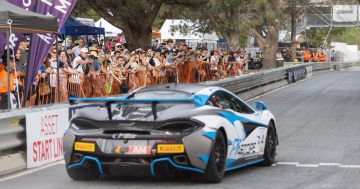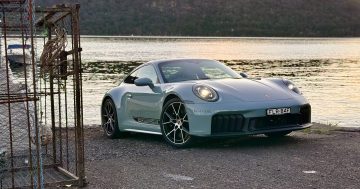

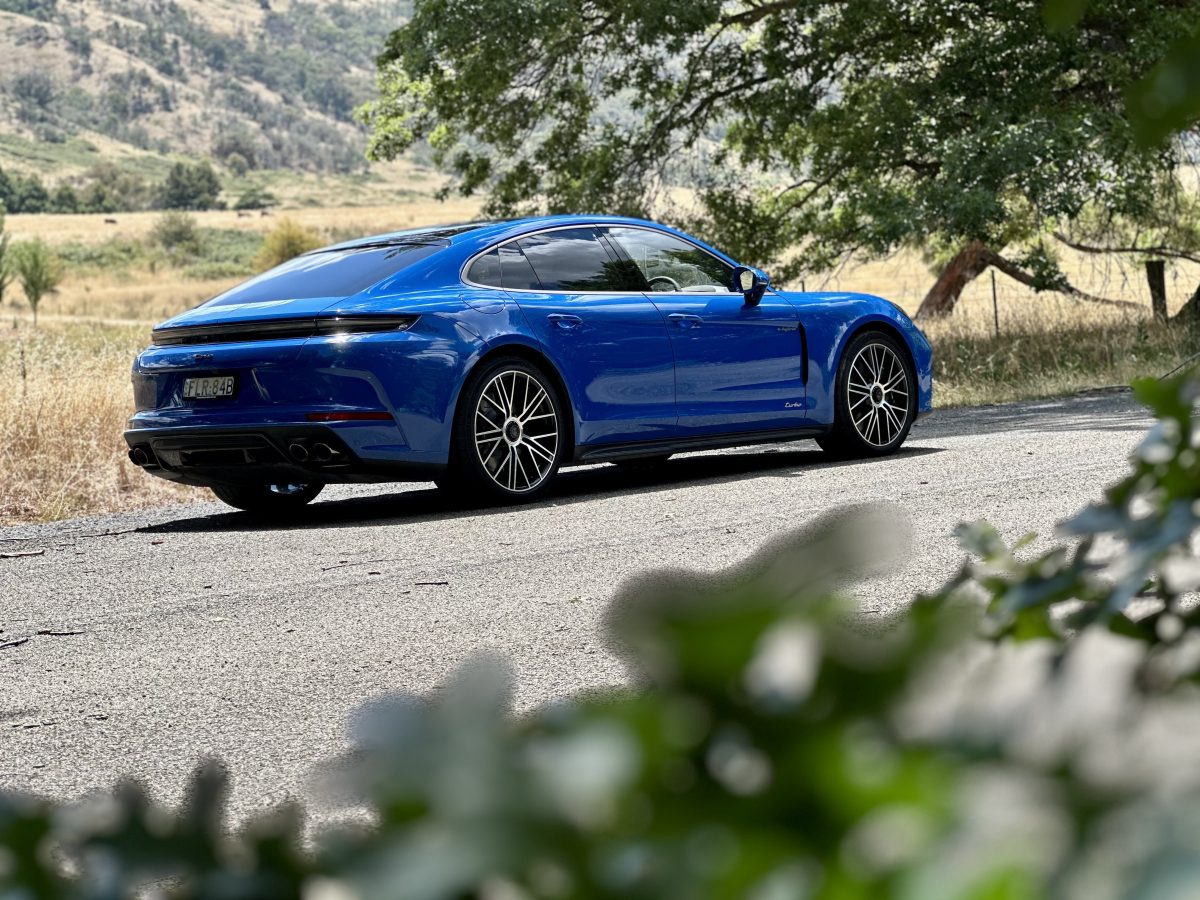
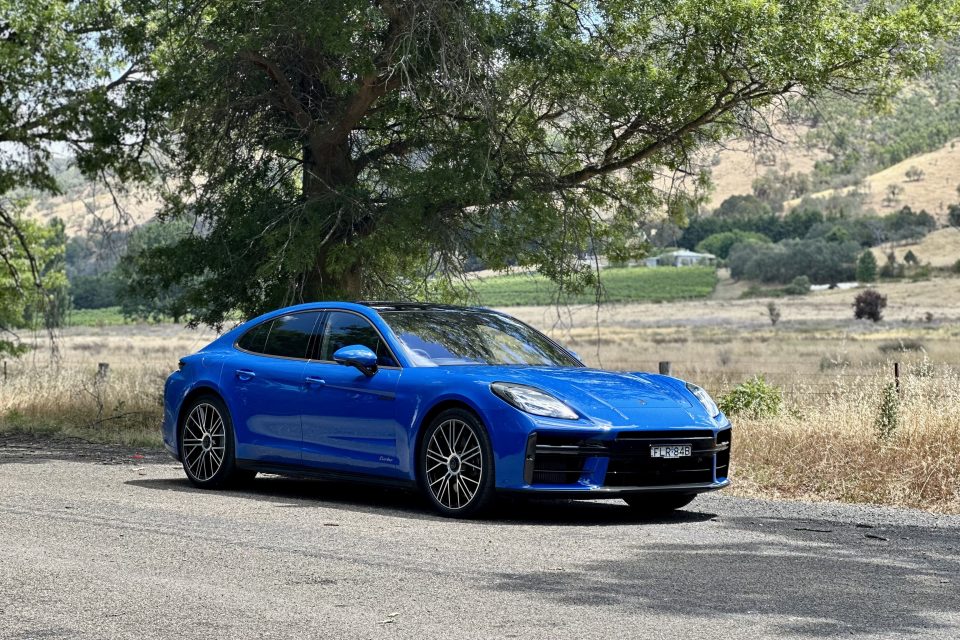
Hard to tell which is prettier: the Porsche Panamera E-Hybrid Turbo or the Lake George Winery. Photo: James Coleman.
I have to admit I’ve never liked the Porsche Panamera.
The original, launched in 2009, was certifiably hideous. It looked like a 911 that had been stung by an entire hive of bees.
Which was unfortunate, because underneath the ugly skin, the Panamera made perfect sense. It was for Porsche purists who sneered at the idea of an SUV but still needed five seats and somewhere to put the Costco shop. And there really weren’t many other swoopy four-door sedans like it out there.
Now, however, all that’s in the past.
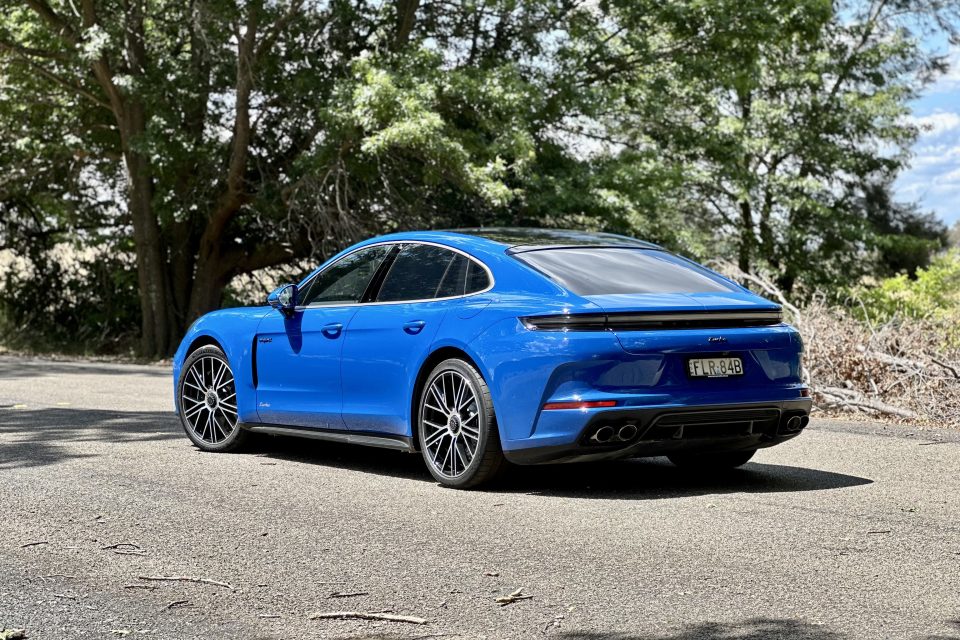
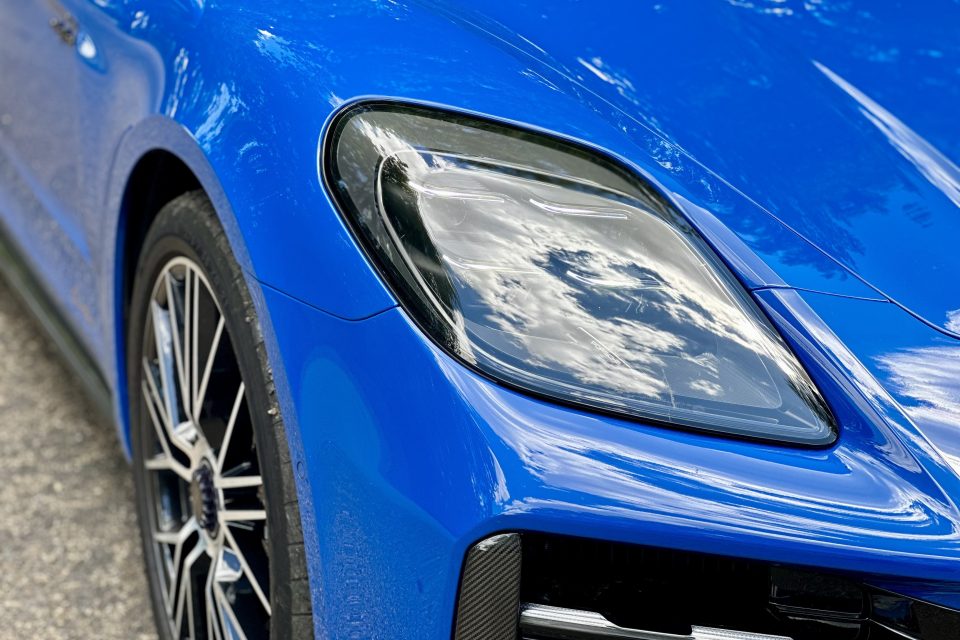
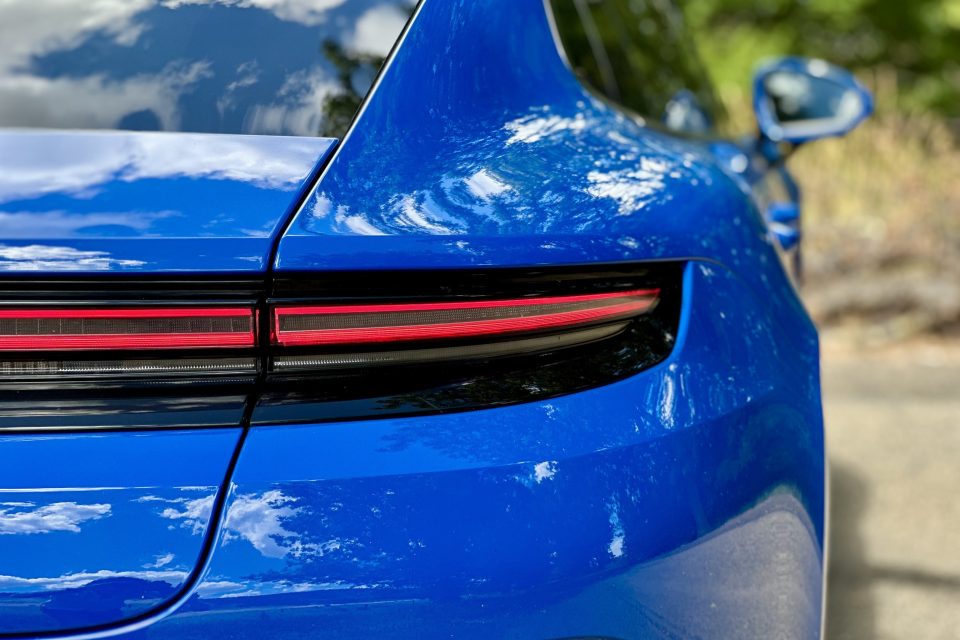
The new, third-generation Panamera has done a George Clooney. It’s the best-looking a Panamera has ever been and from the rear in particular it’s harder than ever to tell it apart from the 911 it has always desperately wanted to be. (The only bad news is that Porsche has killed the Sport Turismo wagon, which was always pretty.)
There are downsides to the shape a Porsche Cayenne or Macan SUV wouldn’t suffer, however.
Around town, the Panamera is a bit unwieldy. Even the fancy four-wheel steering system – where the rear wheels turn opposite to the fronts at low speed to give it a tighter turning circle – can’t help the fact it’s a long car.
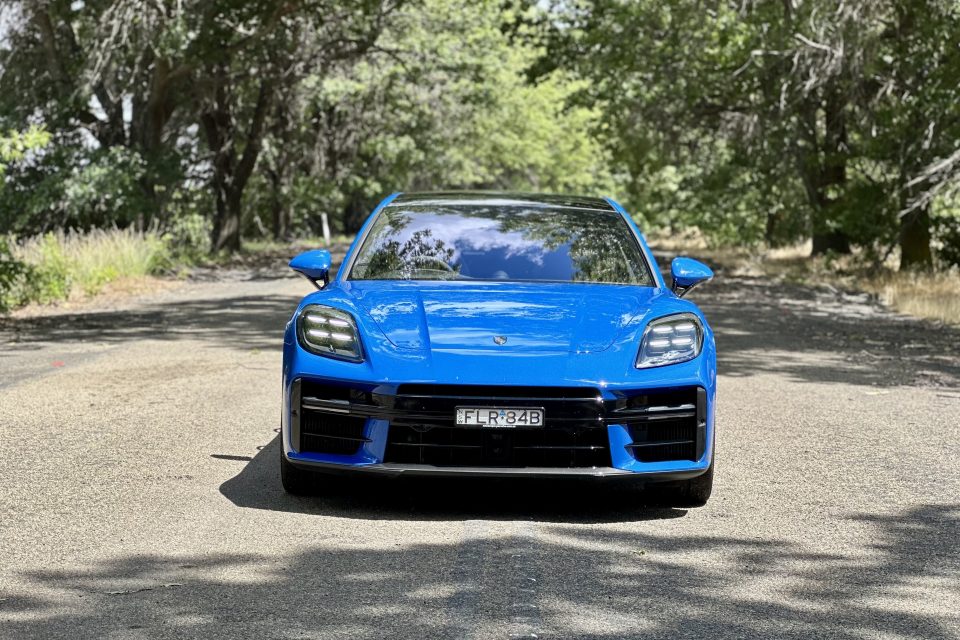
The way the front and rear cameras swivel with the steering wheel is brilliant, but parking – or rather, mooring – is still a pain, because there’s better visibility from inside a sleeping bag.
Still, it’s worth it. Because I’m not sure any car on sale today does everything so well.
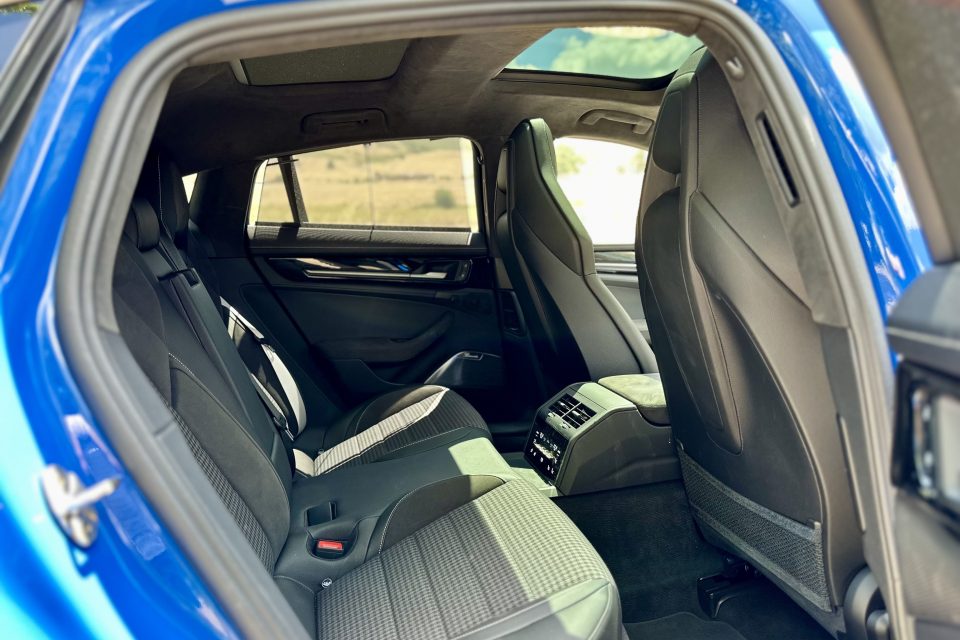
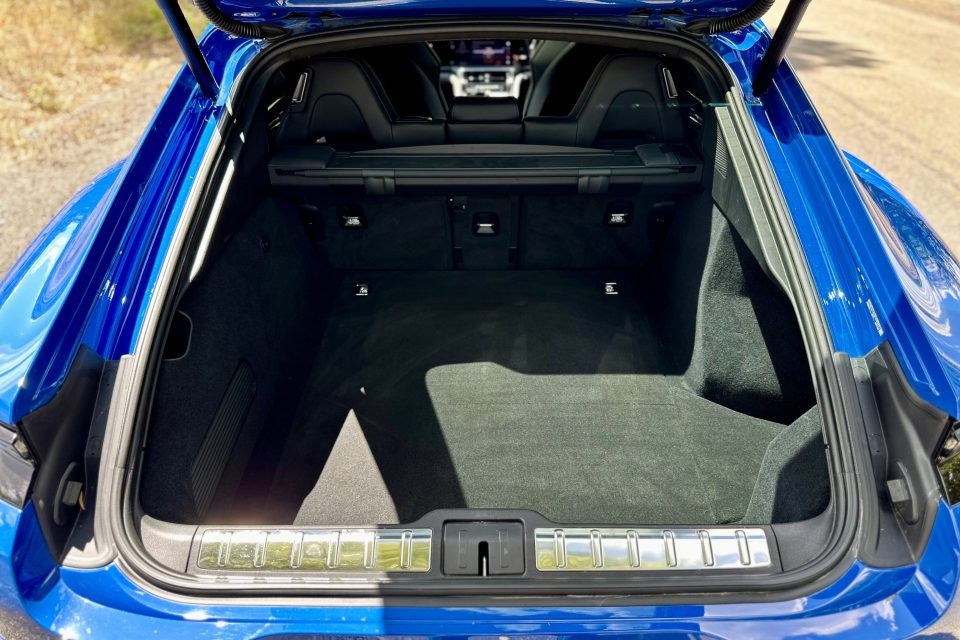
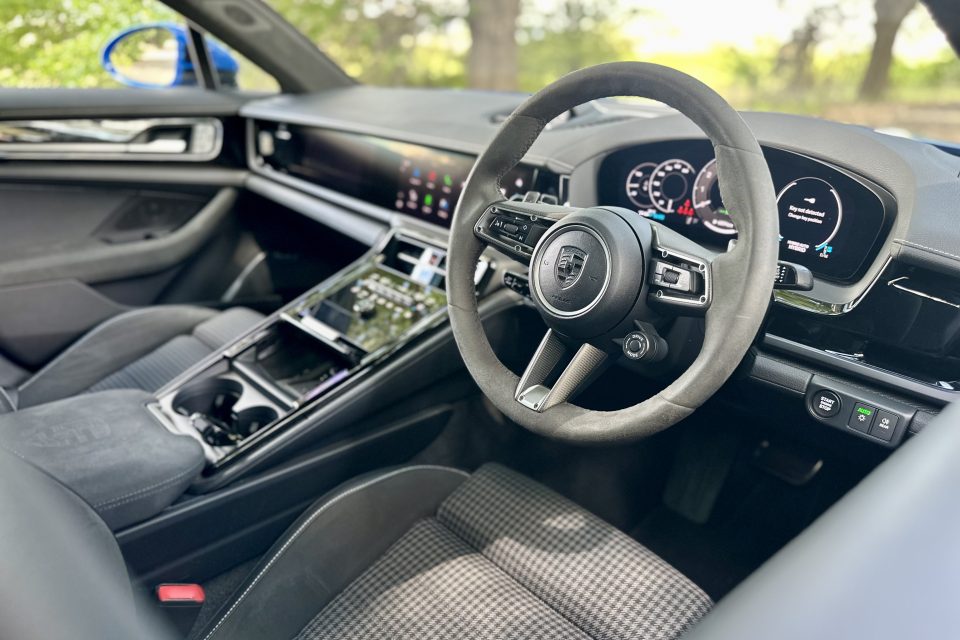
Despite the swoopy roofline, we managed to squeeze in three child seats and the spoils of an hour at Costco without anyone crying – including me. The tech is easy to work and the front passenger even gets their own touchscreen – which admittedly might be more of a curse than blessing depending how much they like playing Espresso.
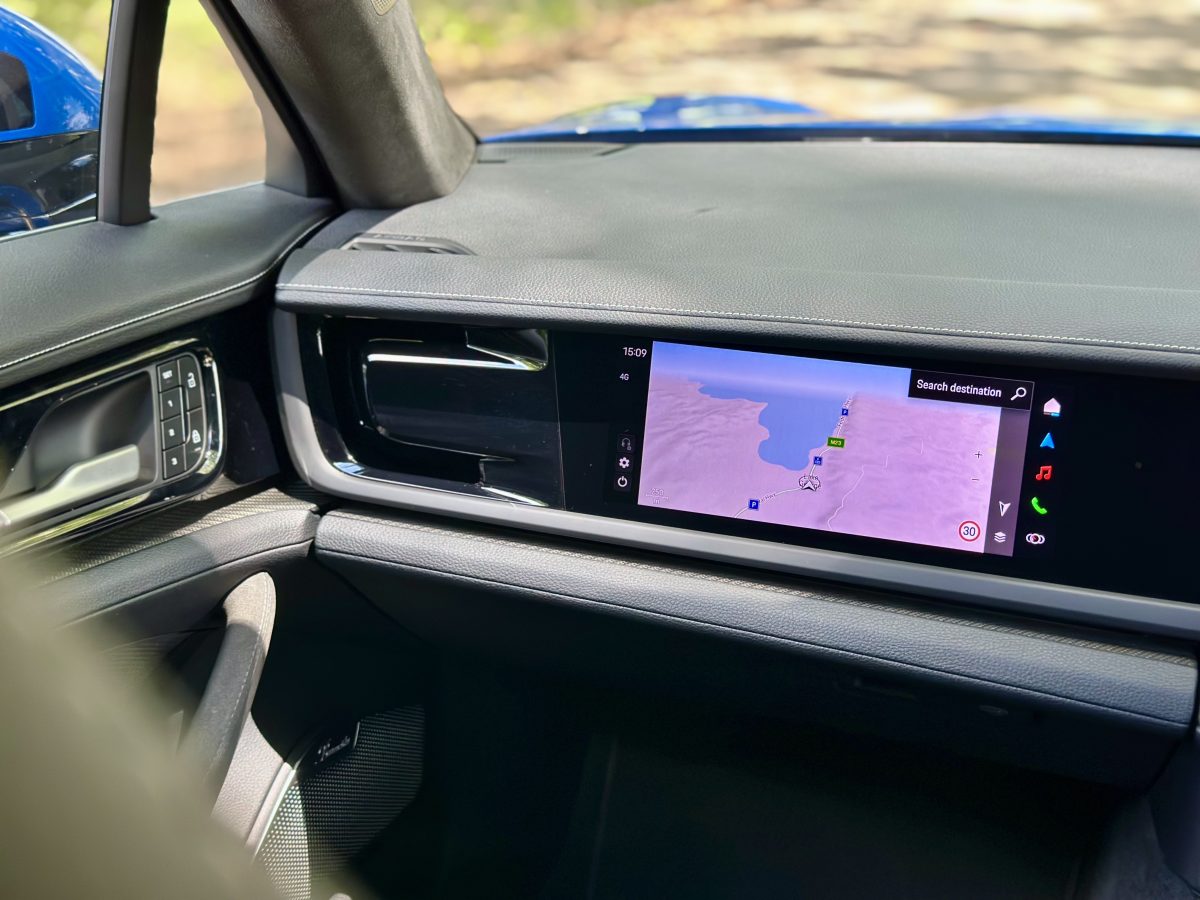
Not every driver will like this. Photo: James Coleman.
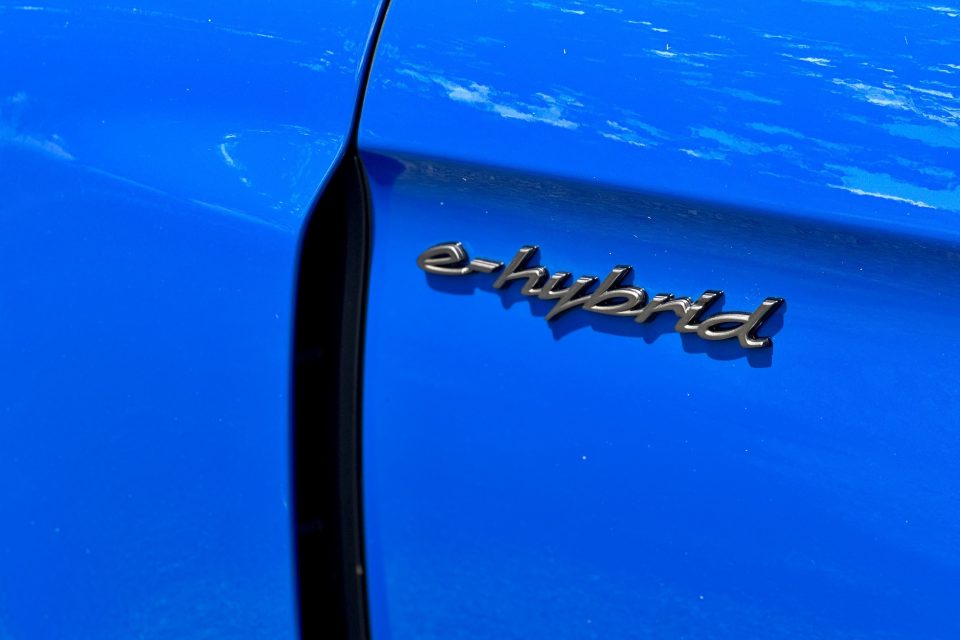
As a plug-in hybrid, it’ll also do about 90 kilometres on the battery alone. And that’s not optimistic marketing – I managed to drive from Porsche’s Sydney dealership to Pheasants Nest at highway speed without waking the engine.
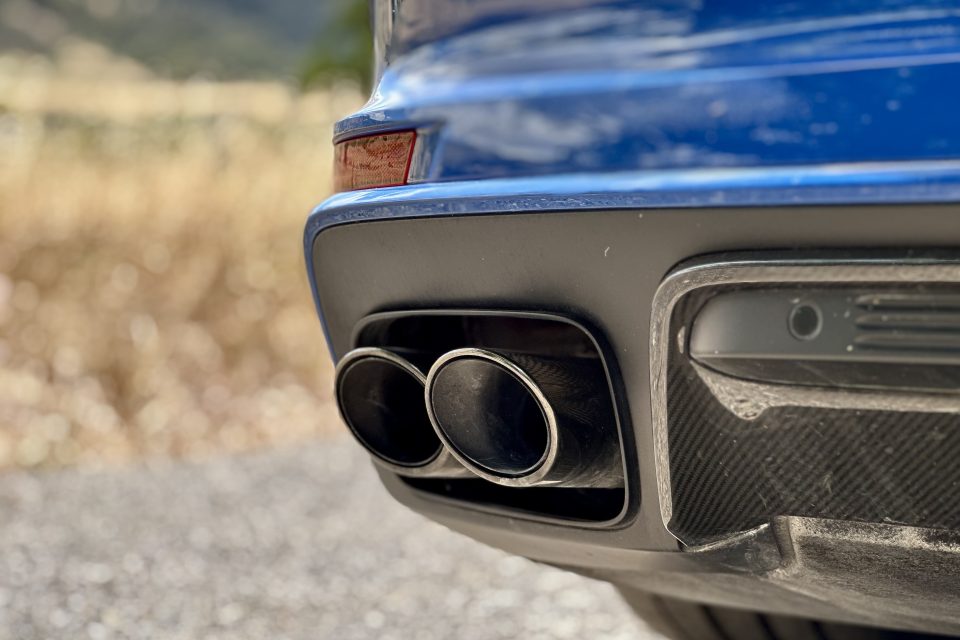
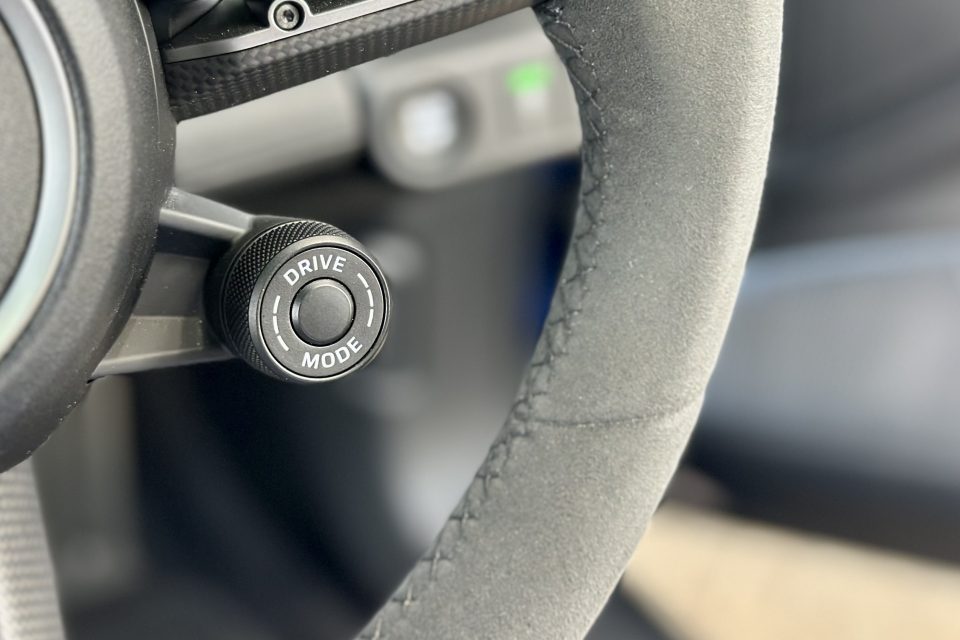
Drive it like your average Toyota hybrid and Porsche claims it’ll use just 2.1 litres of petrol per 100 km. Drive it more like a Porsche, however, and that figure quickly goes to the spreadsheet in the sky. Because there’s still a twin-turbo 4.0-litres V8 under the bonnet and twist the drive-mode dial to sport and it makes itself heard. Deliciously, through fully-open exhaust flaps.
The eight-speed gearbox does like to change down early, which slightly mutes the V8’s operatic talents. But that’s easily fixed with the paddles – or by hitting the “sports response” button in the middle of the drive-mode dial, which delivers 20 seconds of extra boost (another way of saying “all hell”).
But the real magic trick – the secret ingredient – is what’s called Porsche Active Ride Suspension (PARS).
I have never had a car so pleased to see me – open the door and the entire thing pops up on its suspension like an excited dog when you accidentally let “walkies” slip.
Really, this is to make it easier to get into, but it’s just the beginning.
In hybrid mode, the Panamera actively leans into corners much like an aeroplane. So your body is pushed further into the seat when physics suggests you should really be sliding sideways, clutching the door handle and recalling what you had for lunch.
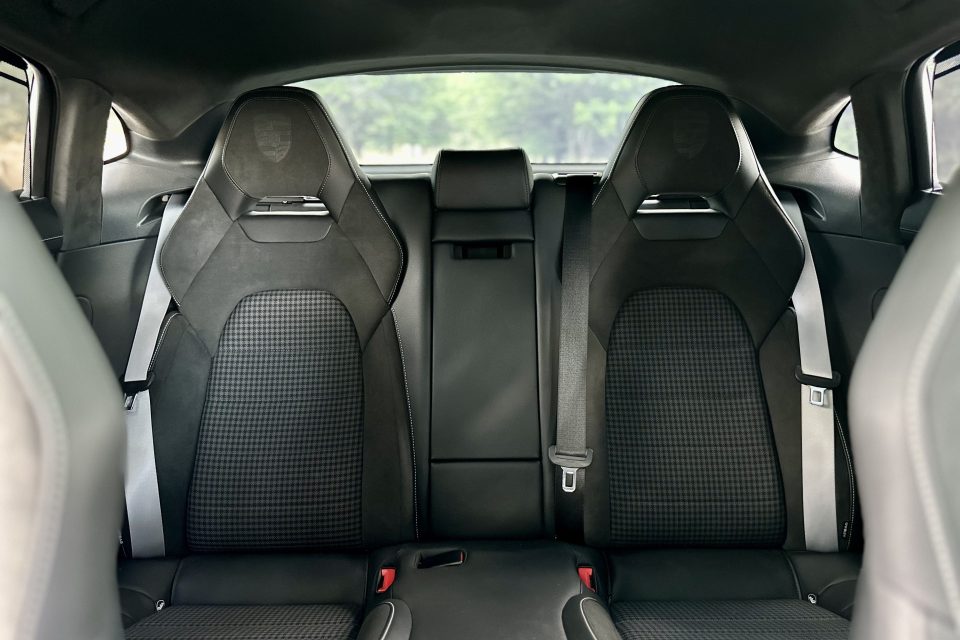
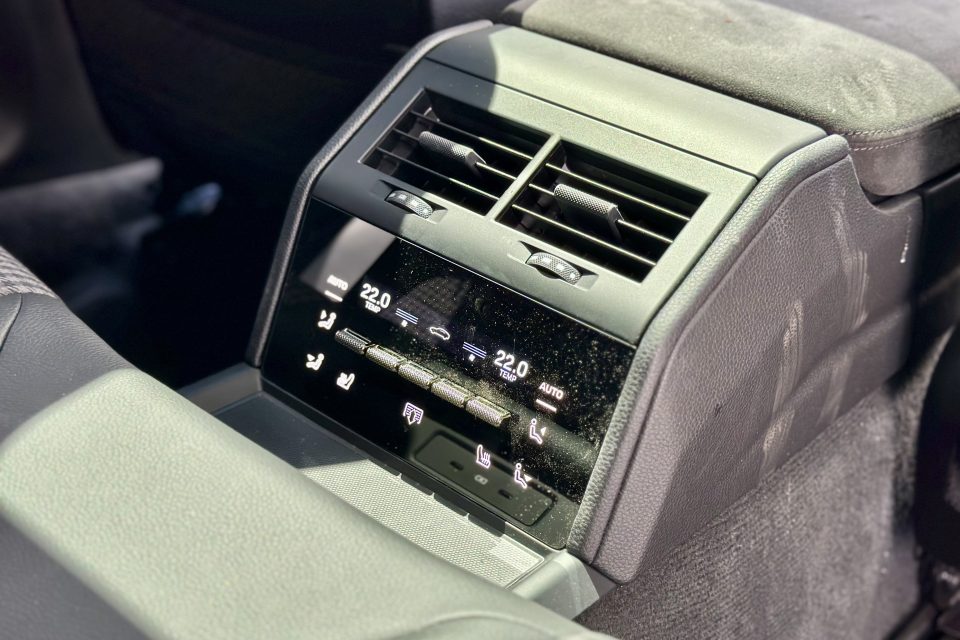
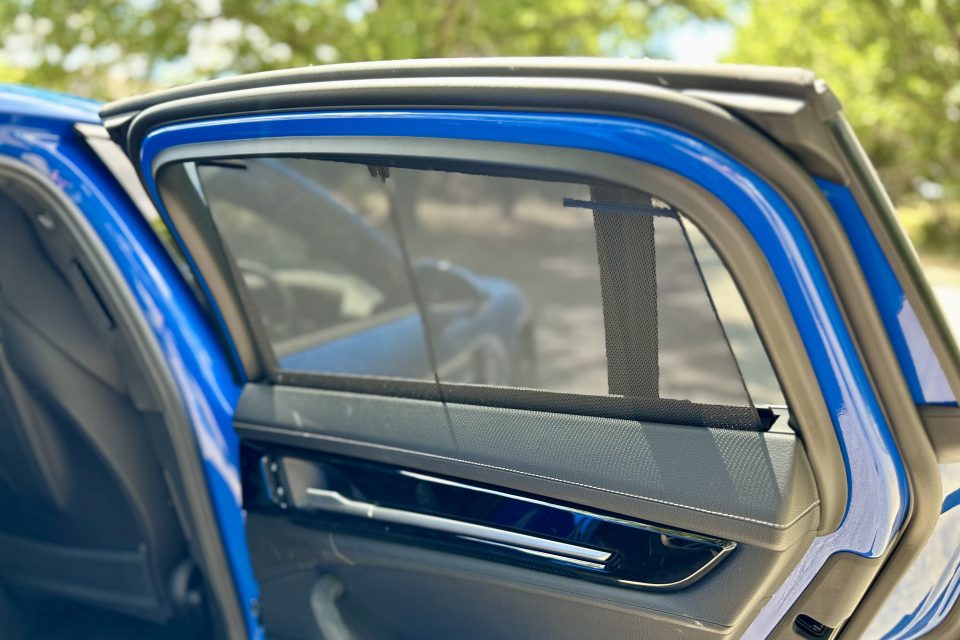
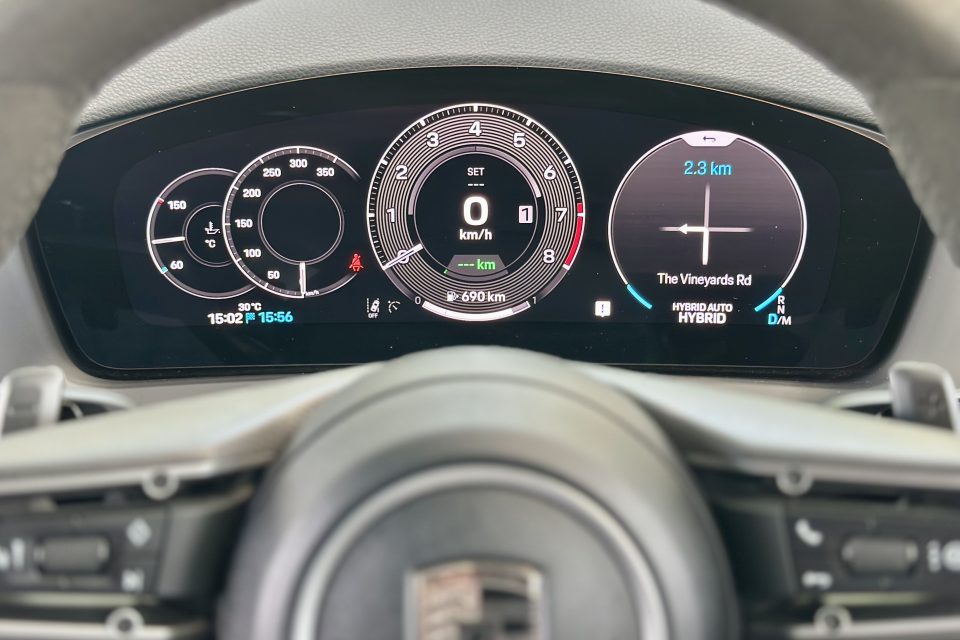
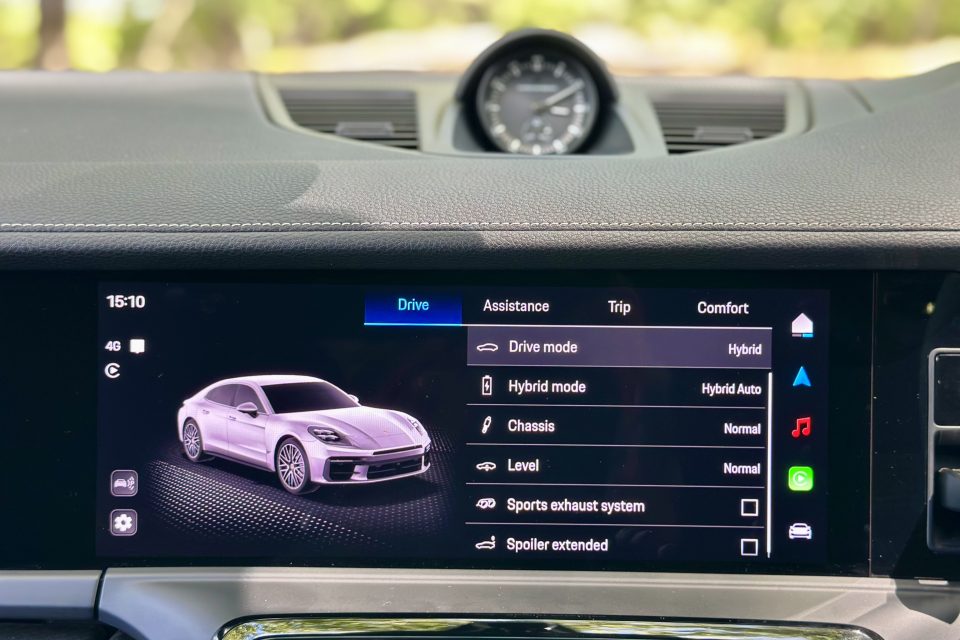
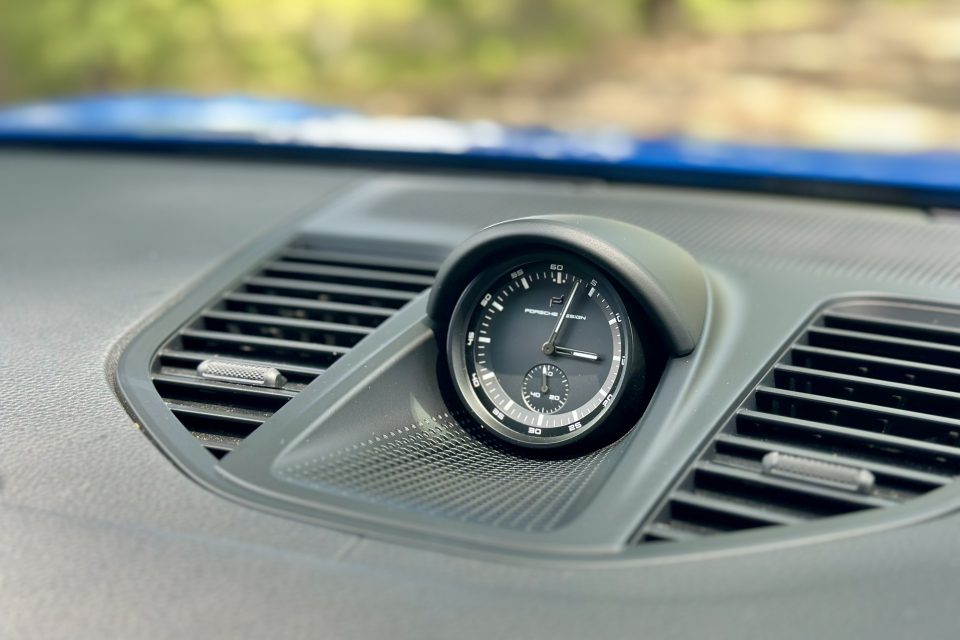
Switch to sport or sport plus and the suspension defies Sir Isaac Newton again, actively pumping up individual wheels to keep all 2.36 tonnes perfectly flat and level through bends.
(You can also program it to automatically raise itself at specific locations – like my in-laws’ steep Calwell driveway – to prevent expensive carbon-fibre crunching noises.)
All of this happens in milliseconds. The result is a car that’s supremely comfortable yet razor-sharp precise. The steering is spot on, the rear follows the front with eerie obedience and the grip is outrageous. It feels like a two-door and half its weight. (Doubtless, the four-wheel steering helps here too.)
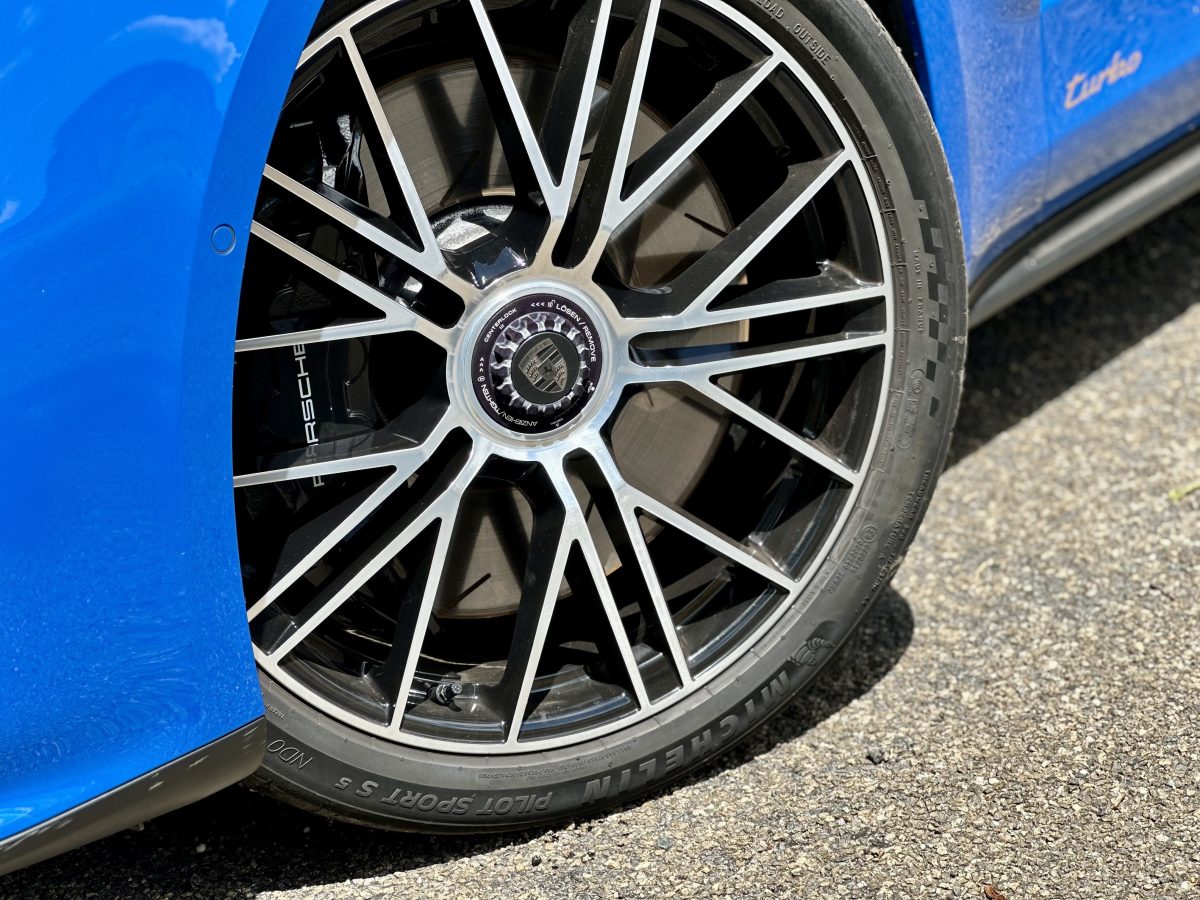
At low speeds, the rear wheels are turning opposite to the fronts to make the Panamera easier to manoeuvre. Photo: James Coleman.
I sincerely hope the market does its thing and something like PARS trickles down into cars for the more average buyer. It would certainly help EVs handle their ponderous weight. Maybe cure car sickness too.
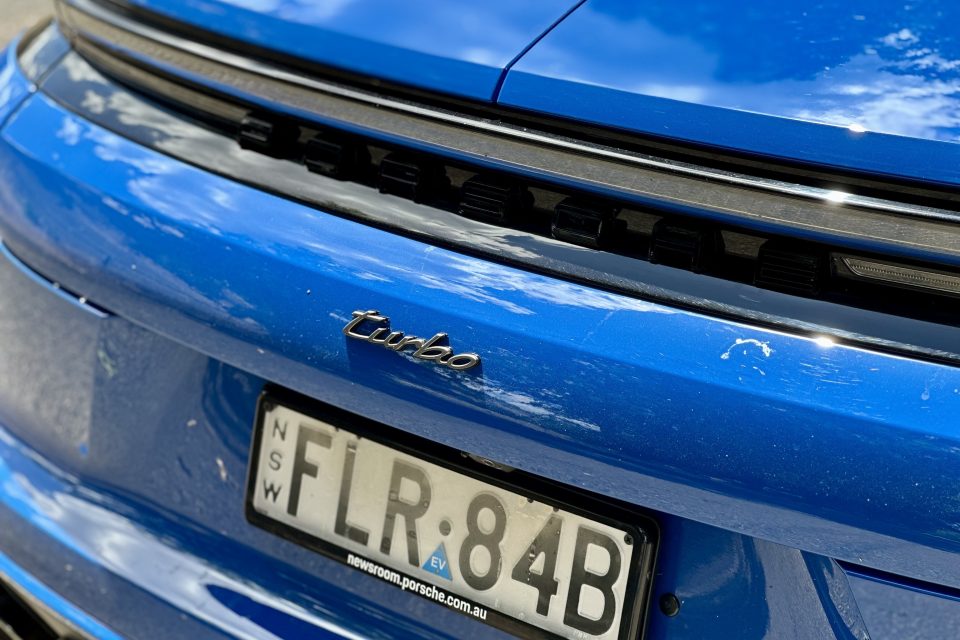
But for now, the Panamera Turbo master-of-all-trades is fittingly pricey, starting at $402,300, and $432,200 for the Turbo S. Or a good $30K-plus more than the equivalent Porsche Cayenne.
But now, it’s finally prettier.
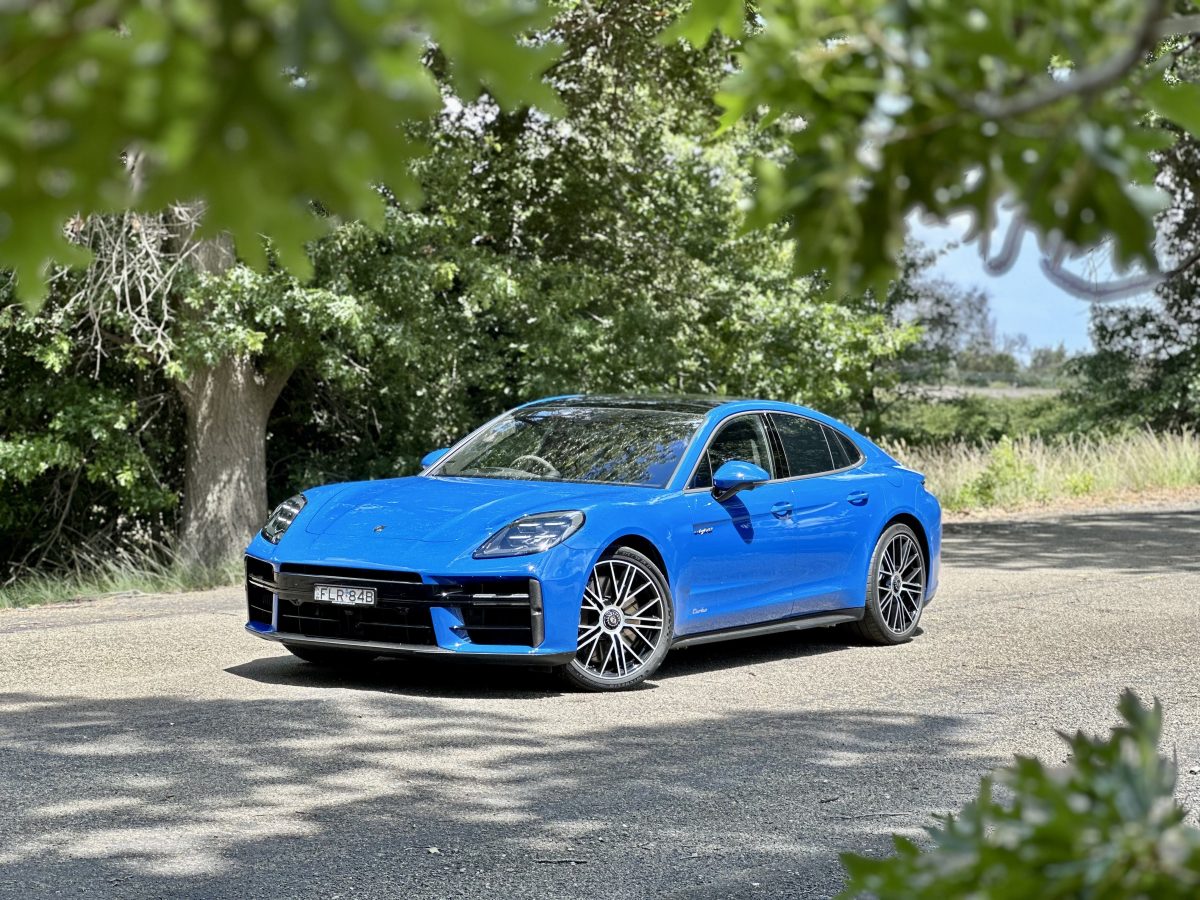
This, or a Cayenne? Photo: James Coleman.
2026 Porsche Panamera E-Hybrid Turbo
- $402,300 (plus driveaway costs)
- 4-litre twin-turbo V8, electric motor, 500 kW / 930 Nm (combined)
- 8-speed dual-clutch automatic transmission, all-wheel drive (AWD)
- 0-100 km/h in 3.2 seconds, 315 km/h top speed
- 2.1 litres per 100 km combined fuel consumption
- 2360 kg
Thanks to Porsche Australia for providing this car for testing. Region has no commercial arrangement with Porsche Australia.