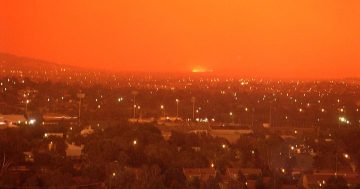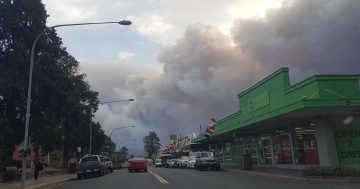

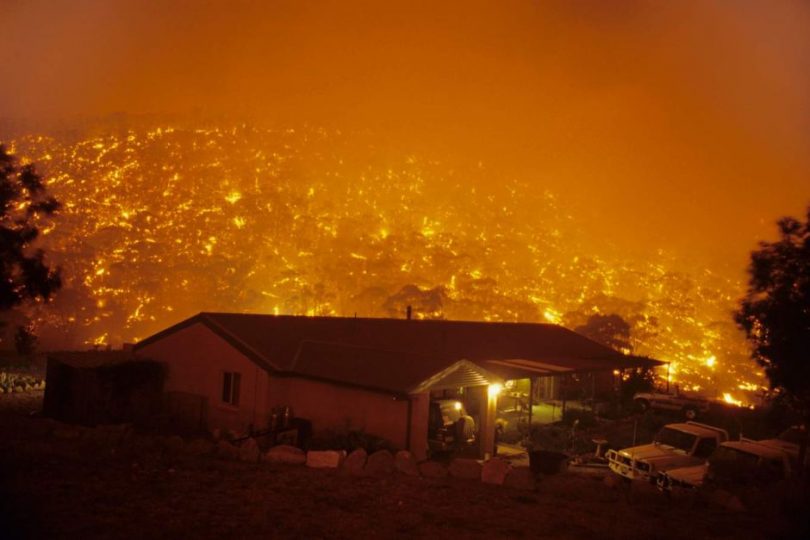
The 2003 bushfires are seared into Canberran’s memories. Are we any safer? Photo: ABC.
This coming Sunday (18 January) marks 23 years since the 2003 firestorm engulfed Canberra’s western suburbs and it has been six years since Black Summer cast a pall over much of the east coast of Australia.
Last week was a stark reminder of those catastrophic events, as the south-east experienced its first real heat wave since that visceral 2019-20 season.
The red beast returned to Victoria’s north-east and Canberrans shrank from a searing sun and the memories triggered by an eerie light filtered through smoke-hazed skies.
The ACT declared its first Total Fire Ban day for six years and the fire season may be extended
Timed to perfection, the Climate Council and Emergency Leaders for Climate Action (yes they’ve held a hose) released a report saying that our cities and particularly Canberra were vulnerable to a Los Angeles-style fire disaster.
After a half decade of benign summers punctuated by La Nina events, a degree of complacency has set in and the authors believe the report is a wake-up call.
Global warming is turbocharging fire events across the world and it was only a matter of time before conditions again align to pose the kind of threat that Canberra faced in 2003, only now as the urban edge advances more people are literally in the firing line.
Naturally, the report calls for more urgency in transitioning away from the burning of fossil fuels to give the atmosphere some chance of stabilising.
One of the more depressing aspects of the US’s Venezuela oil heist is the absence of any discussion about the ramifications for global heating of developing the world’s biggest oil reserves.
Scientists say the planet has already passed tipping points and even if we stopped burning fossil fuels tomorrow, the effects would still be with us for centuries.
It seems more and more likely that we are going to have to adapt to a situation that is not going to change for some time and could in fact worsen.
As bushfire veterans, the report authors also demand more investment in fire-fighting capacity and resources and managing the urban-bush interface to prevent as best can a blaze breaking into the suburbs.
Adaptation is also a priority, such as retrofitting properties to bushfire standard.
But the frightening conclusion is that the changed climatic conditions mean contemporary bushfires driven by cyclonic winds can overwhelm even the best resourced fire crews.
We do not know how the rest of the summer plays out and this week could just be a respite, but another drought and great drying out is coming and fire is no longer a respecter of seasons.
The report ask questions of government and emergency agencies about maintaining the investment necessary to minimise the threat and ensuring the organisational structure of firefighting is lean and muscular enough to respond with rapidity and force.
After a run of kinder seasons, the tendency can be to quietly wind down spending, especially when budgets are challenged.
But the report suggests that even simply maintaining resourcing levels as urban expansion continues will leave the nation exposed.
This should be considered in the same category as Defence. When one contemplates the billions being and to be expended on the Aukus submarine program, the amount being devoted to keeping people and property safe from fire in a warmer world seems small indeed.
Local government areas and small jurisdictions such as the ACT can only do so much. They need greater Commonwealth support.
Australians are already paying the price of this warmer world in soaring insurance premiums. Since 2020 these have increased by 78 per cent to 138 per cent for homes in bushfire-prone Local Government Areas within Sydney, Melbourne and Perth. The cost of the 2019-20 Black Summer bushfires to the economy was estimated at $10 billion.
It’s a good time for a stocktake – of how well our emergency agencies are structured and resourced, whether the planning system is factoring in fire risk sufficiently as housing pressures grow and what resources and methods are being devoted to “cleaning up the camp” to keep urban buffers less fire prone.
And whether recommended reforms remain on the shelf gathering dust.