
5 December 2025

Renewables nimbyism needs to stop to lower power prices

| By Ian Bushnell
Join the conversation
74
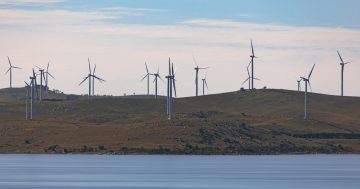
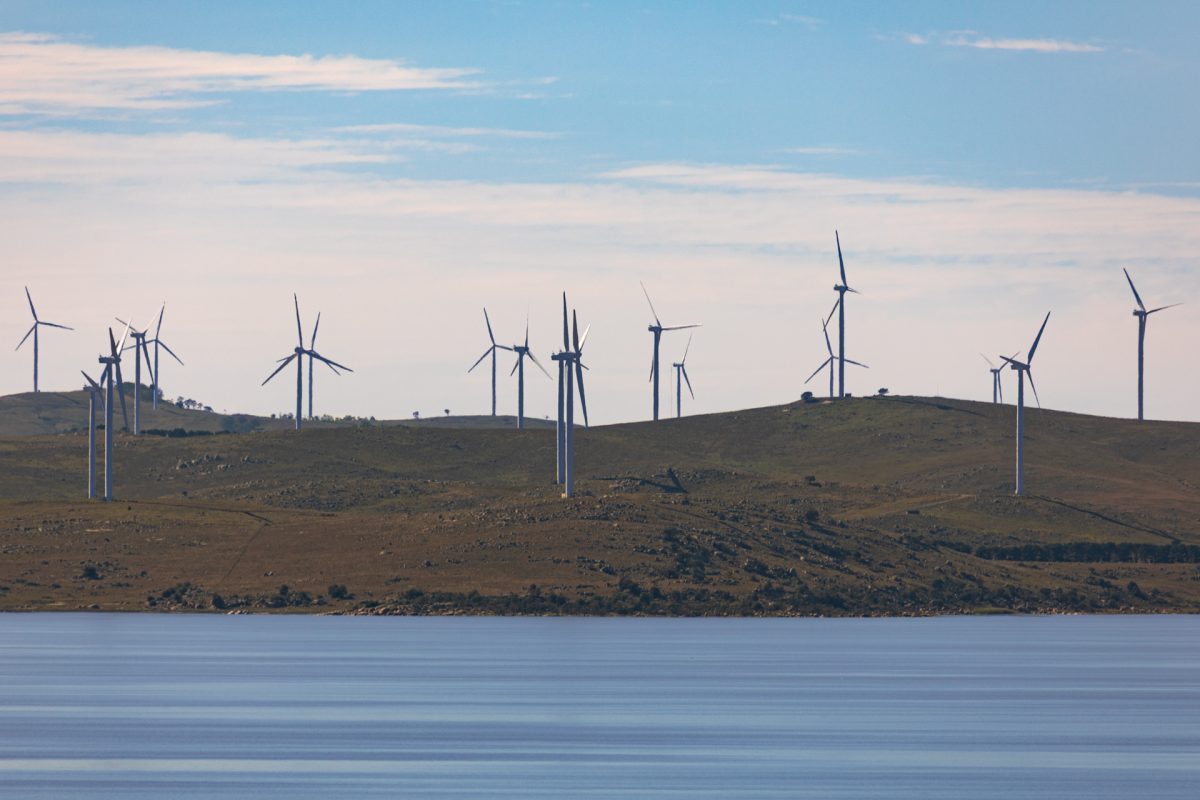
Wind turbines by a lake

Wind turbines along Lake George. The nation needs fewer barriers to renewable energy and transmission projects. Photo: Michelle Kroll.

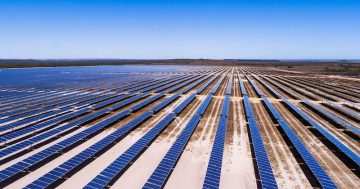
If Australians want cheaper electricity prices, the key is accelerating the rollout of renewable generation, transmission and battery storage.

That’s the message from the Australian Energy Market Commission’s (AEMC) new Residential Electricity Price Trends report.

The independent report projects that residential electricity prices (not bills) will fall by around 5 per cent over the next five years, if supported by new renewable generation growth.

But those prices could rise by 13 per cent from 2030 to 2035, if the three legs of the renewable rollout are not delivered faster than currently projected.

The risk is that renewables and transmission do not increase enough to meet demand as coal-fired power recedes.

Yet, while there is a long pipeline, actual construction of renewable energy projects and associated infrastructure has fallen away as proposals collide with resident and farming groups in rural Australia, and the fossil fuel lobby deploys social media to fan the flames of discontent.

READ ALSO Mandatory AI guardrails put ‘on hold’ with the release of national plan

One only has to look in our own backyard to see this happening.

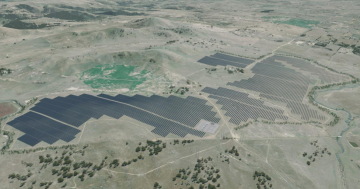
A solar farm proposal in Yass was abandoned this year due to resistance there from a small number of residents, supported by the Yass Valley Council, which has become increasingly strident about renewable energy projects.

A wind farm proposal at Binalong is also getting a buffeting from some residents.

At least a battery project in Murrumbateman was recently approved, but not without local vintners and the Council continuing to rail against fire and contamination risks.

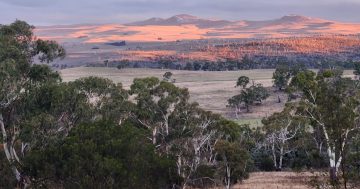
Underlying the rural arguments against renewables is an age-old fear that Arcadia is under threat from a new industrial revolution.

Everybody loves renewables, just not near us. They should be located in industrial areas, not ruining the countryside, they say.

Rural residents also expect reliable, affordable electricity, but some do not want to think too much about where it comes from, as most old-style power stations are out of sight and out of mind.

The countryside itself has not been pristine for a long time. Most modern farms are mechanised and wedded to industrial farming practices, including the use of pesticides, fungicides and synthetic fertilisers, which are also stored on the farm.

The wine growers of the Hunter Valley have had to coexist with the coal industry for years. The town of Acland on the Darling Downs in Queensland was actually consumed by the local coal mine, and the gas industry experience there has not been kind to farmers.

If the choice is between coal mines, gas wells and renewables, then the latter is a better bet for a safer and more pleasant countryside.

Not all farmers and property holders are hostile to renewables, of course, because they can also provide a reliable income stream if they can host a solar or wind farm, which can be compatible with certain farm operations.

There are also jobs and economic benefits for rural areas, struggling with service and infrastructure costs, something the financially challenged Yass Valley Council should be thinking about.

The number of objectors is usually small, but they are skilled enough to marshal the media and the internet to make things difficult for proponents, aided and abetted by a politically opportunistic National Party.

That is not to say that proposals should be waved through without proper assessment wherever they are.

Just because we are talking about ‘green’ energy does not absolve proponents from meeting environmental requirements.

READ ALSO Why do we hype up Ashes series in Australia when they’re always a flop?

But the AEMO report is clear that barriers to new renewable and transmission projects need to be reduced by implementing credible mechanisms to ensure sufficient renewable generation and firming capacity, and by speeding up planning and approvals processes.

It also stresses the importance of continuing to build social licence for new transmission projects; otherwise, delays to wind and transmission projects could increase annual household electricity prices as much as 20 per cent.

Prolonging the life of existing coal plants risks more power outages and potentially adding up to 5 per cent to prices, but faster wind and transmission delivery could reduce prices by up to 10 per cent.

That is the stark choice before Australians.

Nimbyism, hysteria, and deliberate misinformation to undermine the case for renewables should not be part of the process.

Australians should also remember why the energy transition is happening. It’s not just about cheaper electricity.

If you believe the science that global heating is an existential threat, then the choice is even clearer.

If not, I hope you’re right.

Free Daily Digest

Want the best Canberra news delivered daily? We package the most-read Canberra stories and send them to your inbox. Sign-up now for trusted local news that will never be behind a paywall.
Loading
By submitting your email address you are agreeing to Region Group's terms and conditions and privacy policy.

Join the conversation

74
All Comments
  • All Comments
  • Website Comments
LatestOldest

@Stephanie Helm
Australia has always been prone to bushfires! Power lines and associated infrastructure also pose a fire risk. Long term and severe droughts, hot winds and thunder caused the Ash Wednesday fire in SA and the 2003 Canberra bushfires, with lightning and dry weather igniting multiple fires which merged. The Black Saturday fire which ravaged Victoria in 2009 was caused by power lines and killed 173 people and multiple wildlife. It also destroyed thousands of homes and instigated a royal commission. The Kilmore East fire was caused by high winds and a fallen power line. There are many others.

A US study found humans cause nearly 90% of fires via discarded cigarettes, unattended campfires, burning debris or through equipment malfunctions.

That does not mean our governments need to be blind to new technology, especially wind, solar and battery. Communities in our cities and rural areas are embracing solar and the industry is booming throughout Australia.

With our experience of bushfires creating greater knowledge for governments there are many different prevention and mitigation strategies designed and used to overcome these risks.

I can’t help but feel that the people who complain about the placement of renewable energy are just conservative Bogans frightened by change.

That, and a minority that are desperate to get $ out of it, but won’t for whatever reason.

Reports today in the AFR and ABC say AGL has abandoned its Gippsland Skies offshore wind project in Victoria, citing poor economics compared to other renewables. The AGL project had been spruiked to provide 17% of Victoria’s energy demand and replacment power for the Loy Yang coal power station. Gippsland Skies is the third Gippsland offshore wind project to be abandoned this year. In July BlueFloat Energy scrapped its $10billion Gippsland Dawn project saying it was not commercially viable to invest in the sector. The Norwegian company Equinor also withdrew from all four of its proposed projects, including three in NSW.
Nothing to do with ‘nimbyism’, just the hard reality of unviable offshore wind economics.

“AGL has abandoned its Gippsland Skies offshore wind project in Victoria, citing poor economics compared to other renewables”

Yes, isnt it good that the price of solar and battery projects have reduced so much that AGL is focusing more on those projects in their own investment pipeline.

The hard reality of electricity generation economics where the fossil fuel generators dont stack up anymore.

But Australia has “wealth for toil” we should have been able to afford the offshore wind farm. 😆

Wow Penfold how funny. A company picking the most cost effective option to deliver what they want to do. Funny how that isn’t building your love affair coal power plant however.

What a goose you are.

Ultimate NIMBY, last time I was in Canberra there, were no wind turbines in Europe they have wind turbines in cities less rural than Canberra so why not set an example for Melbourne and Sydney.Why destroy CO2 absorbing forests when you could put them in the city without needing to destroy the environment?

Nuuu kleee arrr

If you have ever stood 200 metres from one of those huge wind turbines they are quite noisy.

I can understand the resistance to them. There would be likely less resistance to wind turbines if everyone within a certain proximity of them (the affected neighbours) received a financial benefit and not just the landowner that hosts them.

They really aren’t. Only if the wind is blowing fiercely, and in that case your going to hear the wind if the turbines are there or not.

Stephen Winter2:34 pm 05 Dec 25

Ian,
you are kidding yourself and just blatantly lying to your reads.
In 2022 this lying gov. told us that electricity prices would be $275.00 less that 2022 by 2025 and each year after because unreliables were the cheapest form of electricity.
What we have seen is an average INCREASE of 25%. And you think increasing these unreliables is going to help, please. And as far as climate change, allegedly, 40% of global electricity is from unreliables yet the planet continues to warm. Explain that……..
Wake up, if this gov. was serious about reducing our CO2 input, stop the export of coal and gas.. Then watch our economy and lives crash back to 1850.

Axon obviously earns so much that the cost of living has the impact of a flea on an elephant. People are suffering, but to the left that doesn’t matter

Electricity is in fact quite a minor part of the overwhelming majority of household budgets. Its whined about a lot as its a very visible, discreet cost that the media just loves to bang on about. But compared to other increased costs, it is relatively minor.

Author: Chris Bowen?

The BBC advises the ‘Rage bait’ has been named as Oxford University Press’s word of the year. Rage bait refers to online content deliberately designed to elicit anger or outrage by being frustrating, provocative or offensive. This article is rage bait.

Yes! Written by Bowen?

*many comments here are rage bait.

Fixed it for you.

Bbbbbut Rage Bait isn’t a word it’s a term. 😨

Stephen Saunders11:03 am 05 Dec 25

Penfold, “transition” has a clear meaning for the UN. Coal-giant China gets to do zero population growth with maximum growth in consumption and living standards. Stupid Australia does massive population growth and falling living standards, becoming ever more reliant on Chinese solar/wind power manufactures for its (expensive) energy generation.

Yep, Australia was once the clever country with low power prices, an enviable standard of living and a manufacturing sector.

Now we’re just as stupid as possible. And there’s people who think that’s a good thing. Perhaps our national IQ has shrunk like our living standards.

Meanwhile, the salivating lefties cheer on higher costs of living. Maybe they have their caves already sorted

Anybody who thinks that a wind farm near Binalong will solve the global warming crisis is delusional.
Australia is responsible for approximately 1% of global emissions. India, China and the US for more than 60%.
Sadly, even if Australians were to decide to return to the stoneage, it would barely make a difference on the world stage.
Most Australians already do as much as they can to protect the environment. We should be commended for making the effort. Not ridiculed for objecting to large infrastructure projects that will make little difference anyway.
And before all the do-gooders queue up to criticize me for these comments, please note that I have replaced my petrol car, I have removed a large grass lawn (watering) and replaced it with natives and bark, my recyling bin can barely keep up, I have replaced my gas appliances with electric, I have a rainwater tank and I catch public transport to work.
Am I really that bad a person?

You sound a wonderful person whose horizons appear limited to their back yard.

Are you old enough to remember days before the campaign to “Put it in a bin”? (Ask a boomer). Highways were corridors between strewn paper rubbish, chip bags and other litter. The campaign suggested that each person, among millions, put their own rubbish in a bin. Councils provided more street bins for the purpose, where no bins were before.

Some might have argued “I am responsible for less than .0001% of the rubbish where others contribute 99.9999% or more. It is delusional to think I can make a difference.”

But each person did, and the country changed. Each country must if the world is to change.

China, for all its emissions, is way ahead of the rest of the world in shifting to renewable generation of electricity, but all are following. Why should we be left behind, or choose to be dim?

You are with the angels. 🙂

Clearly you only read the first half of my message. I expected pushback from blinkered people who only see half the picture. The second half of my message shows that I, like many Australians, am trying to make a difference.
You appear to think China is a great place to be. You are welcome to move. I am happy here.

How about we pop a wind farm in your back yard Ian? The charge of nimbyism is very convenient. The road to renewables has been badly managed with a throw the baby out with the bath water mentality… all or nothing. The forced acquisition of privately owned farming land smacks of Stalinist collectivisation. Why aren’t people rioting?When smacking koalas over the head while mowing down pristine rain forests raised an outcry, let’s take farming land from people who probably don’t vote Labor anyway.

Who’s kidding who here ? Just in the last three years since the Albanese government was elected, the ABS reports that electricity prices have risen 23%. And that doesn’t include the tens of billions they’ve spent of our money to subsidise renewables.

If they are indeed cheaper, why do they need tens of billion in public funding ? Surely market forces would mean the private sector would fund them. Yet the private sector is running away faster than you can say “i’ll have 2,000 tonnes of concrete with that turbine please”.

So there’s only one conclusion – more renewables means higher prices. As night follows day. Not in my backyard please.

And as for an “energy transition” well more coal was used in 2024 than in any other year in human history. And it will continue to grow for decades according to the IEA. Maybe the term “transition’ needs redefining.

Totally missed the point Penfold – Again. Still you are consistent.

“And it will continue to grow for decades according to the IEA.”

The actual IEA
“In the first half of 2025, global coal demand is estimated to have decreased slightly, by less than 1%, amid fluctuating trends across different regions. In China, weaker electricity demand growth and a surge in power output from renewables caused a decline in coal power generation. The small decline in China’s overall coal demand came despite growth in some sectors like chemicals. In India, expansion of wind and solar and an early monsoon resulting in stronger electricity generation from hydropower, and weaker electricity demand growth in the first half of 2025, pushed coal power generation – and overall coal demand – into decline from the high consumption levels seen in the same period a year earlier.”

Humblest apologies franky, I thought the article was about power prices and how they’ve exploded as those expensive, unreliable and ugly renewables expand market share.

Did you take something else away from Ian’s piece ?

The article is about how power prices could fall if we move quickly to renewables but have a high risk of rising because the transition is too slow.

You could always try reading the first paragraph rather than your PISIYASCK talking point Penfold. It contains quite a clue about the subject.

“If Australians want cheaper electricity prices, the key is accelerating the rollout of renewable generation, transmission and battery storage.”

The definition of insanity is doing the same thing over and over and expecting a different result. Welcome to the renewables, where taxpayer subsidies apparently mean cheaper power. 🤔

As they do, cheaper than new build alternatives.

I suggest you stop doing it.

Doing the same thing over and over and expecting a different result. Like complaining here and expecting to change our energy strategy or the opinions of those that disagree? Whether we like it or not, renewables are happening so you have to get over that and start looking for the best path to achieve it. Ian offers the premise that NIMBYs slowing down the process are adding to the cost of it all. So do you disagree with that? It was comparatively cheaper to build things in the past and building now will be comparatively cheaper than in the future, that’s inflation for ya. So…. the longer/slower we do this, the more expensive it will be. Prove me wrong penfold.

Daily Digest

Want the best Canberra news delivered daily? Every day we package the most popular Region Canberra stories and send them straight to your inbox. Sign-up now for trusted local news that will never be behind a paywall.

By submitting your email address you are agreeing to Region Group's terms and conditions and privacy policy.