
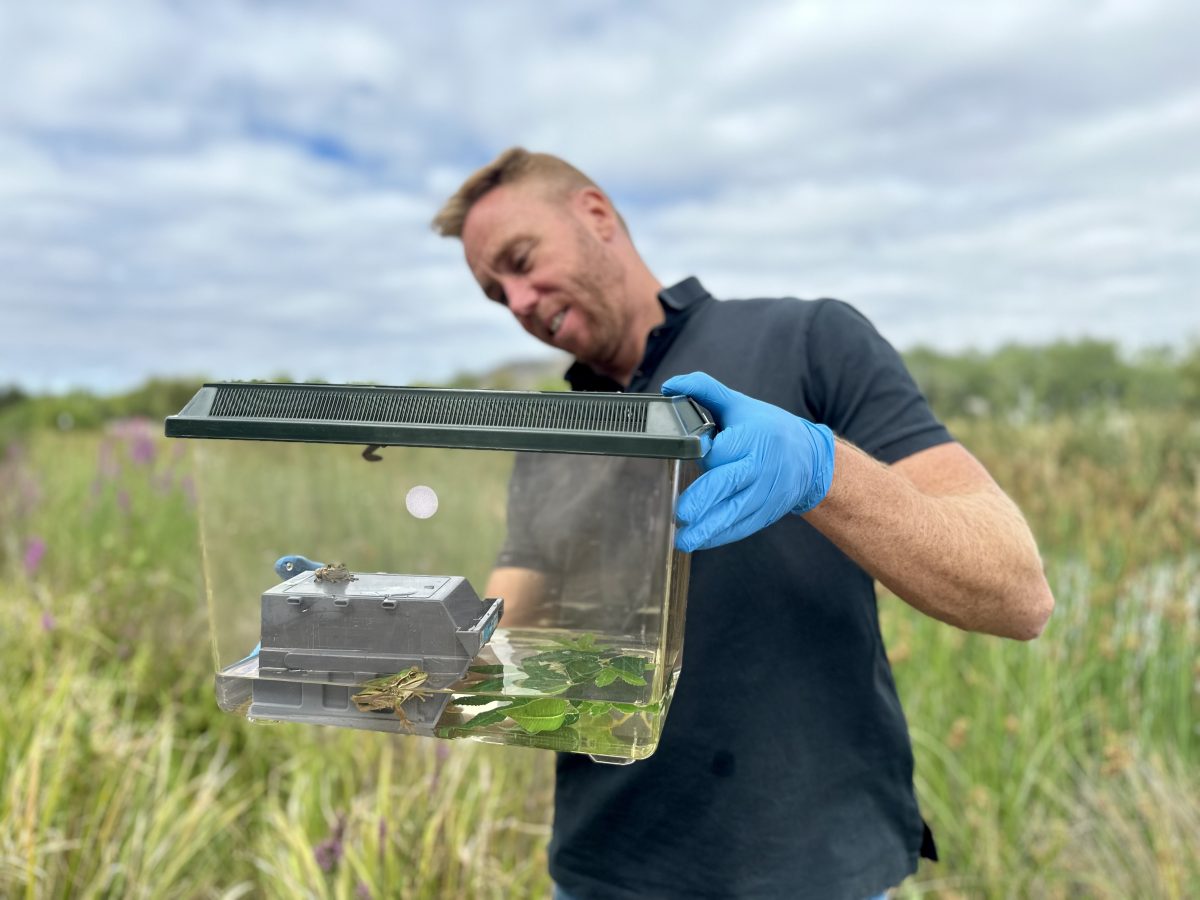
University of Canberra (UC) Associate Professor Dr Simon Clulow preparing a green and gold bell frog for release. Photo: James Coleman.
Lying awake at night in Mawson to the sounds of motorcycles revving in the distance? Um, they’re not actually motorcycles.
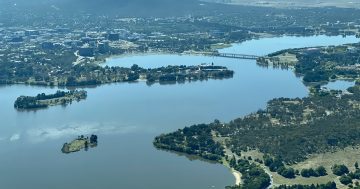
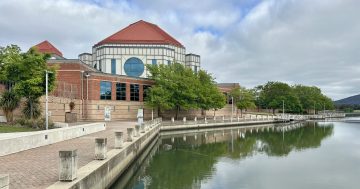
The University of Canberra (UC) has released hundreds of green and golden bell frogs into wetlands across the ACT after a four-year-long research and breeding project, including at Mawson Ponds.
It’s the first time the species has been in the wild since the early 1980s, after a deadly chytrid fungus devastated its population and nearly drove it to extinction in the ACT.
And they make quite a distinct sound.
“Not only is this a really spectacular frog visually, but it’s also quite distinctive with its sound,” project lead Associate Professor Dr Simon Clulow says.
“Sounds a little bit like a motorbike revving up through gears, a bit like ‘wah, waaah, waaaah’.”
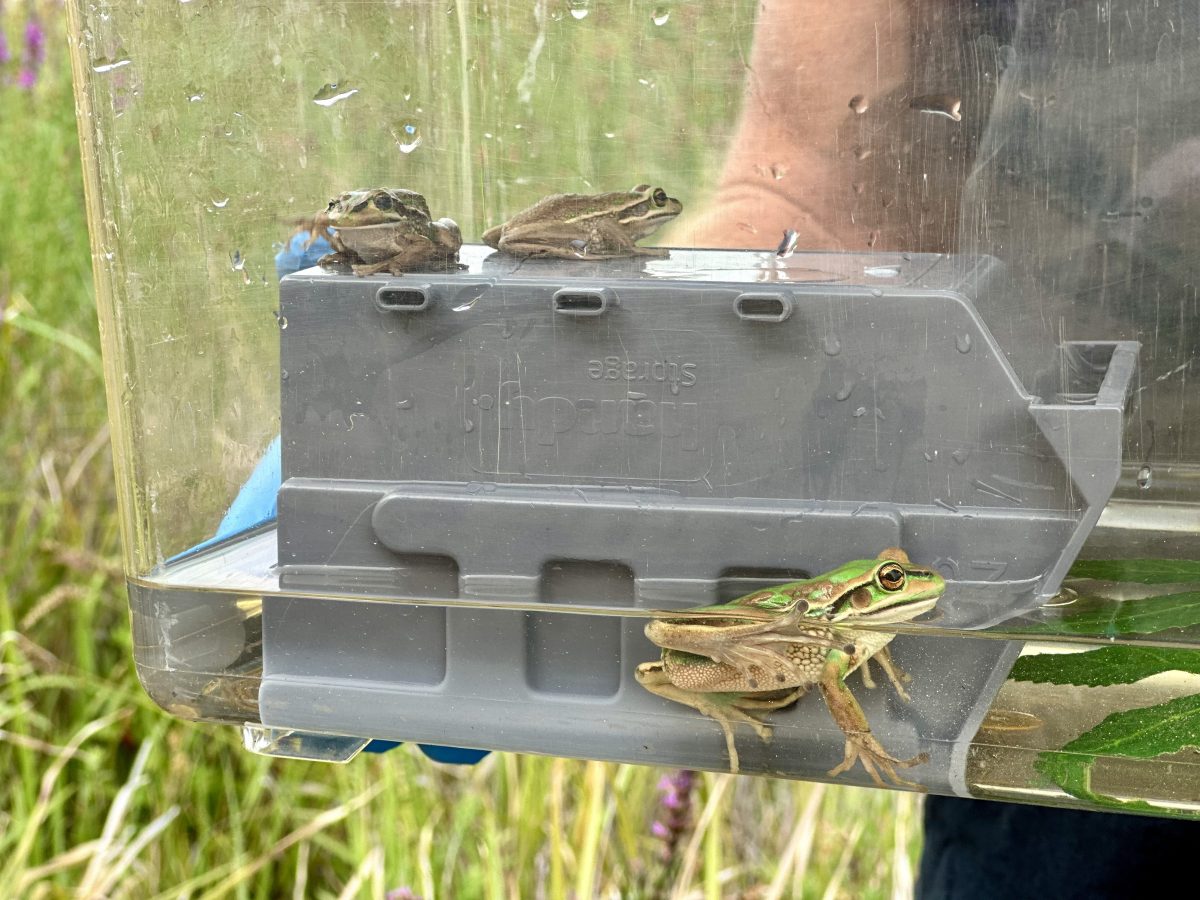
Approximately 500 frogs will be released into 15 ACT wetlands. Photo: James Coleman.
The frog – and its foe
As the name implies, the green and golden bell frog (Litoria aurea) has a bright green back with gold patches. They’re actually considered a “large species” of frog, measuring 8.5 cm in length.
The species was once common along the entire east coast, from northeastern Victoria to northeastern NSW, and inland to the Southern Highlands and the ACT.
However, a widespread disease, the amphibian chytrid fungus, has reduced their numbers to small populations in north coastal NSW, Sydney, and Broughton Island on the mid-north coast.
The fungus, transferred through contact in water, attacks the parts of the frog’s skin containing keratin. Since frogs use their skin in respiration, this makes it difficult for the frog to breathe. The fungus also damages the nervous system, affecting the frog’s behaviour.
Dr Clulow grew up near Newcastle, one of the last remaining populations.
“There’s maybe 1000 still out there – if we’re lucky – so it’s really got a local story for me as well. And I’ve been very fortunate to be able to work on the problem and try to solve it.”
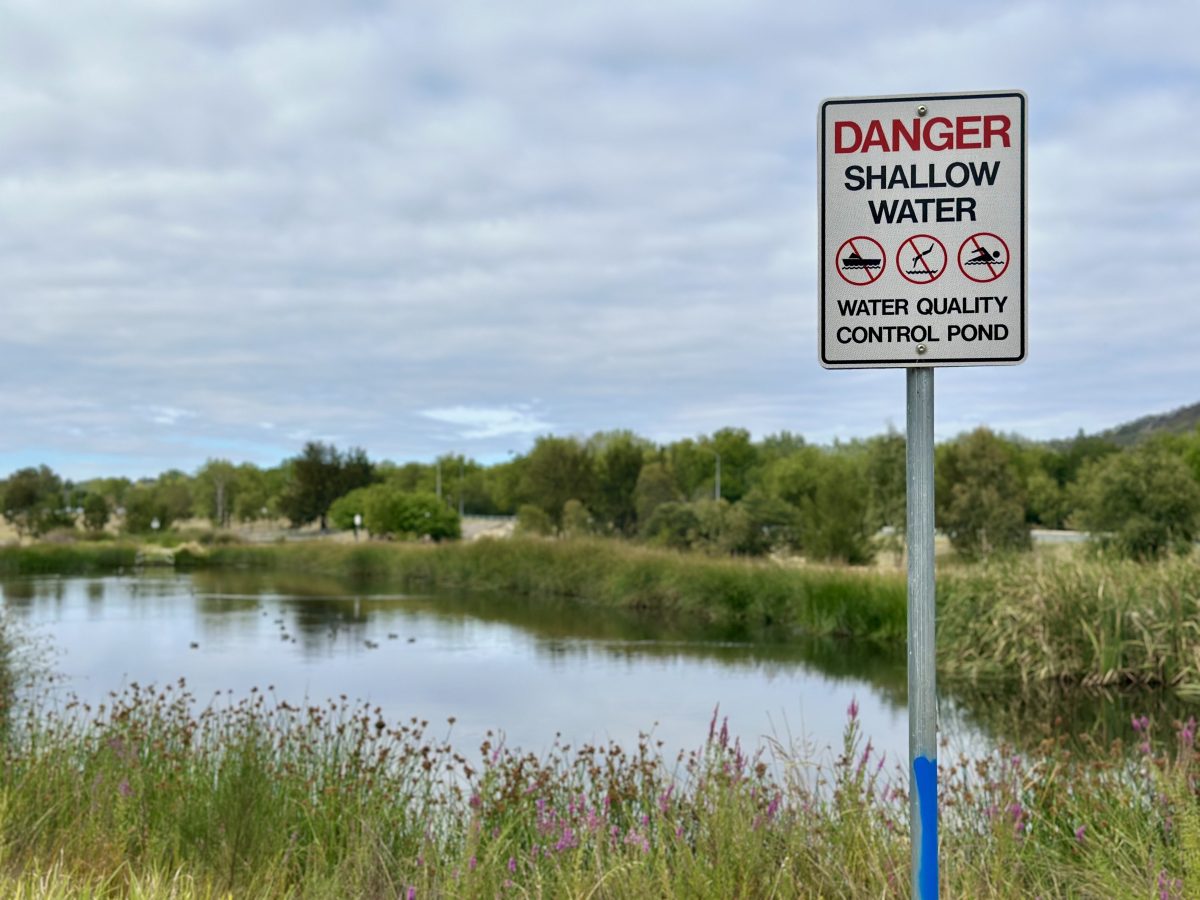
Mawson Ponds was chosen as one of the locations. Photo: James Coleman.
The solution: ‘frog saunas’ and extra salty water
Led by Dr Clulow, alongside Professor Richard Duncan from UC’s Centre for Conservation Ecology and Genomics and Dr Ben Scheele from the Australian National University (ANU), the project is described as a “world-first landscape-scale intervention”.
It also received close to $1 mnillion in funding, as well as support from the ACT Government.
“We’re fighting a disease which we can’t eradicate from the environment, so we’ve had to develop strategies to allow the frog to coexist with the pathogen,” Dr Clulow says.
“We discovered that certain stresses that are quite normal in the environment – slightly elevated temperature, slightly elevated water salinity – that’s just fine for the frogs, but is quite detrimental to the pathogen.
“So we’ve manipulated the environment in ways that allow the frogs to access slightly salty water and little hotspot structures that help them get the upper hand against the disease.”
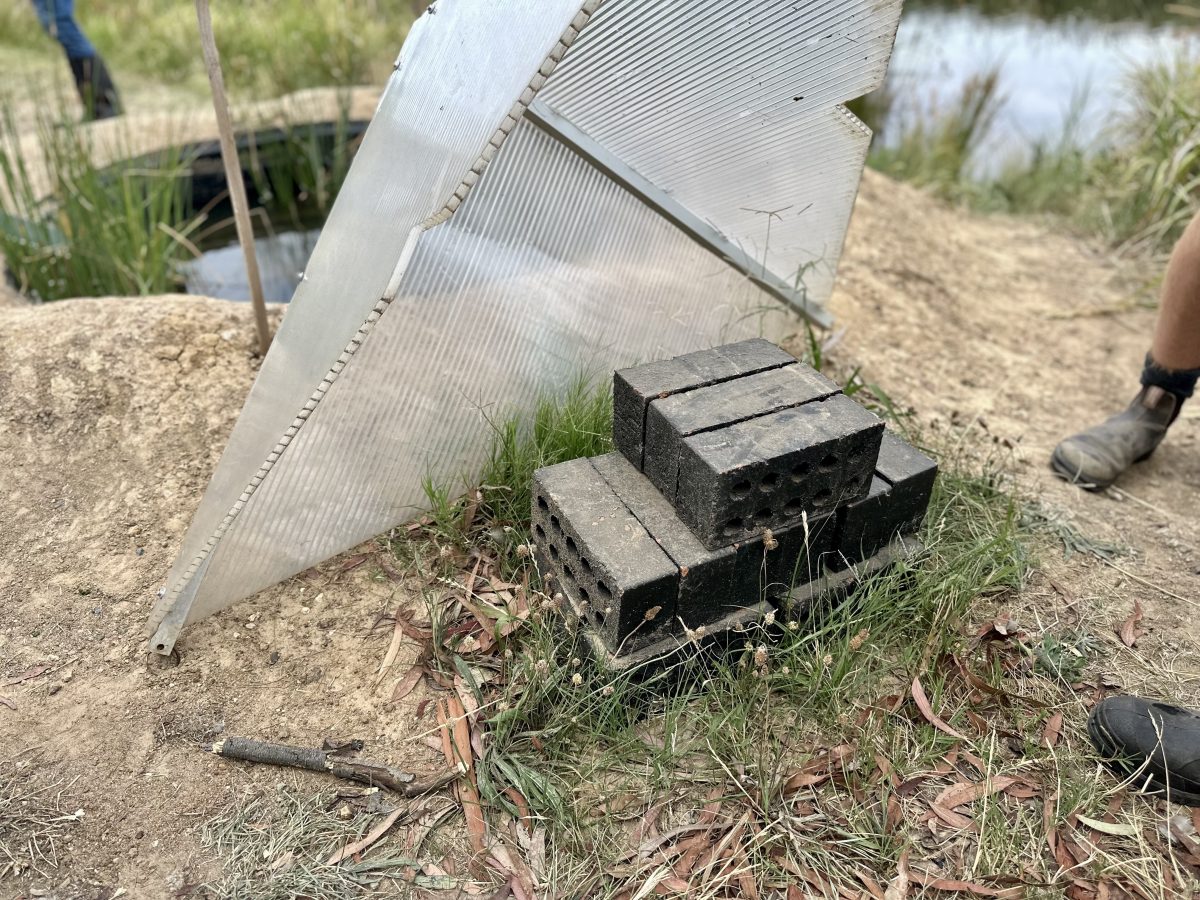
Inside a frog sauna. Photo: James Coleman.
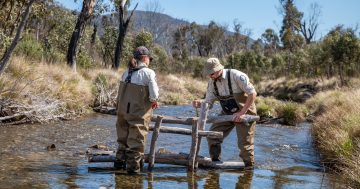
These hotspot structures – also dubbed ‘frog saunas’ – take the form of black-painted and stacked bricks underneath a clear plastic triangle structure. And the frogs love them.
“They actually came about years ago back when I was a PhD student, and we discovered that no matter what else we put in enclosures with this frog, they would always choose house bricks over anything else, because they’ve got little holes in them and provide a great refuge habitat … So the frogs tend to seek out the warm spots and use the saunas really readily.”
All up, about 500 frogs will be released across 15 wetland and pond environments across the ACT in the coming weeks – all of them vaccinated against the fungi.
“This first generation is effectively head-started. If the frog takes hold and persists, we’d expect that hopefully to turn into thousands of frogs, many thousands.”
How you can help
This release marks the crescendo of more than 15 years of national research – including four by UC – and the beginning of many more years of monitoring to see how the population copes.
“This frog hasn’t been seen or heard here in the ACT since about 1981, so almost 50 years,” Dr Clulow says.
“The journey’s been a really long one, but it’s really exciting to be able to finally say we have this frog back here on ACT soil once again.”
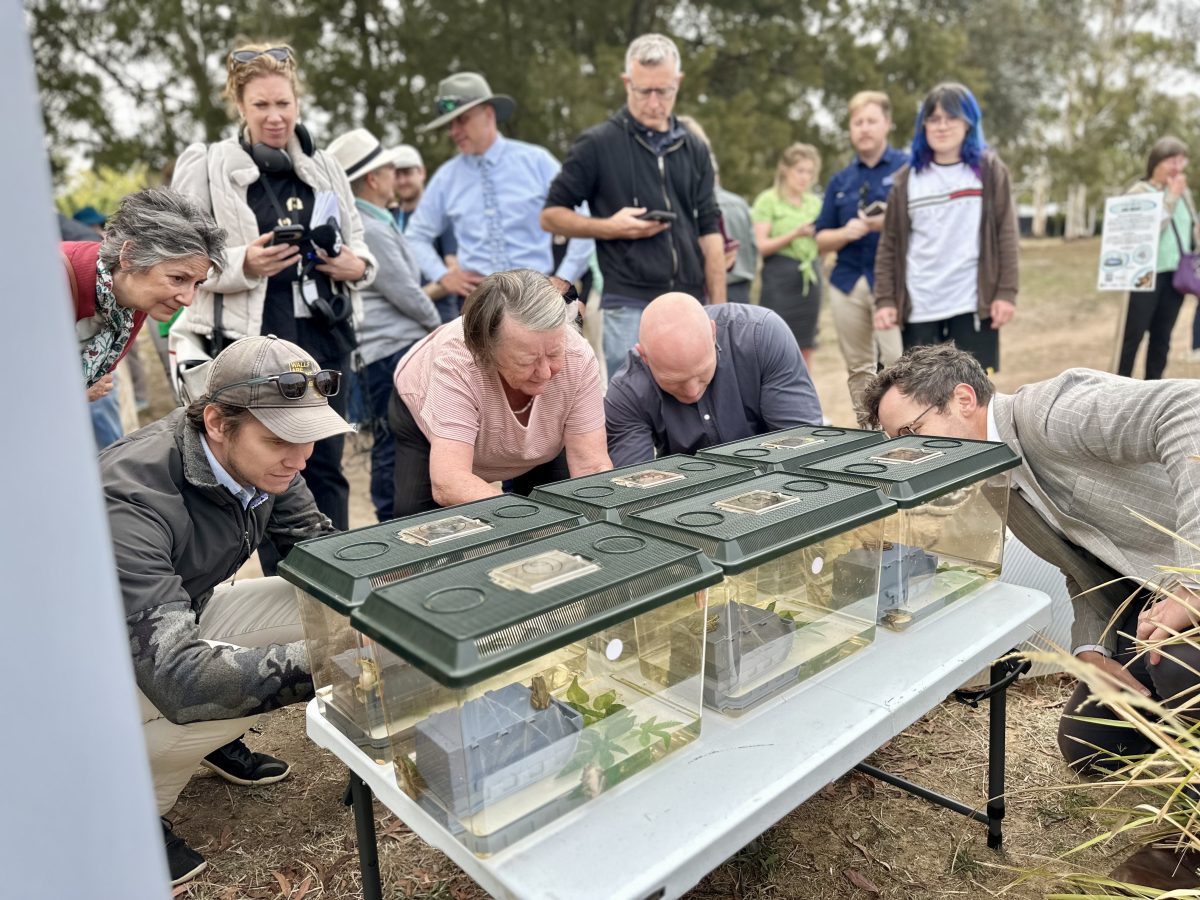
The community is asked to report sightings. Photo: James Coleman.
The community is encouraged to report sightings (or hearings) of the frog by scanning the QR codes on signposts dotted around the wetlands. These are directed to the Atlas of Living Australia website, which UC’s research teams will continue to refer to.
“We’ll also send teams out, and that will actually involve community participation too, so we encourage volunteers to get in contact with us, and they can come out and help us monitor those wetlands.”
“This way we can actually follow their survival and really know if our interventions have worked.”